







The global economy is currently navigating a silent, cellular revolution. For over a century, the "three-stage life"—education, work, and retirement—formed the bedrock of our tax codes and corporate strategies. But in 2026, that foundation is cracking.
As healthspans decouple from birthdates, longevity has evolved from a niche medical interest into a primary macroeconomic factor.
The Death of the 65-Year Horizon
The traditional retirement threshold is officially obsolete. Historically, retirement was a period of managed decline; today, it is being reframed as a "Second Act" of productivity. This shift is a fiscal necessity. With global pension gaps projected to reach hundreds of trillions by 2050, the "Silver Labor" market has become a vital economic cushion.
Forward-thinking firms are no longer "offboarding" talent at 65. Instead, they are seeing a 10–12% boost in productivityby pairing the technological agility of Gen Z with the refined "cognitive endurance" of older professionals. In a world of AI-driven churn, experience is the new hedge.
From ‘Sick-Care’ to Biological Capital
From a budgetary perspective, the transition from reactive treatment to preventive maintenance represents the greatest arbitrage opportunity in modern history. The traditional healthcare model—investing heavily in the final 24 months of life to manage chronic disease—is being challenged by a "Health-Capital" approach.
The ROI is staggering: every $1 invested in increasing healthy life expectancy yields an estimated $3.60 return in global GDP. This is driven by extended consumer spending and a dramatic reduction in public health burdens. We are seeing this play out in the financial markets through the rise of "shared-value" insurance, where premiums are linked to real-time biological age markers. The human body has effectively become a quantifiable, improvable asset.
The Challenge of Biological Inequality
However, this transition is not without its risks. As longevity treatments—from senolytic "zombie cell" cleanup to personalized gene therapies—become the ultimate "quiet luxury," economists warn of a widening "Biological Class Divide." If the ability to bank "productive years" remains exclusive to the ultra-wealthy, we face a future where inequality is not just measured in bank accounts, but in the very cells of the population. Bridging this gap is the defining challenge for policymakers in 2026.
The Convergence in Cyprus: April 2026
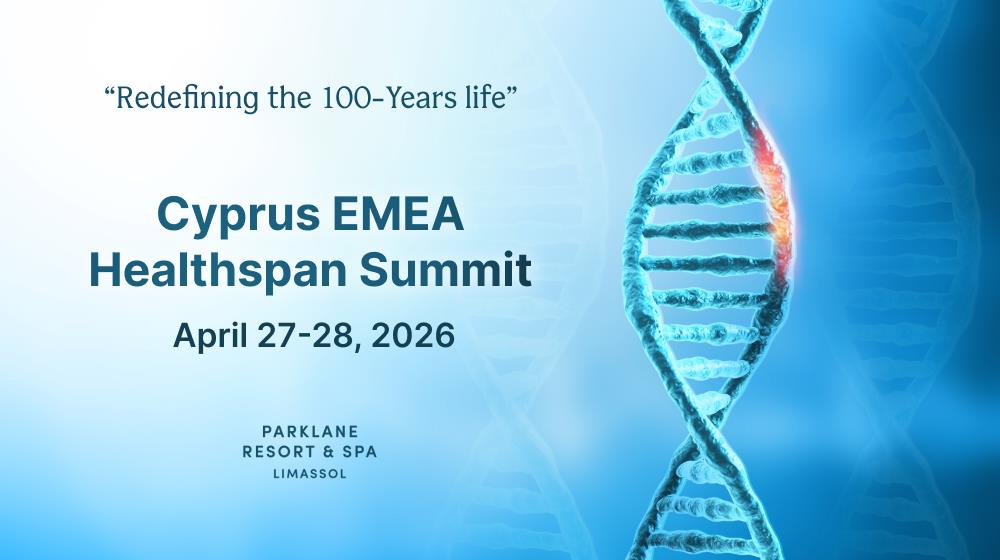
The strategies to navigate this transition will be the focal point of the upcoming Cyprus EMEA Healthspan Summit, taking place on April 27-28, 2026, at the Parklane Resort & Spa in Limassol.
Organized by the St. Moritz Longevity Forum, this summit represents a critical convergence of science and capital. Under the banner of "Innovating Life: Shaping the Future of Longevity," the event will host an elite cohort of biotech pioneers, institutional investors, and policy architects. The agenda is set to move beyond the laboratory, focusing on the real-world deployment of longevity solutions across the EMEA region.
As Cyprus cements its reputation as a burgeoning hub for health innovation, the summit serves as a timely reminder: the longevity economy is no longer a distant prospect. It is here, it is worth trillions, and it is redefining the meaning of wealth in the 21st century.
Information and Registration:Cyprus EMEA Healthspan Summit
For more information and registrations, click here.
Organiser: Cyprus EMEA Healthspan Summit
