






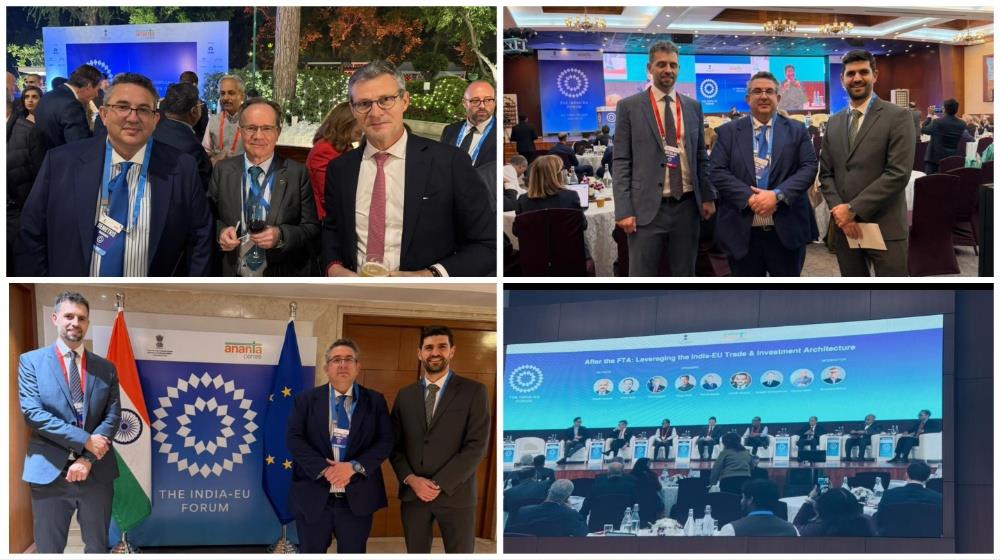
The Chief Scientist of the Republic of Cyprus, Demetris Skourides, accompanied by Heraklitos Iosifides, Deputy Chief of Mission at the Cyprus High Commission of the Republic of Cyprus in India, and Mr Nicolas Kyriakides, President of the Cyprus Forum, recently concluded an official visit to India, where he participated in the EU–India Forum, a closed, invitation-only event held on 6–7 February 2026 in New Delhi.
The Forum was hosted by the Minister of External Affairs, Dr S. Jaishankar, and convened by the Ananta Centre in partnership with the Ministry of External Affairs of India.
As noted in an announcement from the Chief Scientist's office, the event followed the 16th India–EU Summit and the historic conclusion of the India–EU Free Trade Agreement (FTA). Its objective was to translate these high-level political agreements into actionable outcomes across several critical pillars, including Security and Defence, with a focus on maritime security and Indo-Pacific cooperation; Technology, encompassing discussions on semiconductors, cybersecurity, and AI governance; Connectivity, with particular emphasis on advancing the India–Middle East–Europe Economic Corridor (IMEC); and Climate and Energy, highlighting strategic alignment in the clean energy transition.
High-level diplomatic dialogue
The Forum was designed as a high-level diplomatic dialogue, bringing together more than 200 senior policymakers, advisors, industry leaders, technocrats, corporations, startups and strategic experts from India and all 27 EU Member States, with the aim of fostering deeper strategic convergence, encouraging fresh ideas, and translating high-level commitments into concrete initiatives at a pivotal moment for the India–EU partnership.
More specifically, the dialogue focused on the further development of the trade and investment architecture following the conclusion of the India–EU Free Trade Agreement, with an emphasis on boosting bilateral trade, deepening economic engagement, and delivering mutual benefits. This advancement was described by India’s Minister of External Affairs, Dr S. Jaishankar, as a “game changer.”
The dialogue also focused on security and defence cooperation, including maritime security, evolving geopolitical dynamics, Indo-Pacific engagement, counterterrorism, and hybrid threats; critical and emerging technologies, such as semiconductors, cybersecurity, digital governance, innovation ecosystems, and artificial intelligence; connectivity, energy, climate action, and sustainability; as well as talent and mobility flows, alongside broader areas including defence collaboration, technology transfer, and people-to-people ties.
Identifying and assessing opportunities for Cyprus
Throughout the Forum, the Chief Scientist of the Republic of Cyprus, Demetris Skourides, engaged extensively with leaders from across the European Union and India, identifying and assessing opportunities for Cyprus to further strengthen its positioning in innovation, research excellence, and technological development. These opportunities will be advanced in the coming months, beginning with the forthcoming visit to India by the Deputy Minister of Research, Innovation and Digital Policy, Dr Nicodemos Damianou, as well as the Chief Scientist’s participation in the India AI Impact Expo 2026, which will take place in New Delhi during the week commencing Monday, 16 February 2026.
Building on discussions initiated in India, the Chief Scientist will focus on how innovation and commercialisation can be accelerated through the EU–India corridor, how digital technologies can progress through targeted bilateral engagements, and how collaboration across the EU and India can evolve into an operational India–Cyprus innovation engine. This initiative aims to connect digital infrastructure, mobility and talent flows, and investment pathways, enabling startups and innovation ecosystems to establish and scale their presence in Cyprus.
The Forum was organised by the Ananta Centre, a leading think tank dedicated to policy research, leadership development, and fostering dialogue on critical global issues. The event featured multiple thematic streams focused on the EU–India strategic trajectory for the next decade; theories of concentration; investment opportunities and architecture; redefining homeland and the future of warfare; security and emerging threats; the global talent contest; mobility and skills for the new workforce; innovation alignment between India and the EU; approaches to artificial intelligence; and the emerging concept of the Five-Dimension Battlefront and its implications for the future of defence.
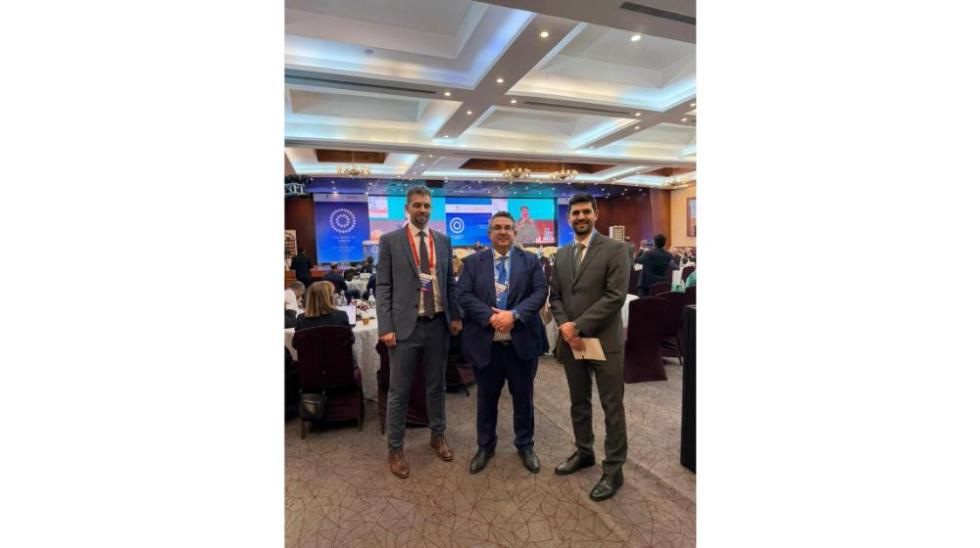
Prominent political leaders and policymakers
Sessions were addressed by prominent political leaders and policymakers, including India’s Minister of External Affairs, Dr S. Jaishankar; India’s Minister of Commerce and Industry, Piyush Goyal; and Ashwini Vaishnaw, India’s Minister of Railways, Information and Broadcasting, and Electronics and Information Technology. Contributions were also made by former ministers, representatives of leading think tanks, senior policymakers, and Professor K. Vijay Raghavan, the immediate former Principal Scientific Adviser to the Government of India. The Summit further featured a special fireside chat with the Greek Minister of National Defence, Nikos Dendias.
During the visit, Skourides engaged with Hervé Delphin, Ambassador of the European Union to India; Jean-Eric Paquet, Ambassador of the European Union to Japan; and Dr Sethu Saveda Suvana, CEO and Founder of ReOrbit.
A key focus of the Summit was the development of interoperable standards to accelerate AI ethics and safety across the European Union. In this context, the Deputy Director-General of the European Commission, Maria Cristina Russo, underscored the importance of leveraging artificial intelligence in science to strengthen Europe’s competitive advantage. She also emphasised the critical role of cross-border collaboration in enabling innovation to flow seamlessly between Europe and India. India’s Minister of Commerce and Industry, Piyush Goyal, highlighted that several EU companies operating in India have achieved growth exceeding 1,000-fold, stating that “if you want to scale big, India is the game.”
Autonomy, sovereignty, and trustworthy AI
Skourides noted that, as Cyprus currently holds the Presidency of the Council of the European Union, with a strong focus on digital autonomy, sovereignty, and trustworthy AI under the portfolio of the Minister of Digital Policy, Research and Innovation, it is imperative to translate these strategic opportunities into concrete operational pathways. These pathways can leverage Cyprus and India to create mutual research initiatives, joint innovation programmes, and shared investment opportunities,” paving the way for the official visit of H.E. President Christodoulides to India later this year.
In parallel, the Chief Scientist held discussions with Professor K. Vijay Raghavan, former Principal Scientific Adviser to the Government of India, focusing on the emerging potential of artificial intelligence in biotechnology and the medical sciences. These discussions underscored a growing view that artificial intelligence is likely to achieve its first truly transformative impact within the biotechnology sector.
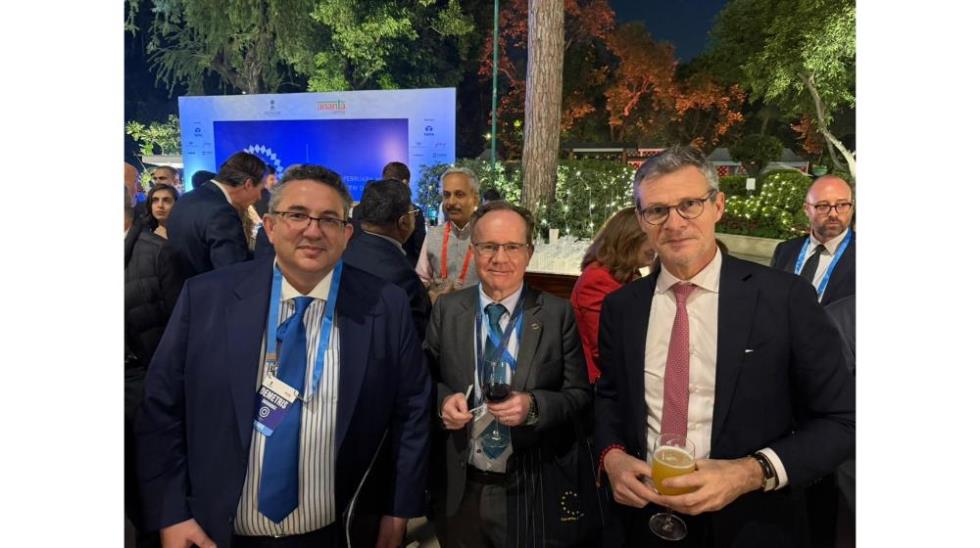
The Chief Scientist highlighted several sessions as particularly significant, including the Inaugural Plenary Session, 'India and the EU: A Strategic Course for the Next Decade,' delivered by Dr S. Jaishankar; 'After the FTA: Leveraging the India–EU Trade and Investment Architecture'; 'Talent Contest: Mobility, Skills, and the New Global Workforce – Redefining Mobility as a Pathway to Work Rather than Citizenship'; 'Innovation Rules: Aligning India–EU Approaches to AI – Charting a Shared Roadmap for AI Governance'; 'Shaping the Future of Tech: Pathways for Trust, Scale and Strategic Advantage'; 'Orbital Futures: Exploring a Space Partnership'; and 'Five-Dimension Battlefront: Building Resilient Defence Systems.'
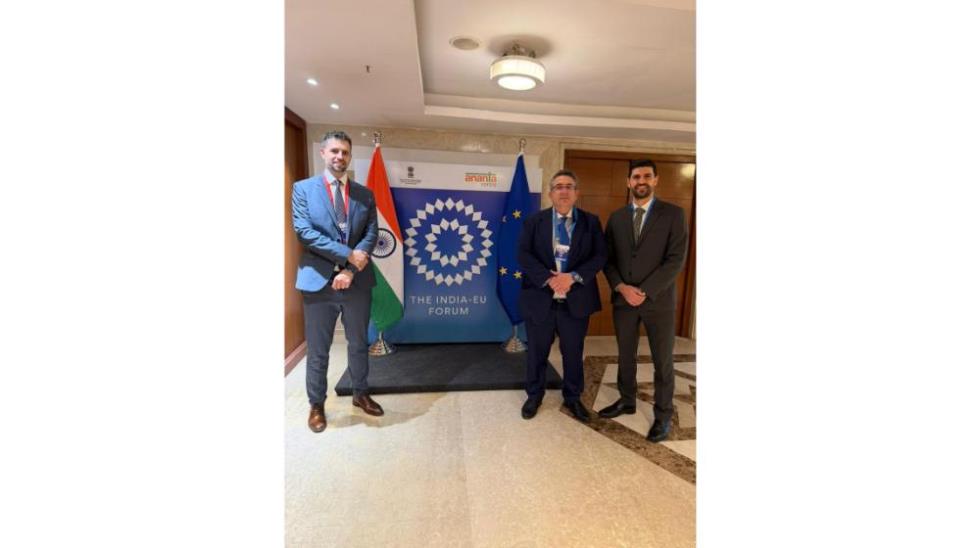
The convergence of security, space, and defence
The session entitled 'Five-Dimension Battlefront: Building Resilient Defence Systems' examined the convergence of security, space, and defence. It provided insight into evolving global security challenges and regional dynamics, highlighting how contemporary warfare increasingly leverages space capabilities, advanced defence systems, and autonomous technologies.
The exchange between Chief Scientist Demetris Skourides and Andrea Margelletti, President and Chairman of the Centro Studi Internazionali and Adviser to the Italian Minister of Defence, reaffirmed that European sovereignty is closely linked to leadership in artificial intelligence across cyber warfare, autonomous systems, and quantum superiority. Margelletti further elaborated on Italy’s approach, which seeks to balance the speed of military procurement with the upskilling of operators capable of identifying, operating, and neutralising any type of drone as a critical operational capability.
During a special fireside chat, Greece’s Minister of National Defence, Nikos Dendias, underscored the growing strategic linkages between the Mediterranean and India, noting that Greece is pivoting towards “smart” defence by moving beyond heavy hardware and placing greater emphasis on defence technology innovation. Dendias expressed optimism about exploring cooperation and co-development opportunities with India’s defence technology ecosystem. In the session 'Talent Contest: Mobility, Skills, and the New Global Workforce,' India emphasised that the continued expansion of its semiconductor and artificial intelligence industries will require access to European talent. In light of India’s current gaps in research depth, Cyprus was identified as a potential strategic partner capable of contributing to advanced research collaboration and talent mobility.
The EU’s AI Continent Plan, the AI Apply Programme, and the AI for Science initiatives
During the session 'Innovation Rules: Aligning India–EU Approaches to AI,' Maria Cristina Russo, Director for Global Approach and International Cooperation in Research and Innovation at DG Research and Innovation, presented the EU’s AI Continent Plan, the AI Apply Programme, and the AI for Science initiatives. She outlined the European Union’s strategic focus on strengthening AI capabilities to safeguard and advance its research and innovation ecosystem.
The session 'Orbital Futures: Exploring a Space Partnership' examined the evolution of space exploration towards more Earth-centric missions, highlighting opportunities for joint satellite initiatives that combine India’s launch capabilities with Europe’s technological strengths. This model aims to foster complementary commercial partnerships and accelerate collaboration between European space agencies and India. Two Finnish startups demonstrated how innovative space architectures have enabled them to outperform traditional space organisations, underscoring the significant emerging potential within the space sector.
India’s vision for digital innovation was further articulated by Shri S. Krishnan, Secretary of the Ministry of Electronics and Information Technology (MeitY) of the Government of India, who outlined the second phase of India’s national semiconductor strategy and its role in strengthening the country’s technological self-reliance.
Finally, during the Space Strategy session, discussions centred on space as a pillar of strategic autonomy, the importance of resilient supply chains, and the role of early investment in foundational research as a determinant of long-term national success. This was illustrated through the case studies of two Finnish startups that invested in foundational research a decade before bringing their solutions to market, a strategic foresight that distinguished the Norwegian innovation ecosystem from others.
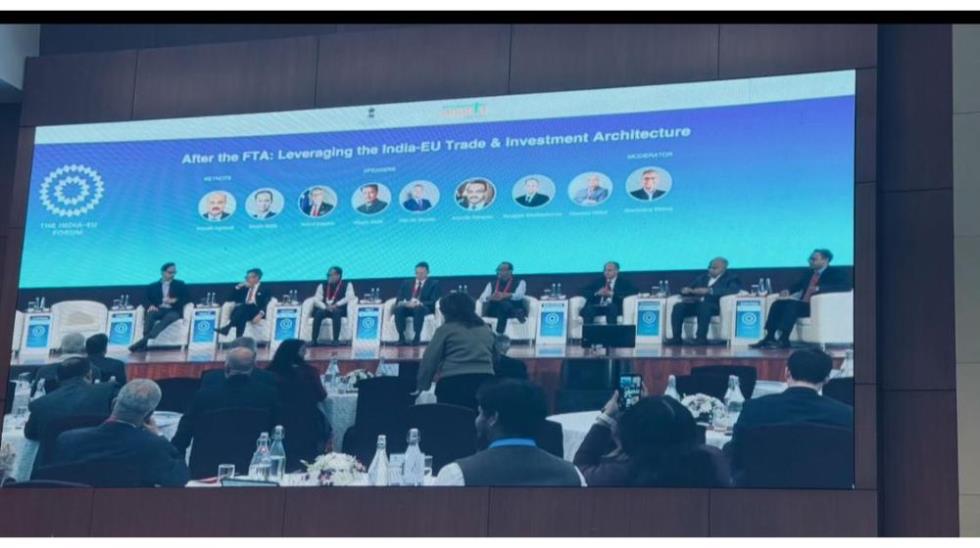
Research in defence leveraging artificial intelligence technologies
Exploring further applications of research in defence leveraging artificial intelligence technologies, the Chief Scientist of the Republic of Cyprus, Demetris Skourides, exchanged views with Dr D. Gowrisankar, Senior Scientist at the Indian Space Research Organisation (ISRO) and Director of the Office of International and Inter-Agency Cooperation (OIIC) at ISRO Headquarters, as well as Dr Kristi Raik, Director of the International Centre for Defence and Security in Estonia.
On the sidelines of the event, Skourides had the opportunity to exchange views with Lukas Savickas, Member of the Parliament of Lithuania and Former Minister of Economy and Innovation, and Timo Olavi Harakka, Former Minister of Labour in Finland, discussing local initiatives on how both nations have used specialized committees to create awareness amongst policy makers on technology matters. In addition, Skourides also met with Jeevan Talegaonkar, Vice President of 5G Business at Jio, to explore Jio’s AI product platforms and assess how Cyprus’s research and innovation ecosystem can create pathways for collaboration and entry into new markets.
Skourides stated that, “Cyprus is uniquely positioned at the intersection of Europe, the Middle East, and Asia to act as a trusted innovation and technology gateway. As Cyprus holds the Presidency of the Council of the European Union, with a clear focus on digital autonomy, sovereignty, and trustworthy AI, our responsibility is to move decisively from dialogue to delivery.
He added, Our objective is clear: to transform strategic partnerships into tangible economic growth, scientific excellence, and high-value opportunities that reinforce Cyprus’s role as a regional hub for innovation and global collaboration.”
