






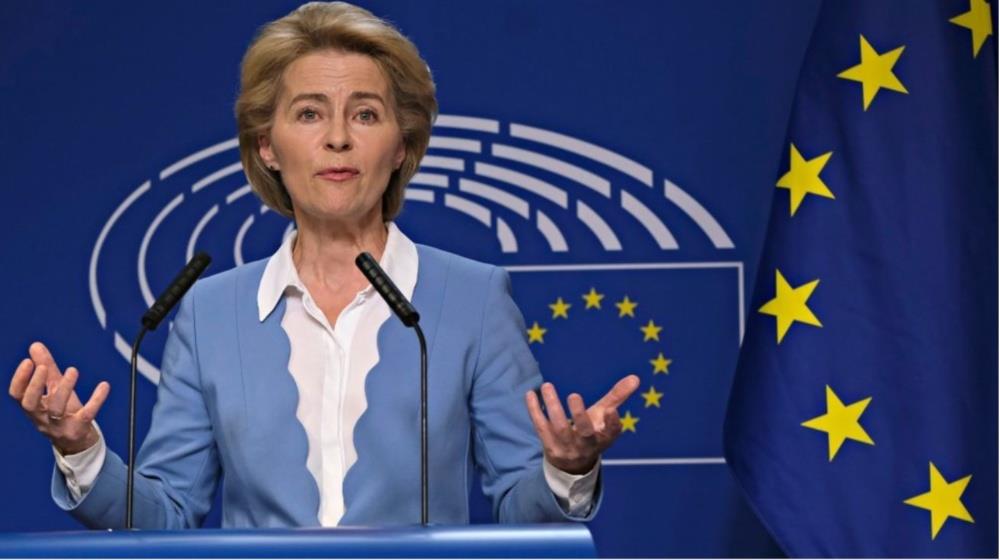
Changes to the way the Common Agricultural Policy will be financed in the next Multiannual Financial Framework 2028–2034 have been unveiled in a letter sent by European Commission President Ursula von der Leyen to President Nikos Christodoulides, in his capacity as President-in-Office of the Council of the EU, and to European Parliament President Roberta Metsola.
The letter makes it clear that the CAP will remain a central pillar of EU policy, with a ringfenced budget that cannot be cut or reallocated. It also constitutes another attempt by von der Leyen to smooth farmers’ reactions ahead of the fast-tracked ratification of the EU–Mercosur agreement (Brazil, Argentina, Uruguay and Paraguay).
As von der Leyen states in her letter, “the Common Agricultural Policy in the 2028–2034 financial framework will continue to play its role as the main EU policy tool to provide farmers with a fair income, to ensure long-term food security and to improve the attractiveness and living standards in rural areas”, adding that despite being embedded in the National and Regional Partnership Plans, “farmers will benefit from a ringfenced budget amounting to €293.7 billion”.
In order to ensure immediate liquidity at the start of the new programming period, the Commission President proposes early access to mid-term review resources, explaining that “when submitting their initial plans, Member States will have access to up to two thirds of the amount normally available at the mid-term review”, which “represents around €45 billion that can be mobilised immediately to support farmers”.
At the same time, the ringfenced CAP budget is complemented by reinforced crisis-management instruments. As stressed in the letter, “the ringfenced amounts for the Common Agricultural Policy and the early access to mid-term review resources will come in addition to the doubled amount of €6.3 billion available for addressing market disturbances and stabilising agricultural markets, the so-called Unity Safety Net”. In addition, “farmers will benefit from the possibility to receive crisis payments out of the 10% flexibility amount in the National and Regional Partnership Plans in case of natural disasters, adverse climatic events or animal diseases”.
Special emphasis is also placed on rural areas, since, as noted, “at least 10% of the resources of each National and Regional Partnership Plan will have to be dedicated to supporting investments in those territories”. The rural target “will amount to €48.7 billion for rural areas”, with the possibility to rise “to as much as €63.7 billion through Catalyst Europe loans”.
In conclusion, von der Leyen argues that “the combination of these policy and budgetary tools will provide the farmers and rural communities with an unprecedented level of support, in some respects even higher than in the current budget cycle”, stressing that the Commission will continue to support the European Parliament and the Council until the adoption of the new Multiannual Financial Framework.
The timing of the letter is particularly significant, as it coincides with an informal meeting of EU agriculture ministers convened by the Commission at its headquarters in snow-covered Brussels, rather than at the Council, ahead of the planned signing of the EU–Mercosur agreement on 12 January in Paraguay. For this to happen, EU ambassadors must give the green light by Friday, enabling von der Leyen to travel to Paraguay in time for the signature of the agreement.
(Source: CNA)
