







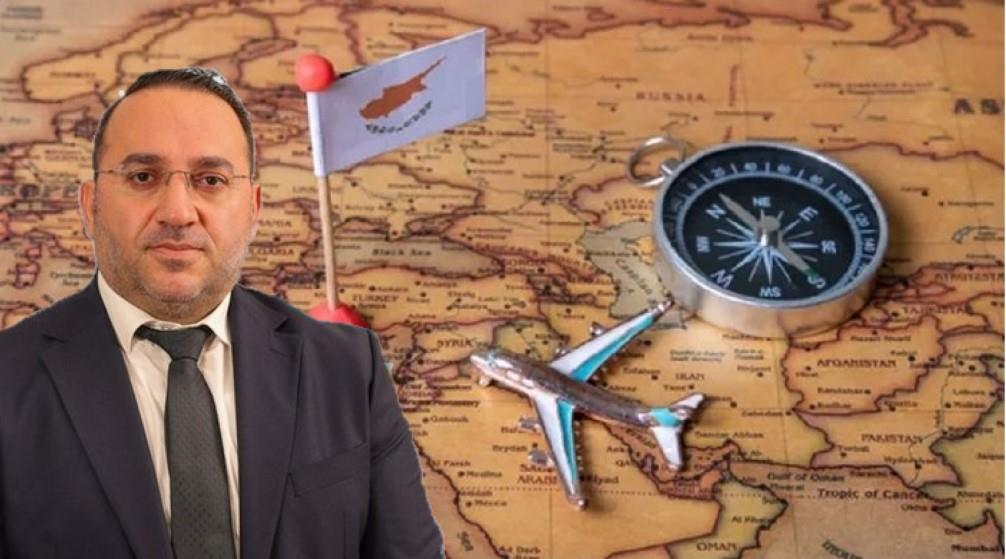
Cyprus’ tourism sector is expected to end 2026 with a single-digit decline in arrivals and revenue compared with 2025, but with positive results compared with 2024, despite facing the biggest tourism crisis in decades, Deputy Minister of Tourism Kostas Koumis expects.
“Based on initial planning and estimates, 2026 was originally expected to be another milestone year for Cyprus tourism. However, it turned into a year in which the sector was called upon to face the biggest tourism crisis in decades as a result of external factors,” the Deputy Minister said.
Despite the challenges, he estimated that “the year will end with a single-digit decline in arrivals and revenue compared with 2025, which was a record year, while maintaining positive results compared with 2024."
This development, he added, "confirms the resilience and competitiveness of Cyprus tourism, despite the country’s longstanding geographical disadvantages, such as its distance from the major tourism markets of Central and Western Europe, as well as the shift in demand towards Western Europe during March and April.”
Koumis identified planning for tourism over the coming decades as a key priority, outlining six pillars: competitiveness, infrastructure, destination management, sustainability, the use of technology and artificial intelligence, and people.
Referring to infrastructure, he pointed out that the European Union’s Multiannual Financial Framework for the 2028–2034 period represents an opportunity to upgrade both public and private infrastructure. On sustainability, he stressed that “it is not a passing trend but a necessity, as it requires a balance between economic activity, environmental protection and social cohesion.”
ACTE President Akis Vavlitis highlighted the need for Cyprus tourism to adapt to the new reality, stressing that a destination’s success would no longer be measured solely by the number of arrivals.
“The success of a destination will no longer be assessed exclusively on the basis of visitor arrivals, but also in terms of its actual economic impact and the added value it generates,” he said.
He added that “tourism in 2030 and beyond is being shaped today. Destinations that invest in authenticity, technology, human capital, sustainability, infrastructure and the quality of their tourism product will be those that reap the greatest benefits.”
The ACTE President also stressed that “the aim of the conference is not simply to hold another gathering of tourism industry stakeholders, but to put forward meaningful proposals that can be readily utilised by the relevant stakeholders.”
As he noted, “ACTE’s objective is to establish Cyprus as a high-quality tourism destination that is resilient to geopolitical challenges, environmentally responsible, digitally smart and socially equitable, for the benefit of local communities, employees and businesses operating in the sector.”
Maria Kouroupi, Director of Aviation Development, Marketing & Communication at Hermes Airports, analysed the prospects and challenges for Cyprus’ air connectivity, placing particular emphasis on emerging Eastern markets.
“Significant growth prospects are emerging in Eastern markets, with India expected to record annual growth of more than 6% over the next decade, Southeast Asia around 5.3% and the Gulf countries approximately 4%,” she said.