






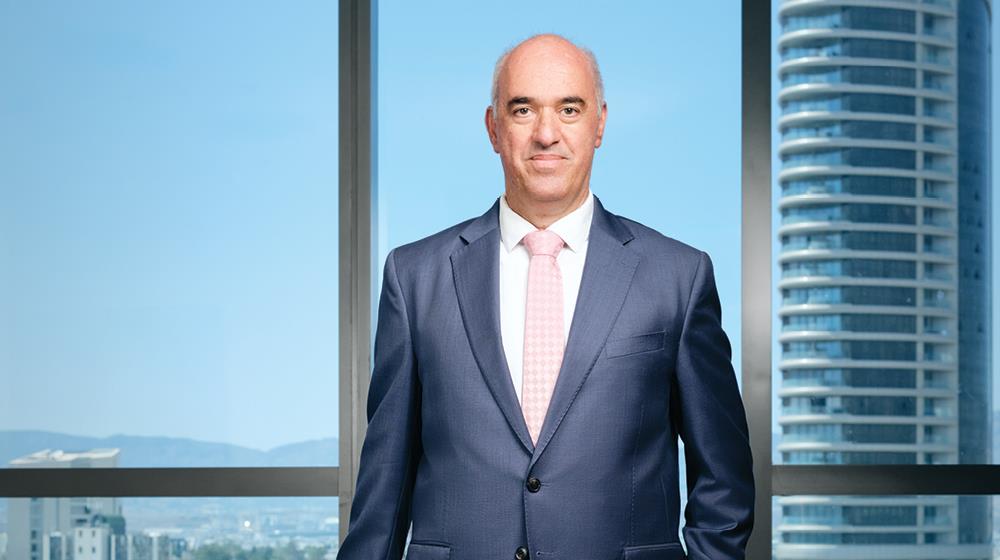
"The outlook for 2027 involves a constructive environment for cyclical assets like equities, despite the prevailing uncertainty around Central Bank policy rates and ongoing geopolitical conflicts," Antonis Antoniou, Senior General Manager, Wealth Management & Global Markets, Eurobank Limited suggests.
In a recent interview with GOLD magazine, the expert also weighs in on what kind of returns investors can reasonably expect across the main asset classes in the coming year while also revealing which equity markets, sectors and regions look most attractive in 2027.
He also suggests that, "We can identify the two main investment risks for 2027: an aggressive Central Bank tightening cycle, or a broad equity market sell-off."
Among other things, Antoniou also explains why it is important for investors to understand that the nature of risk has changed both within and across asset classes, pointing out, "A resilient portfolio is the one that can lean into opportunities, while at the same time allocating to diversifiers to create a cushion from the impact of different types of shocks."
What is your investment outlook for 2027 and what are the main opportunities and risks?
The outlook for 2027 involves a constructive environment for cyclical assets like equities, despite the prevailing uncertainty around Central Bank policy rates and ongoing geopolitical conflicts. Over the past quarter, fixed-income securities have been more sensitive to higher energy prices than equities, providing attractive entry levels, especially for higher duration in Europe. Global macro risks continue to be skewed to the upside, resulting in higher inflation but also higher nominal growth.
However, our base scenario includes a relatively stable macro environment with positive earnings, low recession risk, and energy disinflation over the coming year as the energy supply shocks fade. We can identify the two main investment risks for 2027: an aggressive Central Bank tightening cycle, or a broad equity market sell-off.
What kind of returns can investors reasonably expect across the main asset classes in 2027?
In Global equities, investors can expect high single-digit annualised returns, driven mainly by robust earnings growth. AI and technology adoption is currently under scrutiny from the investing community but this can translate into a major structural reason for equity optimism, especially for the US, where we believe that productivity gains will largely accrue to shareholders.
For fixed income, starting yields above 3% for European government bonds look attractive. Investors can lock in yields not seen in almost 20 years, despite inflation uncertainty weighing on short maturity bonds, and fiscal risks impacting the long end of government bond curves.
Which equity markets, sectors and regions look most attractive in 2027?
The current rate of technology advancements favours the early leaders of the artificial intelligence (AI) race. The ongoing capex and long-term expected productivity boost are mostly driven by Large Cap US stocks, which is currently the area of interest. Over the long term, technology normalisation is a reasonable expectation as the benefits of AI are diffused away from a single sector.
Which sectors would you highlight as ones to watch in 2027 and why?
The AI capex is not only boosting the profit margins of hardware suppliers but also those of the technology infrastructure companies that stand to benefit from capitalising on this spending in the years to come. These should be the companies to watch in 2027, in particular the major hyperscalers like Amazon, Microsoft, Alphabet and Meta.
Where do you see the best opportunities in fixed income in 2027?
European Government bonds remain the core allocation choice due to the historically high starting yield. However, persistent inflation raises the need to balance the allocation with inflation-linked bonds, partially offsetting the risk of low real returns. In addition, both European High Yield and Investment Grade default levels remain low, offering a constructive story for investors looking for income. It is evident that the European Credit market remains healthier than in the past, as riskier borrowers raise capital in the private/direct lending segment, with public issuance reserved for the more profitable, cashflow generating companies.
Beyond equities and fixed income, which alternative investments look particularly interesting in 2027?
Higher stock-bond correlation demands further diversification. Adding a blend of diversified hedge fund strategies, precious metals and private markets (private equity/private credit), can enhance risk-adjusted returns, compared with a simple 60/40 balanced portfolio. Real assets can also prove resilient in the face of persistent inflation, targeting exposure in global infrastructure, global real estate, and global transportation.
Consider a hypothetical 60-year-old investor who has recently sold his company and has €10 million available to invest. He has two adult children and wants to grow the family’s wealth over the long-term while generating a sustainable level of income. How would you allocate the €10 million across different asset classes and why?
40%/40%/20% in Fixed Income, Equities, Alternatives is a fundamental starting point. Diversification, relative to themes as well as across assets, is essential to further strengthen portfolio resiliency and positive risk-adjusted returns. A balanced stock-bond portfolio can offer solid returns in the current environment, through a combination of quality income and capital growth.
However, investors should understand that the nature of risk has changed both within and across asset classes. A resilient portfolio is the one that can lean into opportunities, while at the same time allocating to diversifiers to create a cushion from the impact of different types of shocks. Negative supply shocks need inflation-proof hedges and real assets like precious metals and core infrastructure and real estate. Demand shocks, on the other hand, emphasise the role that duration can play in modern portfolios. Let’s not forget the cyclicality of central bank policy rates and how investors that overlook long-dated bonds can increase their re-investment risk given a fall in interest rates.
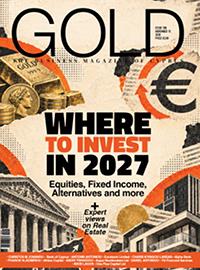
This interview first appeared in the November edition of GOLD magazine. Click here to view it.