

As alternative investment funds (AIFs) expanded into private markets, fundraising became increasingly linked to distribution structures, regulatory positioning and strategic jurisdiction selection. The implementation of AIFMD II introduced new considerations for fund managers, prompting them to reassess the structure of their investment vehicles, their ability to market funds cross-border across Europe, and their access to both institutional capital and private investors.
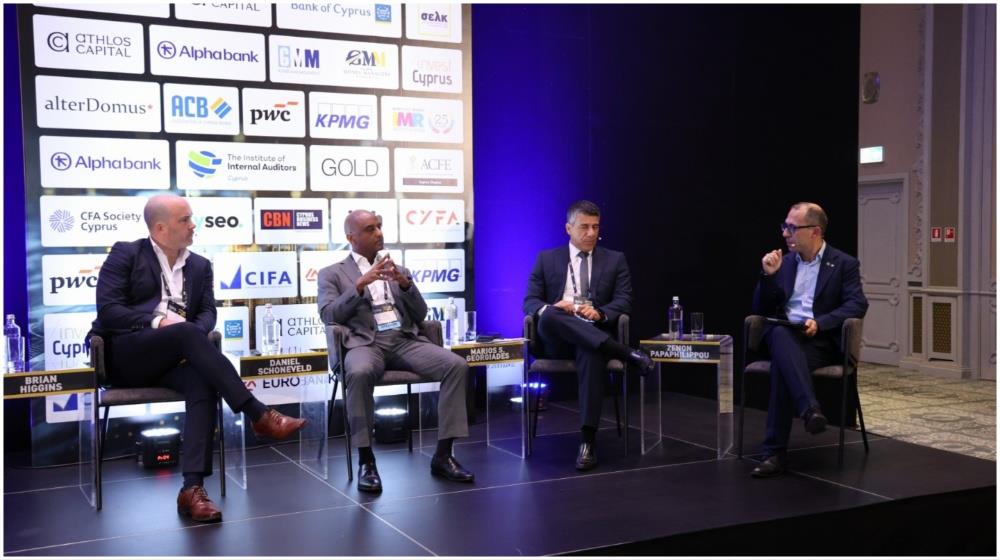
These developments were discussed at the 12th International Funds Summit & EXPO 2026 by Daniel Schoneveld, Principal, Client Solutions at Hamilton Lane; Brian Higgins, Senior Product Manager, Alternatives at Clearstream; and Marios Georgiadis, Manager, Institutional Wealth & Custody at Bank of Cyprus.
Marios Georgiadis explained that when a fund manager based in Cyprus uses the European passporting framework to market its funds cross-border, the first step is to clearly define its target investor profile, desired fundraising size, liquidity requirements, and risk-return objectives. He added that the strategy should then initially focus on two or three carefully selected EU member state markets where the manager already has an established presence, strong sponsor relationships or direct client access. He also pointed out that, when choosing to work with a placement agent, the key selection criterion should not simply be a recognised brand name, but rather the agent’s expertise in the specific investment strategy and investor category.
According to Daniel Schoneveld, the shift towards private markets is still in its early stages, but demand from different investor segments is substantial and is driving rapid modernisation across the industry. Comparing the current landscape with the past, when access was largely restricted to a closed circle of personal connections, he noted that professional fund managers, a robust regulatory framework and strong infrastructure are now making private markets far more accessible. As he emphasised, private markets are gradually following the example of public markets, where investors can now gain access to a wide range of funds at the click of a button. He stressed, however, that this broader access makes transparency and proper investor information more essential than ever, ensuring that investors fully understand where their capital is being deployed and can construct their portfolios accordingly.
Finally, Brian Higgins highlighted the critical importance of structured data for the effective operation and digitalisation of the alternative investments industry. As he explained, when data is based on standardised and commonly accepted market definitions, the risk of misinterpreting financial information and fund documentation is eliminated. Referring to recent assessments conducted by industry working groups, he stressed that data standardisation and consistency are essential prerequisites for process automation and the development of digital workflows, concluding emphatically that “it all starts with structured data”.
The discussion was moderated by Zenon Papafilippou, General Manager of CISCO, Bank of Cyprus.
The 12th International Funds Summit & EXPO 2026 was presented by CIFA.