



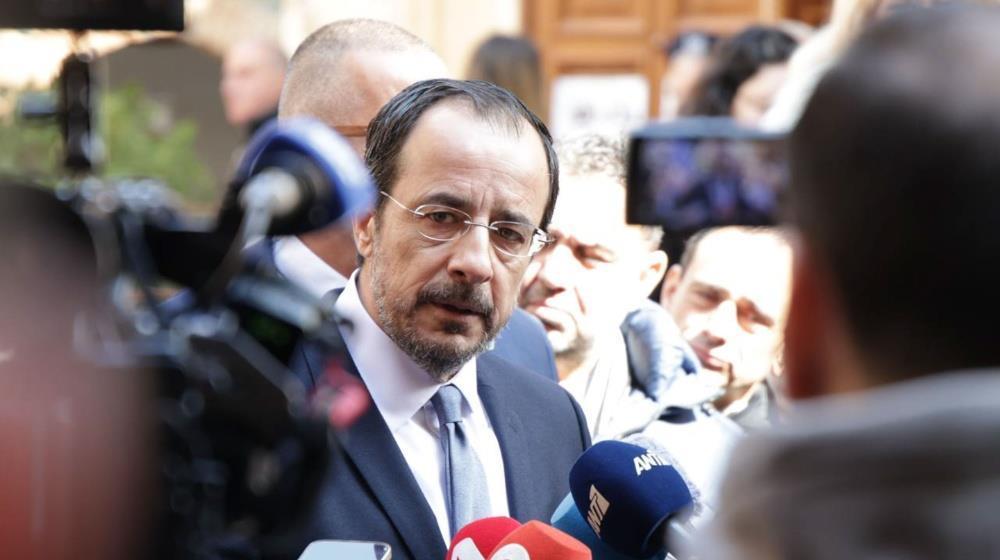
The informal meeting of EU heads of state and government takes place in Dublin today Friday, 13 November under the chairmanship of European Council President António Costa, and with the participation of Cyprus President Nikos Christodoulides.
The meeting, which will also be attended by European Commission President Ursula von der Leyen, will be the first discussion at European leaders’ level specifically dedicated to Artificial Intelligence (AI).
As António Costa, President of the European Council, has noted, given the pace at which AI is evolving, a dedicated discussion is now considered necessary on the opportunities it offers and its transformative socioeconomic impact.
According to an official briefing, Friday’s discussion is expected to focus on three aspects. The first concerns Europe’s position in the global AI race, as well as the strategic challenges it faces in strengthening its competitiveness and safeguarding its technological sovereignty in the field of AI.
The broader impact of AI on European societies
The second point concerns the broader impact of AI on European societies, as well as issues relating to security and trust, while the third aspect will focus on Europe’s next steps in the field of AI.
The discussions are also expected to feed into the forthcoming informal European Council meeting (Leaders’ Retreat), on 5 February, 2027, which will review the two previous similar retreats on defence and security and on competitiveness.
The first discussion at the informal meeting will begin with an introductory presentation by Mistral AI CEO Arthur Mensch, followed by questions, answers and reactions from the leaders. Proceedings will then continue with a second discussion, which will open with a presentation by Nobel Prize-winning researcher Geoffrey Hinton.
Regarding Cyprus’ National AI Strategy, it is noted that it covers the period up to 2032 and was adopted by the Council of Ministers on 10 November. The Strategy is aligned with European priorities and aims to establish Cyprus as a trusted AI hub in the Eastern Mediterranean by strengthening productivity, skills and domestic technological capabilities.
Particular emphasis is placed on developing national computing infrastructure and making use of European capabilities, including EuroHPC, AI Factories and Pharos-CY.
Cyprus supports Europe’s AI ambitions
According to the official briefing, Cyprus supports Europe’s AI ambitions by strengthening European capabilities in AI development and deployment, with an emphasis on competitiveness, productivity, resilience and technological sovereignty, in line with its new National AI Strategy.
Furthermore, Cyprus supports open strategic autonomy, as opposed to technological isolationism, by reducing critical dependencies while maintaining international cooperation.
Through the Ministry of Education, Cyprus is promoting the modernisation of school curricula, the strengthening of digital skills and AI literacy, as well as the upgrading of Technical and Vocational Education and Training. These efforts are being pursued alongside teacher training and the promotion of the Technical Gymnasium on a pilot basis, as well as the introduction of career guidance and vocational education in primary education.
Cyprus welcomes the proposed EU Kids Act, stressing the need for proportionate rules, reliable age verification, and stronger media literacy and parental supervision.
At the same time, Cyprus is a member, alongside France, Denmark, Greece, Ireland, Italy and Spain, of a group of seven Member States working to develop and implement a common online age-verification system, establishing an age limit of 15.
Finally, it is noted that Cyprus on 9 November co-signed the G7 Leaders’ Declaration, which calls for a safer digital environment for minors and was published during the G7 Summit held last June in Evian, France.
(Source: CNA)