

“I believe that insurance will be fundamentally reshaped by artificial intelligence, data analytics, digitalisation and climate change. Insurance will increasingly move from simply compensating losses towards predicting, managing and preventing risk. But as more processes become automated, companies must decide what kind of relationship they want with their customers,” Emilios Pyrishis, Chairman of Atlantic Insurance Co Public Ltd, says.
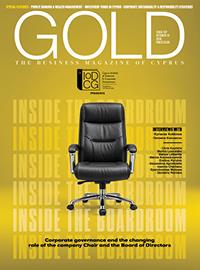
In an interview with GOLD magazine, Pyrishis weighs in on the changes corporate governance is facing, and outlines what makes for an effective relationship between the Board and executive management.
What does your role as Chair look like in practice? Where do you draw the line between providing oversight and becoming involved in the organisation’s day-to-day operations and decision-making?
At Atlantic, my role combines strategic leadership with executive responsibility, so maintaining the right balance requires discipline. As Chair, my priority is to ensure that the Board remains focused on long-term strategy, capital strength, risk appetite, governance and the sustainability of the business. At the same time, strategy must remain connected to customers and their needs. Atlantic has always been built around a personal, customer-centric service model and one of my responsibilities is to ensure that, as we grow and adopt new technologies, we do not lose the agility, accessibility and personal relationships that distinguish us.
Is corporate governance in Cyprus genuinely changing the way companies are run, or does a box-ticking mentality still persist? How has the role and the expectations of a Chair evolved over the past decade?
Our agenda increasingly covers regulatory demands, market consolidation, competition, geopolitical uncertainty, technological change, cybersecurity and climate-related risks. Of these, climate change and natural catastrophes concern me particularly. Their increasing frequency and severity can create losses beyond the capacity of individual insurers and leave significant parts of society underinsured. Addressing this requires disciplined underwriting, strong reinsurance partnerships and, potentially, broader public-private solutions. We are also focused on ensuring that technology makes insurance simpler and faster without making it impersonal.
How do you distinguish between the roles of the Chair and CEO and what makes for an effective relationship between the Board and executive management? How do you handle situations when different views arise?
The distinction is fundamentally between direction and execution. Executive management develops proposals and implements strategy; the Board challenges assumptions, establishes boundaries and approves major strategic decisions. An effective relationship requires trust, transparency and open communication. The Board must give management enough freedom to remain agile and responsive while ensuring that the company stays within its strategic, financial and risk parameters. When different views arise, I encourage open discussion based on facts, risk and the long-term interests of shareholders, policyholders and the company.
What has been the most difficult decision you have had to make as Chair and why?
One of the most demanding episodes during my leadership was the aftermath of the Mari explosion in 2011. Atlantic ultimately honoured its contractual obligations through a €132 million settlement to the Electricity Authority of Cyprus. The difficult issue was not whether a valid obligation should be honoured – that principle was clear – but ensuring that an event of such exceptional magnitude was managed responsibly while protecting the insured, the company and its stakeholders. It reinforced a principle deeply rooted in Atlantic’s culture: an insurer is truly judged when the difficult moment arrives.
Looking five to ten years ahead, what development do you believe could fundamentally reshape your industry, and what should boards be doing now to prepare for it?
I believe that insurance will be fundamentally reshaped by artificial intelligence, data analytics, digitalisation and climate change. Insurance will increasingly move from simply compensating losses towards predicting, managing and preventing risk. But as more processes become automated, companies must decide what kind of relationship they want with their customers. At Atlantic, we are clear: technology must support the human relationship, not replace it. Our competitive strength is our personal service, accessibility and agility. Boards should invest in technology, data, cybersecurity and people while ensuring that innovation remains aligned with culture and values. The future will be more digital but trust and personal service will remain irreplaceable.
Is corporate governance in Cyprus genuinely changing the way companies are run, or does a box-ticking mentality still persist? How has the role and the expectations of a Chair evolved over the past decade?
In a highly regulated sector such as insurance, corporate governance has become far more substantive. Risk management, compliance, internal controls and regulatory obligations are now embedded in everyday decision-making. Good governance cannot be a box-ticking exercise; it is about culture, behaviour and accountability. The modern Chair is expected to encourage constructive challenge, safeguard transparency and ensure that risk and long-term sustainability are properly considered. At the same time, governance should not become so bureaucratic that it prevents an organisation from reaching its targets. Atlantic has long incorporated transparency, Board independence and formal governance structures into its approach.
Atlantic Insurance Co. Public Ltd
Atlantic Insurance Co. Public Ltd is a Cyprus-based general insurance company established in 1983 by Zenios Pyrishis and a group of Cypriot entrepreneurs. Listed on the Cyprus Stock Exchange since 2000, the company provides a broad range of personalised insurance solutions for individuals and businesses. Atlantic serves more than 50,000 customers and offers over 50 insurance products. Some 70% of its clients are serviced directly through the company’s offices in Nicosia, Limassol, Larnaca and Paphos. The portfolio is also supported by a network of insurance intermediaries across Cyprus.
This interview first appeared in the October edition of GOLD magazine. Click here to view it.