


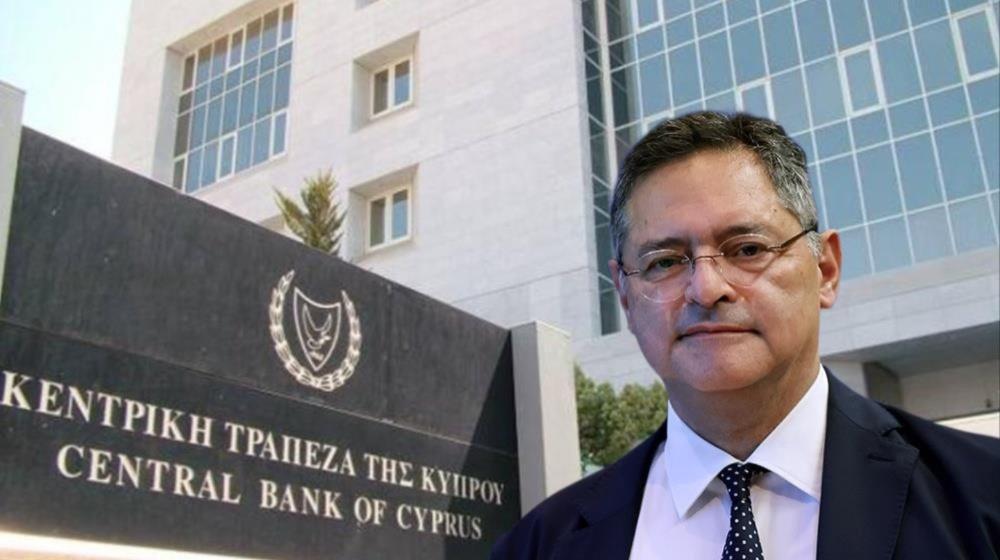
Governor of the Central Bank of Cyprus and member of the ECB Governing Council, Christodoulos Patsalides, has outlined what he considers to be the two major developments that are increasingly shaping the economic landscape, describing them as the persistence of the energy shock and the rise of Artificial Intelligence.
He was speaking during a MNI Connect Video Conference with economists, investors and financial market participants on 11 November.
MNI Connect is a premium service by Market News International (MNI) that hosts private and livestreamed video conferences connecting financial market participants with macroeconomic policymakers and central bank officials
In his address, Patsalides said, "Today’s theme (Monetary policy at a crossroads: The energy shock and the rise of Artificial Intelligence) brings into focus the complexities of an ever-changing world where geopolitical fragmentation, disruptive technologies and recurring economic shocks continually reshape the landscape in which monetary policy operates."
He continued that, in preparing his speech, he had reflected on the ECB Governing Council’s policy retreat in Kilkenny, Ireland in May 2024, noting, "At the time, policymakers were already grappling with an increasingly complex policy environment. My primary concern revolved around supply shocks and how monetary policy should respond to them. During a walk with Olivier Blanchard, former Chief Economist of the IMF, I shared my concerns. He smiled and replied: 'Well, you have a tough job ahead of you.'"
"Looking back," Patsalides continued, "I could hardly have anticipated the range and scale of the shocks that would subsequently confront policymakers around the world."
He went on to say that he would like to focus "on two developments that are increasingly shaping the economic landscape: the persistence of the energy shock and the rise of artificial intelligence."
In his adress, Patsalides argues that geopolitical tensions and the disruption of strategic energy supply routes, particularly the Strait of Hormuz, have created significant inflationary pressures. According to ECB analysis, approximately 90% of the increase in energy inflation is attributable to adverse energy-supply developments linked to the conflict in the Middle East, rather than excessive domestic demand.
Although the ECB decided to keep interest rates unchanged at its October meeting, citing well-anchored inflation expectations and the absence of meaningful second-round effects, Patsalides stresses that policymakers must remain vigilant. There are early signs of energy-related pressures spreading into food and services prices, while persistent increases in short-term inflation expectations also require close monitoring. The ECB will therefore continue to follow a data-dependent, meeting-by-meeting approach to ensure inflation returns to its 2% medium-term target.
The speech also highlights artificial intelligence as a major driver of structural economic change, with growing implications for productivity, economic growth, inflation and financial stability. AI-related investment is expected to reach as much as $9 trillion between 2025 and 2032, creating an unprecedented demand for financing.
Patsalides raises particular concerns about the growing reliance of major technology companies, or hyperscalers, on debt financing to fund AI infrastructure. Technology and hardware companies have reportedly issued approximately $350 billion in bonds this year, around double the amount issued during the same period last year. Outstanding hyperscaler bonds total approximately $570 billion, including €39 billion issued in euros.
Although investor demand has so far absorbed this increased borrowing without significant disruption, the Patsalides warns that the expansion of AI-related financing, increasingly complex funding structures and potential credit risks warrant closer scrutiny. These developments could become increasingly important for European capital markets.
Governor of the Central Bank of Cyprus and member of the ECB Governing Council concludes that both the energy crisis and AI are transformative forces with far-reaching economic consequences. While the energy shock threatens purchasing power and production, AI offers opportunities for higher productivity and economic growth.
For central banks, both developments underline the need for rigorous analysis, closer examination of underlying economic trends and improved data and analytical tools. Policymakers must look beyond headline figures to understand how disruptions spread through the economy, while remaining prepared to adjust their assessments as new evidence emerges.
The central message is that monetary policy must evolve alongside an increasingly complex and unpredictable global economy, with the ability to identify, understand and respond to emerging risks becoming more important than ever.
Patsalides' full address can be read below:
Monetary policy at a crossroads: The energy shock and the rise of Artificial Intelligence
"Today’s theme brings into focus the complexities of an ever-changing world where geopolitical fragmentation, disruptive technologies and recurring economic shocks continually reshape the landscape in which monetary policy operates.
In preparing this speech, I reflected on the ECB Governing Council’s policy retreat in Kilkenny, Ireland in May 2024.
At the time, policymakers were already grappling with an increasingly complex policy environment. My primary concern revolved around supply shocks and how monetary policy should respond to them. During a walk with Olivier Blanchard, former Chief Economist of the IMF, I shared my concerns. He smiled and replied: "Well, you have a tough job ahead of you."
Looking back, I could hardly have anticipated the range and scale of the shocks that would subsequently confront policymakers around the world.
Today, I should like to focus on two developments that are increasingly shaping the economic landscape: the persistence of the energy shock and the rise of artificial intelligence.
“This is Sparta!”
Strategic choke points have held the global economy to ransom since the ancient world. During the Peloponnesian War, Sparta seized control of the Hellespont in 405 BC. Athens lost access to its grain supply from the Black Sea, leading to famine and forcing its surrender the following year, bringing down the Athenian dominance and changing the course of history.
Admittedly, the blockade at the Strait of Hormuz may not be as dramatic. But it has altered the course of history through the energy inflation channel. The global citizen at the gas pump has been casting their vote.
Supply shocks are inherently heterogeneous, differing not only in magnitude and duration but also in the systemic interactions and the political landscape in which they unfold. Our task as the ECB Governing Council is to understand how the energy shock propagates through the economy by navigating our three-pronged reaction function and by taking appropriate action to meet our 2% inflation target in the medium term. Policy credibility is best preserved through disciplined adherence to a robust analytical framework grounded in data, careful assessment of underlying inflation dynamics and rigorous evaluation of transmission mechanisms. Amid heightened uncertainty our data-dependent, meeting-by-meeting, approach remains essential to ensuring price stability.
In the October meeting, we decided to keep key interest rates unchanged. Inflation expectations remain well anchored, monetary transmission remains effective, and second-round effects have not materialized to any meaningful extent.
At this juncture, the inflationary impulse remains predominantly a supply-side phenomenon. ECB analysis indicates that around 90% of the increase in energy inflation reflects adverse energy-supply developments due to the Middle East conflict, rather than excessive domestic demand.
But this should not lead to complacency. As always, monetary policy must remain focused on ensuring that inflation stabilises at our medium-term target.
Don’t look through. Look deep, look wide.
A key question at this point is the extent to which higher energy prices are becoming embedded into broader inflation dynamics. Should price pressures persist, the direction of travel is clear.
Recent developments warrant continued close monitoring. There are signs that the effects of the energy shock may be broadening, although underlying inflation remains broadly stable. We have recently observed a slight upward pressure in food-price and services inflation, while core inflation remains unchanged. Crude prices have recently retreated substantially, though the forward trajectory necessitates ongoing observation.
The mere passage of time since the beginning of the conflict is bound to create its own momentum on price formation and expected inflation.
(i) On price formation, it is imperative that we remain vigilant and carry further our research and analysis into the granular sectoral networks of price dynamics and structural pass-through mechanisms. Continued monitoring of potential second-round effects therefore remains essential.
(ii) On inflation expectations, it is important that we assess the wider landscape. Although long-term inflation expectations are firmly anchored, headline inflation is making headlines, and higher short-term inflation expectations remain persistent. The evolution of inflation expectations requires heightened vigilance.
From choke points to chatbots.
At the same time, energy is not the only disruptive force into play. Artificial intelligence is disrupting our lives and is here to stay. As the Managing Director of the IMF, Kristalina Georgieva, recently remarked:
“Love it, hate it, fear it, it is here. It has arrived and it is changing our lives. The way we work, the way we live.”
Both energy and AI are global and disruptive in nature. Both have implications for growth, inflation, financing conditions and financial stability. And both present new analytical challenges for central banks.
Artificial intelligence is rapidly reshaping the economic landscape of the euro area, establishing itself as a powerful driver of structural change. As recently presented by Philip Lane, Member of the Executive Board of the ECB, in his keynote speech at a symposium organized by the Federal Reserve Bank of San Francisco, AI has become a significant contributor to growth in the euro area driven by both expenditure on AI adoption and by the participation of European firms in the global AI supply chain.
When AI is discussed in the international macroeconomic fora, the focus is usually on the nexus of growth, productivity and inflation. When discussed in the context of financial stability, the theme revolves around potentially stretched valuations, concentration risk, and as of recent the shift into debt issuance.
In my remarks today, I shall also be focusing on the impact of hyperscaler debt financing on the European market.
Hyperscalers. Hyperfunding?
The AI infrastructure buildout is boosting investment at a time of a rising global public funding requirement owing to the elevated fiscal deficits.
The scale of investment currently underway is extraordinary. Research suggests that AI-related investment could reach as much as $9 trillion between 2025 and 2032, making it one of the largest concentrated investment booms in modern economic history.
Even though numbers vary widely, the direction of travel is clear.
With capital expenditure rising faster than cash generation, financing is increasingly being pursued in the debt market, and particularly the bond markets, private credit, and circular funding and contractual commitments through interlinked ownerships. Complex and opaque financial structures, including SPVs and project-level finance, are making underlying risks more difficult to assess.
Technology and hardware firms have reportedly issued around $350 billion in bonds this year, roughly double the amount issued over the same period a year earlier. Total outstanding hyperscaler bonds stand at around $570 billion, of which EUR39 billion have been issued in Euro. European investors are active participants in the euro-denominated bond issues, primarily through a lower allocation to US Treasury bonds.
Increased supply, increased credit risk, and wider elevated uncertainty are giving rise to wider credit spreads, both in the debt and in the CDS market. Yet, investor absorption has been smooth so far.
To date, there is little evidence that AI-related financing has materially crowded out funding for other sectors. But hyperscalers represent a fast-growing segment of the bond market. Should projected investment continue to expand, AI-related financing may become an increasingly relevant consideration for capital markets.
This must be an area of focus.
Concluding remarks
Let me conclude.
The energy crisis and the rise of AI are both disruptive forces: the former erodes purchasing power and constrains production; the latter holds the promise of higher productivity and growth. Given sufficient time, the effects of both become increasingly pervasive, reshaping economic decisions and transmitting disruption across the global economy. For central bankers, both call for the same analytical discipline: rigorous, detailed examination of the evidence and careful assessment of uncertainty.
In the energy markets, this means further study of the granular networks of price dynamics. For AI, it means greater visibility into the opaque and complex funding structures, alongside closer scrutiny on the assumptions of underpinning projections. In both cases, sound policy requires us to look beneath aggregate developments, identify how disruption spreads through the economy and remain ready to adjust our assessment as the evidence evolves.
The global economy has become faster-paced and increasingly granular. To navigate these shifting dynamics, data sets and analytical tools must evolve to match this precision. Afterall, we have AI to help us do that.
New shocks and disruptions are likely to continue emerging. Our capacity to understand them must keep pace. Perhaps this is the most important lesson I have learned since that conversation in Kilkenny.
Thank you for your attention. I look forward to our discussion."