



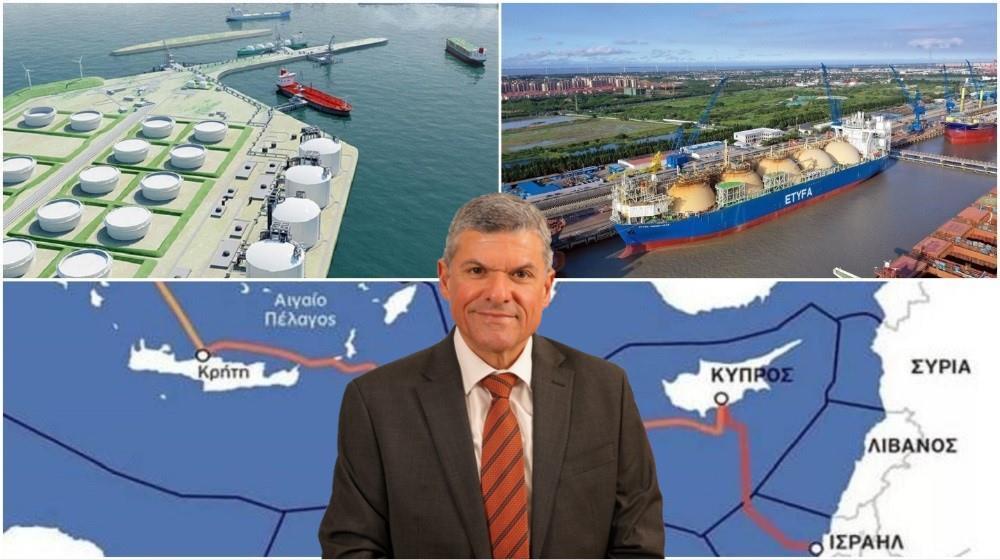
The commercial exploitation of Cypriot natural gas, the prospects of the Cronos and Aphrodite fields, the future of the GSI and the distortions in the electricity market constitute a particularly complex energy landscape for Cyprus. At the same time, delays at Vasiliko and the absence of adequate storage infrastructure continue to burden energy costs.
Former Minister of Energy, George Papanastasiou, analyses the challenges and prospects of the energy sector, explaining why the start of the exploitation of the Cronos field is an important step, what parameters will determine the Republic of Cyprus's revenues from natural gas and why the electrical interconnection with Europe can change the domestic market. At the same time, he presents his assessments of the projects that have been delayed, points out the weaknesses of the current power generation model and underlines that energy security requires multiple sources and alternative supply routes.
Let's start with the Cronos field, which is now on a development trajectory, with first production scheduled for 2028. How close are we to the substantial commercial exploitation of Cypriot natural gas and what is the significance of this development for the country?
Cronos was not initially the field expected to be the first to be commercialised. It would have been logical for the Aphrodite field to start first, as it was the first discovery. However, Cronos progressed faster, mainly because there was infrastructure available in the wider area that investors could exploit.
Specifically, the field is located at a relatively short distance from the marine infrastructure of the Zohr field located within the Egyptian EEZ, approximately 110 kilometers. This means that the construction of a submarine pipeline is required to connect it to the existing facilities. From there, the natural gas can be transported, through the Zohr infrastructure, to the onshore natural gas processing infrastructure in Egypt and from there by land pipeline to the liquefaction terminal in Damietta.
The use of existing infrastructure is a significant advantage, as it reduces the need for new, particularly costly investments. Especially in a sector where the cost of infrastructure is crucial for the economic viability of a project, the ability to connect to already operating facilities significantly facilitates the development of a deposit.
What are the remaining technical challenges and how feasible is the 2028 timeline?
Following the Cyprus-Egypt intergovernmental agreements of 2024/25 that determined the commercialisation of the field, the final investment decision was taken in July 2026, after the necessary techno-economic study, known as the Front-End Engineering Design (FEED), was completed. This was followed by eight agreements between the management company ENI and specialised organizations, which will undertake different parts of the project, from drilling, new infrastructure, specialized units and automation, to production support services.
Despite significant progress, I consider 2028 to be an optimistic timeline. This is a complex project involving many organisations, including Egyptian government agencies. All the individual processes will need to be coordinated and the necessary infrastructure completed.
My own estimate is that the first production of liquefied natural gas from Damietta could be placed towards the end of 2028 or even in 2029.
Beyond the timetable, how significant will the economic benefit ultimately be for the Republic of Cyprus? There are estimates that create expectations for significant revenue.
We should be cautious in our expectations. Cronos is estimated to contain about 3.0 trillion cubic feet of natural gas. However, the amount that can ultimately be produced depends on technical factors, mainly the pressure of the natural gas within the field.
An important element is that there is no plan to install a floating production unit above the field. Therefore, there will be no possibility of utilising systems that would help pump a larger amount of natural gas from the field. This creates some uncertainty as to how much of the available reserve will ultimately be able to be utilised.
Additionally, we need to understand how revenue sharing works. In the initial period, investors have priority in recovering their eligible investment costs. The relevant costs are submitted to the Ministry of Energy, which reviews them and decides which can be recognised for recovery purposes.
Consequently, the revenues of the Republic of Cyprus in the initial phase may be very limited. After the recovery of investments, the state's share increases. However, in the case of the Cronos field, there is also the parametre of the duration of production, as the absence of a floating unit may affect the quantity and time of exploitation of the field.
So, the real value of the Cronos deposit may not be reflected only in the revenue it will generate?
Exactly. I believe that the value of this particular project is that Cyprus is finally moving from the stage of discoveries to the stage of production and commercial exploitation. A precedent is being created that can be the trigger for the exploitation of other deposits.
For example, if the infrastructure is available, the connection of other deposits in the area, such as those in Block 10, but also in other neighboring blocks, could be considered. The possibility of exploiting common infrastructure through synergies reduces costs for investors and makes subsequent developments more attractive.
Therefore, we should not view the Cronos field in isolation. It is a first step that can pave the way for broader exploitation of the natural gas in the Cypriot EEZ.
Aphrodite: Commercial exploitation and pending issues
Moving on to the Aphrodite deposit, what are its development prospects and what remains until the final investment decision?
The direction that is being set is now specific. The investors have proceeded with the preliminary pre-FEED study and are completing the FEED techno-economic study, which is expected to be delivered by the end of the year. The goal is then for the final investment decision to be made by the companies and investors involved by June 2027.
Unlike the Cronos field, the Aphrodite development foresees the installation of a floating production unit above the field. This unit will process the natural gas and will have compression systems, which will allow for the pumping of larger quantities from the field.
Aphrodite is estimated to contain approximately 4.2 trillion cubic feet of natural gas. Therefore, it is a larger deposit than Cronos, with different technical characteristics and development prospects.
But why was the choice made to channel the natural gas from Aphrodite to the Egyptian market and not to liquefy it for export to international markets?
The choice is largely linked to the investors' commercial strategy and the conditions prevailing in the wider region. The Aphrodite investors also have a stake in the Israeli Leviathan field, from which natural gas is already being pumped to Egypt and Jordan.
There is, therefore, the potential to exploit commercial synergies and supply relationships with existing arrangements. Egypt has natural gas needs for power generation purposes and the introduction of Cypriot natural gas into its network could be an attractive option.
Furthermore, based on current market conditions, the price one can secure for natural gas that is directly piped into a national grid may be higher than the corresponding price one would secure through the international liquefied natural gas market.
How decisive are international prices and geopolitical developments for the economic performance of deposits?
They are extremely decisive. In the past, during my ministry, the Cyprus Hydrocarbons Company had examined three scenarios for the commercial exploitation of natural gas for Cronos, one pessimistic, one realistic and one optimistic.
The calculations were based on different assumptions for international natural gas prices, taking into account forecasts from specialised organizations. The economic performance of the fields is directly affected by natural gas prices on international markets.
Geopolitical turmoil has led to increased prices and greater uncertainty in the market. On the other hand, international LNG production is increasing significantly, with major investments from countries such as the US, Qatar and the United Arab Emirates.
Therefore, if geopolitical tensions de-escalate and LNG supply increases further, prices may decline. The choice of the Egyptian market should be evaluated in this light, as it may offer commercial advantages for the exploitation of the Aphrodite.
Electrical interconnection: Essential for energy security and competition
Let's move on to the Great Sea Interconnector (GSI). With the delays, uncertainties and debates over the project's viability, how realistic is its completion?
I believe that the discussion on electricity interconnection should start from the role it can play in the energy system of Cyprus. The existing electricity market operating model faces significant weaknesses and interconnection can contribute to addressing them.
First of all, it will enhance energy security. When there is excess electricity production from renewable sources, we will be able to channel it to other markets. Similarly, when domestic production is not sufficient, there will be the possibility of importing electricity.
This is particularly important for a country like Cyprus, which remains energy-isolated. We must not forget what happened in 2011, when we lost Vasiliko and faced serious problems in electricity generation. Having an alternative source of supply could significantly reduce the risk of electricity shortages.
Beyond energy security, can the project contribute substantially to reducing the price of electricity for households and businesses?
I believe so. I have been monitoring the wholesale electricity market prices in Greece and Cyprus since the competitive electricity market began operating in our country. The average difference between the two markets is approximately 7 to 8 cents per kilowatt-hour, with the Greek market recording lower prices.
Electrical interconnection will allow the entry of an external source of supply, which could enhance competition and put pressure on reducing electricity prices from domestic production.
However, there is an important condition. Cyprus should not depend exclusively on imported electricity, even if it is cheaper. If excessive dependence is created on one external source, there is a risk that it will gain a dominant position and increase prices.
A balance is therefore needed between domestic production and imports. The state and the Regulatory Authority must ensure that both sources remain viable, so that there is real competition and security of supply.
At what stage is the project currently and what remains to be done at a technical and investment level?
One of the issues that concerned the project was the seabed surveys. From what I know, they were expected to proceed and be completed by the end of the year, in order to confirm the technical parameters of the chosen route.
The total route of the cable is approximately 898 kilometers, from Korakia in Crete to Kofinou in Cyprus. Significant sections of the cable have already been constructed, while seabed surveys are necessary to confirm conditions along the route.
Geopolitical considerations also need to be addressed. Electrical interconnection is a European project and I believe that the European Union should have taken a more active role in managing geopolitical issues.
Why hasn't the project attracted investors and capital?
An investor wants to know that the project in which he is investing has a clear institutional and political framework. He needs a clear position from the governments involved and the European Union regarding its support and promotion.
Meridian's entry into the corporate structure that owns the project, with a 66% stake in the Great Sea Interconnector special purpose vehicle, may diversify the dynamics and create new prospects.
The project has the characteristics of a regulated investment, with a projected return on capital of 8.3% for the first 17 years and 4.6% for the following period. These are returns that can be attractive to investors. However, the issue is not only financial. There must be clear political will and understanding between the parties involved. Until recently, this did not exist.
With geopolitical developments constantly highlighting the risks to energy supply, what is the energy security model that Cyprus should ultimately pursue?
Energy can no longer be approached solely on the basis of lowest cost. We must move from the logic of “just in time,” that is, securing the lowest supply and corridor costs, to the logic of “just in case,” which means that we maintain alternative options even if they have higher costs.
Recent geopolitical turmoil has shown how easily traditional energy sources and supply routes can be disrupted. That is why I believe that a country's energy independence now depends on its flexibility, that is, the ability to utilise multiple energy sources and different supply corridors.
Cyprus must avoid over-reliance on any single technology or source of generation. A balanced mix of domestic generation, renewables, conventional units and electrical interconnection is needed.
RES and storage: The weaknesses of the current system
Despite the growth of renewable energy sources, we still see significant cuts in green production. Where is the problem and how important is storage now?
Storage has been absolutely essential for the further development of RES from the beginning. Cyprus was slow to proceed with the design and implementation of the appropriate grid infrastructure, as a result of which we are currently facing significant difficulties in utilising green production.
The problem is that electricity from photovoltaic and wind systems is produced according to weather conditions and not when there is a need for consumption. When production exceeds demand, while some conventional units remain in operation, we are forced to limit production from RES.
This is one of the biggest problems with our current energy model. We have low-cost green generation, but we don't yet have the infrastructure to utilise it to the extent we could.
What needs to change to limit cuts and make greater use of energy produced from RES?
A combination of central storage systems and hybrid systems that will be installed in RES production units is needed, and this implies upgrading the electrical grid to manage production and consumption more "intelligently."
Storage allows us to store the energy produced during sunny and/or windy hours and use it later, when there is greater demand, especially during peak hours. This reduces the need to operate conventional units and maximizes green production.
There is also ongoing work on the creation of a central storage system, under the management of the competent Transmission System Operator of Cyprus (TSO), which will be used, at the discretion of the TSOC, for grid stability purposes. This is an important development, as it will be possible to store energy when there is a surplus and channel it into the grid when needed.
At the same time, incentives must be provided to accelerate investments in storage. It is in the interest of the entire energy system to limit cuts and utiliSe more green production.
But is storage enough or is a change in conventional electricity generation also needed?
Of course it is necessary. The units we have today do not have the required flexibility. These are largely old, energy-intensive and polluting production units, which remain in operation even when there is sufficient energy from RES.
This means that the system cannot adapt quickly to changes in production and demand. In a modern energy model, conventional units should be able to be activated when needed, without having to operate continuously.
We had highlighted the need for investment in more flexible generation units, which could respond quickly to the needs of the system. Storage and flexible conventional units must work complementarily.
The electricity market and high costs for consumers
Despite investments in RES and announcements of major energy projects, the cost of electricity continues to burden households and businesses. Where are the main distortions in the Cypriot market located?
One of the most important issues concerns the way the competitive electricity market currently operates. The European model foresees that suppliers purchase electricity from different production sources and then supply it to final consumers.
In Cyprus, however, all the conditions for fully exploiting the advantages of this model have not yet been established. Despite the entry of new suppliers, the residential consumer market is still characterised by limited choices, while competition has not developed to the extent it could.
At the same time, the increasing participation of RES in the energy mix does not automatically translate into lower prices for the end consumer. This is also related to the way prices are formed in the market, as in many cases costs are still influenced by the most expensive production technologies, even when lower-cost electricity is available.
Therefore, the challenge is not only to increase production from renewable sources, but to ensure that the benefits of this technology actually reach the consumer.
How can this situation be corrected and more of the benefit passed on to end consumers?
There is a need to substantially enhance competition in the supply of electricity. More choice must be created for households and the further development of the retail market must be encouraged, so that consumers can choose a supplier based on the package offered, which will include the most competitive price.
At the same time, it is important that prices reflect more the real cost of electricity and the prevailing market conditions. The increasing participation of RES in production should gradually create corresponding benefits for end consumers.
It is not enough to invest in green energy and increase our production capacity. We must also create the appropriate conditions so that cheaper production is effectively utilized for the benefit of the economy and society.
This requires a better-functioning competitive market, more choice for consumers, investment in energy storage and infrastructure upgrades. All of these are interconnected. You cannot address electricity costs in isolation without examining the energy system as a whole.
Vasiliko: A difficult project with pending issues
Closing with the natural gas terminal at Vasiliko, a project that has been marked by major delays and problems. Is there now a realistic prospect of its completion?
The Vasilikos project is a particularly burdensome one, with serious outstanding issues that arose from the initial assignment and the course of its implementation.
In my humble opinion, the initial choice of contractor was not the most appropriate for such a complex construction project. Along the way, the departure of one of the consortium members, who had a significant role in the construction part, further worsened the situation.
Disagreements between the contractor and the Natural Gas Infrastructure Company (ETYFA) followed, which led to arbitration proceedings in London. The contractor's claims amount to approximately €150 million, while as long as the relevant proceedings remain ongoing, there is a possibility that additional financial burdens may arise.
What are the most important steps taken to secure the investment and what is the situation with the ship?
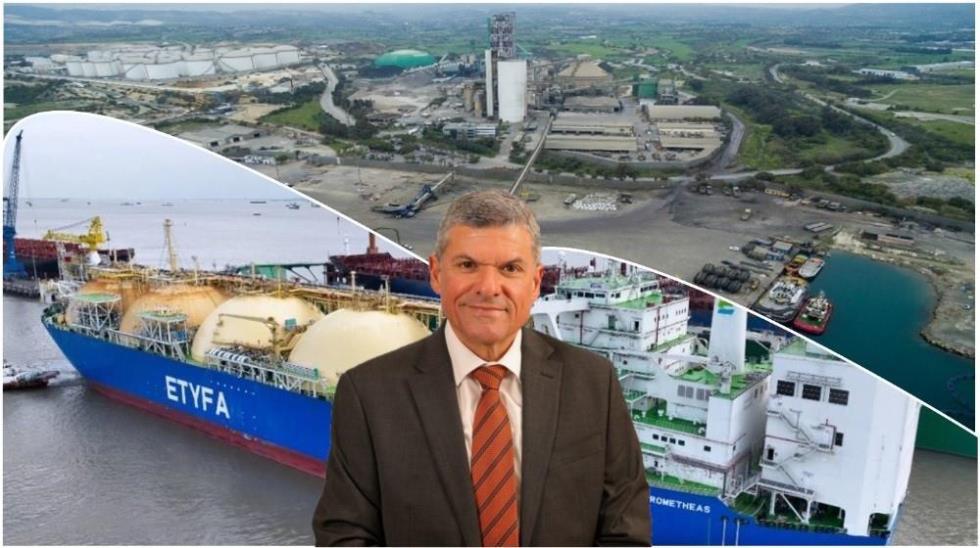
An important positive element is that the largest and most expensive part of the terminal, the Prometheus floating supply and regasification unit, became the property of ETYFA and, by extension, the Republic of Cyprus.
We also managed to secure the return of the ship, which was in a port abroad, without having to disburse additional funds for its possession. I believe that this was the right move, as it was an asset that had already been paid for and should have passed into the possession of the Republic of Cyprus.
The ship remains outside Cyprus, as it is more economical to stay there until the remaining facilities in Vasiliko are completed. When the pier and land facilities are ready, it will have to be transported to Cyprus, the necessary certifications completed and it will be established that the ship and land facilities can operate safely as a single system.
The commitments associated with European funding and the European banks participating in the financing of the project must also be taken into account.
Do you know what stage the effort to select a new contractor is at?
The expression of interest process has progressed and, according to the information I have, eight organisations have expressed interest, some of which have the potential to complete and significant experience.
The critical issue is to select a contractor with the appropriate expertise and, most importantly, with a proven ability to complete similar unfinished energy projects.
It is not the same to start a project from scratch and to take over a project that has already been partially constructed by another contractor. There are components and installations that need to be checked, certified and evaluated for their compatibility with the final specifications.
Also, the new contractor may be called upon to take responsibility for work that he has not performed himself. This creates additional technical and financial risks, which should be assessed very carefully by the parties involved.
That is why I believe that experience in completing unfinished energy projects should be given particularly great weight in the selection criteria of the new contractor.
(Source: InBusinessNews)