




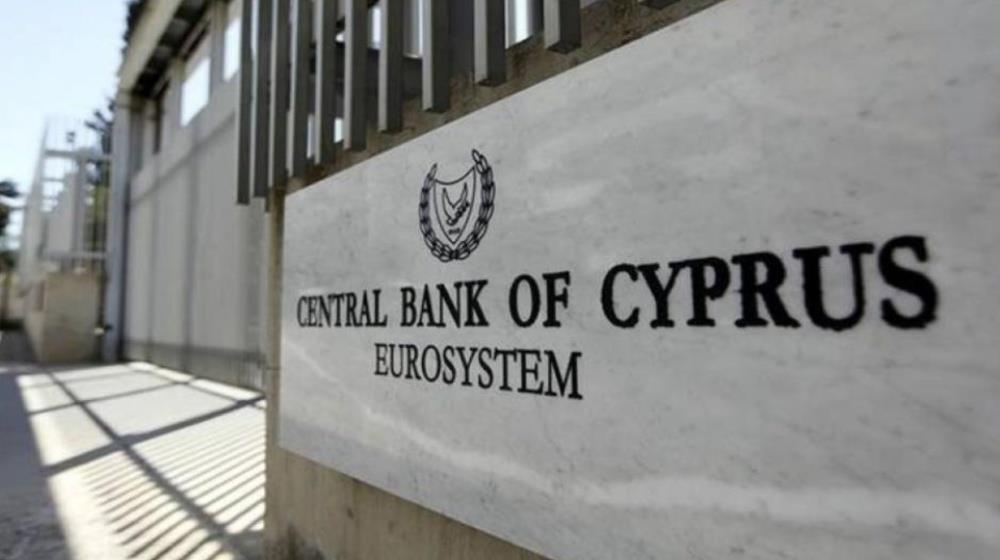
The interest rate on deposits from households with an agreed maturity of up to one year in September recorded an increase to 1.62%, compared to the previous month, while the interest rate on consumer credit decreased to 6.45%, according to the Statistics on Interest Rates applied by Monetary Financial Institutions (MFIs) issued by the Central Bank of Cyprus.
The CBC refers to the main developments in interest rates on new deposit and loan contracts, including contracts which were renegotiated, for the reference month of September 2026.
Regarding deposit rates it notes that the interest rate on deposits from households with an agreed maturity of up to one year recorded an increase to 1.62%, compared with 1.35% in the previous month.
The corresponding interest rate on deposits from non-financial corporations registered an increase to 1.70%, compared with 1.56% in the previous month.
Regarding lending rates, it says that the interest rate on consumer credit decreased to 6.45%, compared with 7.12% in the previous month.
The interest rate on loans for house purchase decreased to 3.88%, compared with 4.16% in the previous month.
It is noted that, the portfolio of loans for house purchase of the MFIs contains various types of loans, such as loans for primary residence, for vacation houses etc, which bear different risk and interest rate.
The composition of the housing loans portfolio varies from month to month, resulting in changes to the level of the weighted average interest rate, independently of the increases or decreases of the interest rates of the MFIs.
The interest rate on loans to non-financial corporations for amounts up to €1 million increased to 4.76%, compared with 4.45% in the previous month. The interest rate on loans to non-financial corporations for amounts over €1 million registered an increase to 4.40%, compared with 3.67% in the previous month.
Regarding amounts of pure new loans, the Statistics show that pure new loans recorded an increase to €596.2 million in September 2026 (from total of €896.8 million), compared with €251.4 million (from total of €390.1 million) in the previous month.
Pure new loans for consumption increased to €32.2 million (from total of €33.7 million), compared with €19.3 million in the previous month (from total of €20.7 million), while pure new loans for house purchase recorded an increase to €135.1 million (from total of €163.7 million), compared with €114.4 million in the previous month (from total of €141.9 million).
In addition, pure new loans to non-financial corporations for amounts up to €1 million increased to €45.4 million (from total of €56.6 million), compared with €35.5 million in the previous month (from total of €42.8 million).
Pure new loans to non-financial corporations for amounts over €1 million registered an increase to €376.7 million (from total of €635.7 million), compared with €77.0 million in the previous month (from total of €178.1 million).
As far as the Cyprus interest rates in a European context is concerned, it says that the interest rate level on outstanding loans in Cyprus is close to the respective Eurozone median, with the spread standing at -0.1% (marginally lower than the Eurozone median) for households and to 0.3% for non-financial corporations.
In contrast to the loans interest rates, interest rates on outstanding deposits in Cyprus are considered as outlier, standing at the lower level within Eurozone. This might be attributed to the excess liquidity of credit institutions in Cyprus, which is among the higher ones within Eurozone, it says, adding that indicatively, the Liquidity Coverage Ratio – LCR in Cyprus in September 2026 stood at 305%, compared with 182% (median) and 158% (mean) in European Union in June 2026 (latest available data), as well as to the short range of the banking sector in Cyprus.
Regarding the interest rates on new deposits, the situation is similar to that of outstanding deposits, due to the same reasons.
The pass – through of increases and decreases of interest rates in deposits in Cyprus appears to be weak as compared with almost all other Eurozone countries, both for households and non-financial corporations.
The share of new loans tο households for house purchase with variable interest rate is aligned with the Eurozone. The said share follows a sharply declining trend in recent years.
From almost 100% at the beginning of 2022, it has fallen to 9.8% in September 2026 and it is below the Eurozone median.
This may be partly affected by the choice of fixed-rate lending in the early years (e.g. 3-5 years), and their subsequent conversion to a floating rate. Consequently, there is a change in the behaviour of borrowers regarding interest rate risk, an element that should be taken into account in banks' risk management policies.
The share of new loans to households and non-financial corporations with floating interest rate compares favourably with the Eurozone. The said share follows a declining trend in recent years. From almost 100% at the beginning of 2022, it has fallen to 73.8% today, which is slightly above the Eurozone median.
This may be partly affected by the same reason mentioned above and should be taken into account in banks' risk management policies, the CBC says.