




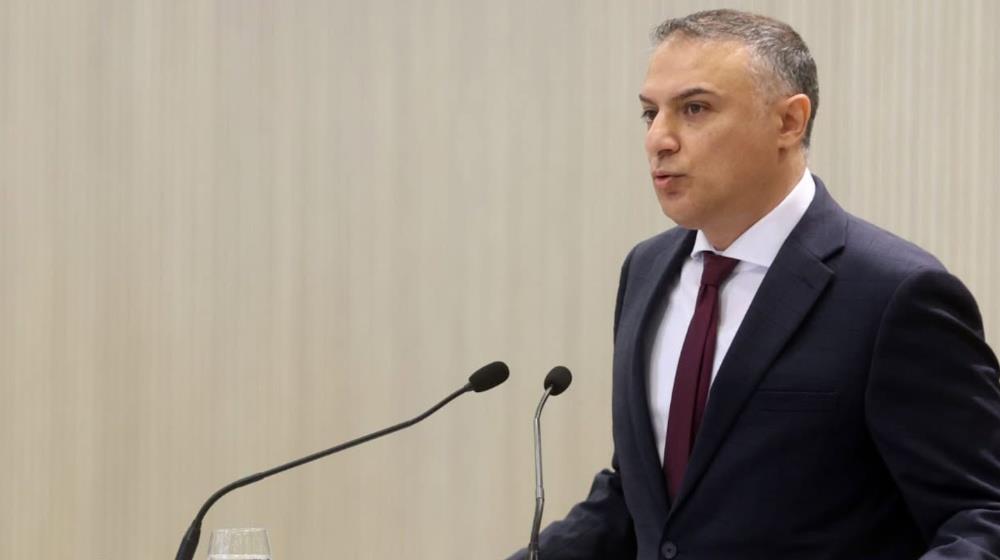
Αn extensive programme comprising at least 65 water supply and irrigation projects, 15 of which will be large-scale, will be implemented in 2027, said the Minister for Agriculture, the Environment and Rural Development, Christos Senekis, during a debate on the Ministry’s 2027 budget before the Parliamentary Committee on Finance.
Speaking on 2 November, he added that, within this framework, five permanent desalination units with a capacity of 235,000 cubic metres of water per day are being utilised, as well as five mobile units with a total capacity of 62,000 cubic metres per day, whilst two additional mobile unit projects are being promoted in Vasiliko and Mazotos.
He also stated that efforts to combat foot-and-mouth disease will continue in 2027, with repeat vaccination of susceptible animals (cattle, sheep, goats and pigs) and by providing substantial support to affected livestock farmers, while regarding Akamas, he said that there is a revised plan with reduced development figures and a reduced environmental footprint.
According to Senekis, the Ministry’s proposed budget for 2027 amounts to €532 million, an increase of €18.7 million, or approximately 3.5 per cent, compared with 2026, with around 43 per cent of the budget allocated to the water sector.
He added that the Ministry’s total appropriations for 2027 amount to €532 million, an increase of €18.7 million compared with 2026 and €181 million compared with 2023, representing a rise of 51.6 per cent; of this amount, €433.7 million relates to recurrent expenditure and €98.3 million to development expenditure; meanwhile, the Ministry’s projected revenue amounts to €275.7 million.
He further noted that €48 million is earmarked for co-funded projects, bringing the total resources available for implementing the Ministry’s policies to €580 million.
The Minister also described the launch of the “Pay-as-you-throw” scheme in municipalities and local communities as a “key reform”, with the initial aim of promoting recycling and the use of recyclable materials, while, at the same time, work is scheduled to begin in 2027 on drafting the new Municipal Waste Management Plan 2029–2035 and the National Strategy for the Bioeconomy.
With regard to the timely response to forest fires, he said that 17 measures with a total budget of €25.5 million are being implemented over a three-year period, with the interventions including the use of modern surveillance and early fire detection technologies, as well as strengthening the operational readiness of the Forestry Department.
Political parties tabled questions regarding the impact on farmers and livestock farmers of animal diseases, the rise in fuel and fertiliser prices, the loss of income for winegrowers affected by downy mildew, as well as support for sheep and goat farmers to safeguard the PDO status of halloumi.
In statements after the discussion’s conclusion, the Minister referred to the public debate taking place within the European Union’s institutions, prompted in part by the Mercosur agreement, regarding “whether we will be able to focus more on locally produced goods, in order to strengthen our region’s autonomy through this process”.
“Through the measures set out in the Strategic Plan for the Common Agricultural Policy, efforts are being made to modernise the primary sector and strengthen its sustainability and resilience,” he said, adding that “there are sectors that have utilised these funds in a more creative way and have achieved results”.
“It is our duty to disseminate this information, this scientific knowledge, to all sectors, so that production can be bolstered,” concluded Senekis.
(Source: CNA)