




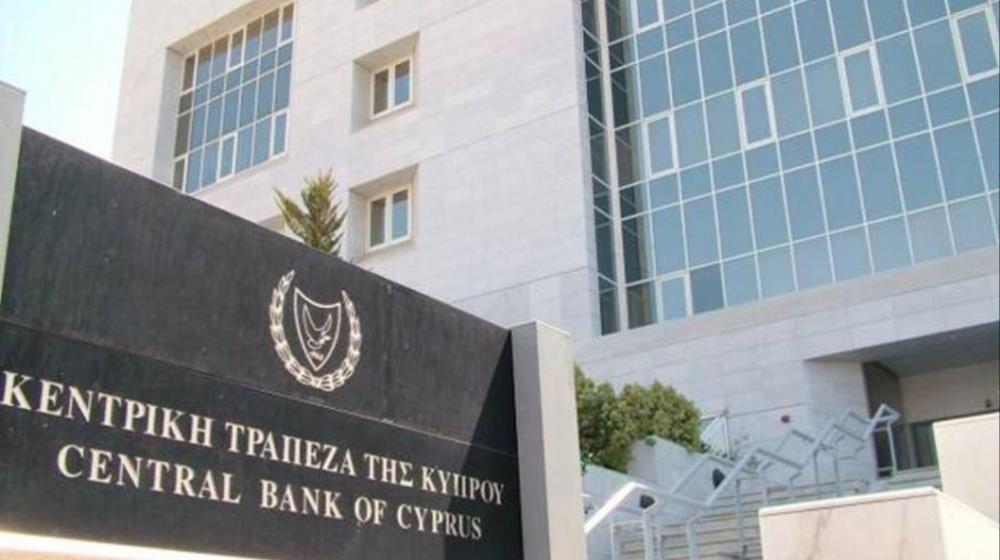
The Central Bank of Cyprus (CBC) decided to introduce a Systemic Risk Buffer (SyRB) of 1,0% applicable to all exposures of all authorised credit institutions in the Republic of Cyprus, with effect as from 31 December 2026.
A press release says that the CBC has identified a number of structural vulnerabilities within the Cypriot banking system that may contribute to the build-up of systemic risks and consequently pose risks to financial stability in the Republic of Cyprus.
"Given that such vulnerabilities can amplify the impact of adverse shocks, maintaining and further strengthening the resilience of the banking sector remains important for safeguarding financial stability," the press release reads.
The measure aims to strengthen the resilience of the banking sector against these vulnerabilities, thereby enhancing its capacity to absorb losses and continue supporting the real economy, in the event of adverse developments.
Cyprus Central Bank further notes that the decision reflects the CBC’ assessment that the existing macroprudential measures in place do not address the identified structural systemic risks.
Structural Systemic Vulnerabilities
CBC explains that the SyRB is intended to mitigate systemic risks arising from the structural characteristics of the Cyprus economy and banking sector. According to the Central Bank, the external environment continues to represent a material source of risk to financial stability and given Cyprus’ status as a small and open economy, developments in the global economy and financial system can be transmitted relatively quickly to the domestic market.
Furthermore, it is noted that the domestic banking sector is characterised by its large size relative to the domestic economy and the significant degree of similarity in credit institutions’ business models. As a result, the limited diversity of domestic credit institutions' business models constitutes a structural source of systemic risk.
CBC also points out that the real estate sector represents a key source of domestic systemic risk, given its strong linkages with the banking sector and the real economy.
Furthermore, according to the Central Bank, Cybersecurity risks remain elevated and constitute a key concern for financial stability. Cyber incidents, the press release reads, may extend beyond individual institutions and result in simultaneous operational disruptions, financial losses and adverse confidence effects across the financial system.
Furthermore, the rapid advancement of artificial intelligence and the increasing sophistication of cyber threats may amplify these risks by enabling more complex, scalable and harder-to-detect cyberattacks.
Rationale and scope of the Systemic Risk Buffer
The CBC considers the identified vulnerabilities to be structural in nature, persisting through the financial cycle and being common across the banking sector.
Consequently, the SyRB is applied uniformly across all credit institutions and all exposures, with the objective of strengthening the resilience of the banking sector against such vulnerabilities and ensuring that credit institutions maintain sufficient capacity to absorb losses during periods of stress.
Calibration of the Measure
The calibration of the SyRB rate was based on a comprehensive assessment incorporating a range of quantitative and qualitative indicators, statistical analyses and expert judgement.
The assessment considered, among other things, indicators related to the structural features of the Cypriot economy, the size and funding structure of the banking sector, the dependence of credit institutions on net interest income and deposit funding and vulnerabilities associated with the real estate sector.
The assessment was further complemented by stress-testing exercises evaluating the capacity of the banking sector to withstand adverse macro-financial shocks.
It is noted that the CBC "will continue to closely monitor developments in systemic risks and structural vulnerabilities and will review the appropriateness of the SyRB rate on a regular basis."
(Source: CNA)