




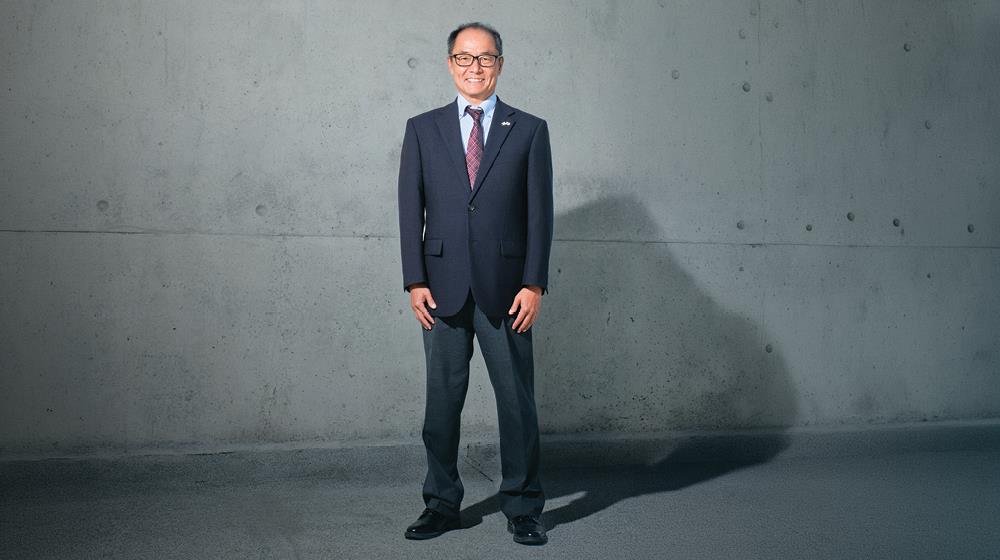
"I believe there is room to further expand our bilateral relations in areas such as the green transition, maritime, research and development, startups, tourism, content industry, cultural and educational exchanges, disaster prevention and climate change," Satoshi Iwasaki, Japan’s Ambassador to Cyprus, suggests.
Sharing his views on the expanding relations between the two countries and suggests how closer cooperation could benefit both in a recent interview with GOLD magazine, Iwasaki notes that, ever since the Japanese Embassy in Cyprus was established in January 2018, relations between the two countries have been steadily strengthening.
He also explores the role Japan could play in the Cypriot startup and tech scene and weighs in on whether he anticipates more Japanese companies looking to set up offices in Cyprus, as an access point to the EU market.
Among other things, the Ambassador also cultural and tourism-related cooperation between the two countries and shares is experience of living in Cyprus.
How would you assess the present ties between Cyprus and Japan and in what fields is there room to grow the partnership?
Although Cyprus and Japan are located far apart – at the eastern edge of the Mediterranean and in the Pacific respectively – they have been deepening their relationship as sister maritime nations and like-minded countries that share common values. Faced with the changing global environment of recent years, the two countries are finding increasing common ground on issues of mutual interest, including the rule of law, the strengthening of supply chains and energy security.
Ever since the Japanese Embassy in Cyprus was established in January 2018, relations between the two countries have been steadily strengthening. Next year marks the 65th anniversary of the establishment of our diplomatic relations. Looking ahead, I believe there is room to further expand our bilateral relations in areas such as the green transition, maritime, research and development, startups, tourism, content industry, cultural and educational exchanges, disaster prevention and climate change.
Since July this year, when Japan associated itself with the EU’s Horizon Europe programme, some initiatives have been undertaken in Cyprus. How can Japanese expertise in technology help with the already flourishing Cypriot startup and tech scene?
On 30 July this year, the Japanese government signed the agreement for the country’s association with Horizon Europe, the EU’s framework for research and development support. We believe that this will enable the strengthening and expansion of existing networks between researchers in Cyprus and Japan, leading to the enhancement of research capabilities for both sides and, furthermore, to the improvement of industrial competitiveness. An existing example of Cyprus-Japan scientific research cooperation is interdisciplinary research by The Cyprus Institute and Japan’s High Energy Accelerator Research Organization (KEK). This research utilises Japan’s cutting-edge science to investigate the materials and properties of cultural heritage objects and archaeological artefacts without direct physical contact.
Another example is the cooperation between the Cyprus University of Technology (CUT) with the Okinawa Institute of Technology, focused on digital agriculture and sustainable farming innovations. I would also like to highlight an MoU that was signed last year during the 6th COSPAR Symposium between the Cyprus Space Exploration Organisation (CSEO) and the Japanese IHI Corporation.
Following investments by Japanese companies in Cyprus’ tech and finance sectors, do you anticipate more Japanese companies looking to set up offices in Cyprus, as an access point to the EU market?
In 2024, Kurosaki Harima Co. Ltd, a world-class Japanese materials and technology manufacturer, opened its Kurosaki Middle East and Africa Ltd branch in Cyprus. This has already strengthened the presence of Japanese companies in Cyprus, acting as a launchpad to provide high-quality refractory solutions and technical support across the Middle East and Africa. I think this could be a model case of investment after MUFG and Furuno Cyprus, which have been active as Japanese frontrunner companies located in Limassol.
I also understand that Cyprus has successfully attracted the games industry by offering generous tax incentives on revenue generated from intellectual property (IP) assets. In August 2026, Japan’s Ministry of Economy, Trade and Industry (METI) announced its Entertainment and Creative Industries Strategy 2026. The Government has set a target of expanding overseas sales of content to 20 trillion yen by 2033 and, as a central component of this policy, it intends to allocate a substantial budget to the gaming sector. I am sure many of you in Cyprus will be familiar with titles such as Super Mario, Street Fighter, Final Fantasy and so on; Japan is recognised as being among the world’s leaders in game development. I hope that this will lead to business opportunities for Japanese companies in the future.
The creation of the Sakura Park in Kambos is a symbol of friendship between Cyprus and Japan. Are there plans to expand these localised green space initiatives, perhaps linking them with Japanese concepts of smart urban design and sustainable cities?
The Sakura Park in Kambos was launched in 2022. Since then, we have maintained a close relationship with the Kambos community. Thanks to the dedication of the community leadership, the park now features the national flags of Cyprus and Japan, a Japanese-themed mural, and plantings inspired by Japanese flora. In April and June, I was pleased to attend the community’s local events bridging Cypriot and Japanese flavours and traditions. The Embassy of Japan will continue to support the park’s development together with the community.
Separately, since last year we have been in contact with the Cyprus Energy Agency (CEA), a non-profit organisation that works to expand green areas throughout Cyprus. We are pleased that CEA and the Municipality of Lakatamia have launched a pilot project applying the Miyawaki method – pioneered by a Japanese botanist – to create dense, native “tiny forests” that enhance biodiversity and urban resilience. CEA aims to collaborate with more municipalities and local organisations to plant more ‘tiny forests’ across Cyprus. The Embassy of Japan supports these efforts and is exploring ways to connect them with Japanese approaches. I welcome opportunities to facilitate knowledge exchange, expert visits and joint workshops between Japanese institutions and Cypriot partners, and to encourage pilot projects in interested municipalities.
Bilateral tourism remains an area with immense untapped growth. Beyond major promotional events, are any specific initiatives being discussed to make travel between Tokyo and Nicosia more accessible for tourists and digital nomads?
Despite the richness of attractions in Cyprus – such as its beautiful turquoise-blue sea, numerous World Heritage Sites, Cypriot wines and gastronomy – there are still not many tourists from Japan visiting the island. Personally, I would like to see many more Japanese people visiting Cyprus. At the same time, I hope that more people from Cyprus will visit Japan to experience, taste and feel Japanese culture first-hand. I know that there exists an image of Japan as an expensive destination; in reality, however, it can be an affordable destination offering a variety of options to travel, sights to visit and diverse culture to experience. I am particularly happy to experience the heartfelt reactions of Cypriots towards Japan and Japanese culture; to see how much Cypriots appreciate Japanese culinary traditions – from sushi to matcha, mochi and sake – and how much interest they have shown in Japanese-themed events such as the annual Cyprus Comic Con (CCC), the Japanese Otaku Day, Ikebana workshops and music concerts featuring the 13-stringed Japanese koto.
Fostering exchanges between local authorities is another objective of mine. I am delighted that there are municipalities in Cyprus that are interested in interacting with Japanese local authorities and I very much hope that exchanges between Cypriot and Japanese local authorities will begin. The Embassy is committed to providing its full support in this regard. Furthermore, exchanges between students and teaching staff in the two countries are also important. As demonstrated by the people-to-people exchanges between the University of Nicosia and Akita International University, we look forward to seeing the further revitalisation of such exchanges in the fields of academia, sport and research.
The Cyprus problem has remained unsolved for more than 50 years now. How does Japan view prospects for a solution and how can current initiatives to restart talks lead to action?
I am pleased to note that, since the election of the new Turkish Cypriot leader last year, dialogue between the two leaders of both communities has been progressing. I believe that resolving the longstanding division and achieving reunification will bring stability and prosperity both to Cyprus and to the wider region. Japan has consistently supported a comprehensive, fair and sustainable solution based on a bizonal, bicommunal federation in accordance with United Nations Security Council resolutions and will continue to encourage the resumption of negotiations within the UN framework. I would like to pay tribute to those who are working tirelessly to build trust between the two communities. As the Japanese Embassy, we intend to explore how we can contribute to promoting confidence-building between the two communities in the future.
You were appointed ambassador to Cyprus in October 2025. How has your first year in Cyprus been?
During my first year, I have experienced the island’s beautiful nature, its rich history and culture and, above all, its open, generous and kind people. However, there’s still so much of Cyprus I have yet to know. Moving forward, I want to discover even more of its charms and promote them to people in Japan.
(Photo by TASPHO)
This interview first appeared in the October edition of GOLD magazine. Click here to view it.