




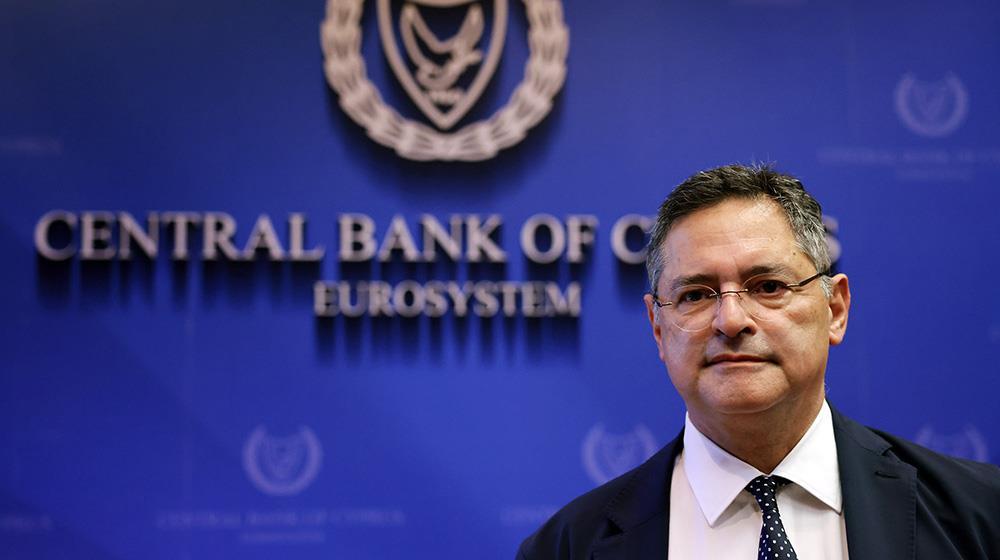
Statement by the Governor of the CBC on yesterday’s monetary policy decision
The prolongation of the energy shock. The deterioration of inflation prospects- the ECB’s commitment.
"At yesterday’s meeting of the Governing Council of the European Central Bank (ECB), we decided to keep the key interest rates unchanged. Ongoing geopolitical tensions and the resulting energy shock continue to intensify inflationary pressures, while inflation prospects point to a prolonged period of elevated rates of price increases. Inflation rose significantly in September to 3.8%, from 3.2% in August, mainly due to a further increase in the prices of petroleum products. At the same time, the tightening of financial conditions — as a result of both the transmission of previous increases in key interest rates and the significant rise in long-term government bond yields, against the backdrop of heightened concerns about debt sustainability internationally — is contributing in part to limiting the spillover of inflationary pressures from energy to the rest of the economy.
So far, the indirect effects of the energy shock remain relatively limited, and no significant second-round inflationary effects have yet been recorded, as also demonstrated by the most recent developments in wage-increase indicators. At the same time, inflation expectations, both in international financial markets and in relevant surveys, remain generally well anchored, particularly over the medium and long term.
Economic activity in the euro area continues to display notable resilience. However, heightened uncertainty and tighter financing conditions are expected to continue weighing on the pace of growth in the period ahead.
In light of the new data and our overall assessment of them, we concluded that keeping the key interest rates at their current levels allows the ECB to manage the current uncertainty effectively, while remaining firmly committed to bringing inflation back to and maintaining it at the medium-term target of 2%.
The Cypriot picture
The Cypriot economy continues to demonstrate remarkable resilience despite heightened geopolitical uncertainty, supported primarily by strong domestic demand, favourable conditions in the labour market, and sound public finances. Inflation remained at the high level of 5.2% in September, mainly due to the significant increase in energy prices (21%) and services prices (7.1%). However, the decline in underlying inflation — which excludes energy and food prices — to 3.9% in September, from 4.5% in August, suggests an easing of underlying inflationary pressures. Nevertheless, the risks to inflation prospects remain on the upside, making continued vigilance and close monitoring of developments necessary.
In conditions of persistent inflationary pressures, economic resilience emerges as a factor of decisive importance, as it serves as an essential shield against the cumulative effects of price increases and helps preserve the country’s growth momentum.
Economic resilience as a catalyst for addressing inflationary pressures
-
Mitigating the effects of inflationary pressures. A strong labour market and high employment support households’ disposable income, allowing private consumption to remain an important driver of growth.
-
Preserving fiscal space. A resilient economy ensures a steady flow of tax revenues, providing the state with the necessary fiscal flexibility to implement targeted measures supporting vulnerable groups, without excessively burdening public finances.
-
A strong banking sector. The resilience of the economy is further reinforced by the particularly positive performance of the banking sector, reflected in high levels of capital adequacy and liquidity. These strong fundamentals enhance the stability of the banking system and its capacity to effectively support economic activity.
-
Absorbing shocks. The broadening of the economy’s productive base, spearheaded by dynamic sectors such as information and communication technologies, strengthens the economy’s ability to absorb external shocks and offset pressures on sectors more heavily affected by high inflation. This resilience, combined with the country’s recent credit-rating upgrades, enhances Cyprus’s attractiveness as a reliable investment destination, supporting the continued inflow of foreign capital and the economy’s growth prospects.
In an environment of global challenges, the faithful adoption of sound economic policies is the only path to shielding the economy from the erosion caused by inflation.
The upside risks to inflation prospects, combined with the continuing escalation of threats to the international economy, make an overall disciplined approach all the more imperative.