







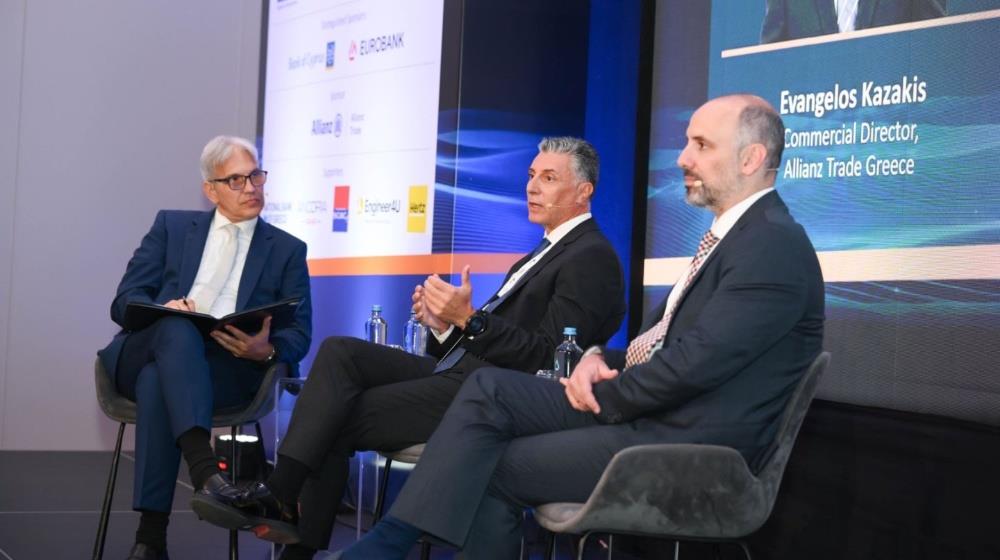
Businesses can no longer rely on traditional approaches to credit risk as geopolitical instability, economic disruption and increasingly interconnected markets create new challenges for companies and their customers. This was one of the key messages to emerge from the panel discussion “How much Risk is Worth Taking? Credit Decisions in a Changing Business Environment”, held as part of the 3rd Credit Risk and Sustainability Conference.
The discussion, moderated by George Chatzileontis, Director, Corporate Credit & ESG – Ratings & Services / “Synesgy”, brought together Petros Kontopoulos, Credit Director at Allianz Trade Greece, and Evangelos Kazakis, Commercial Director at Allianz Trade Greece.
Kontopoulos noted that businesses are operating in an environment of successive disruptions, from the pandemic and the Russia-Ukraine war to developments affecting banking, supply chains and international trade. While companies have become more experienced at managing uncertainty, he argued that credit risk functions must evolve further.
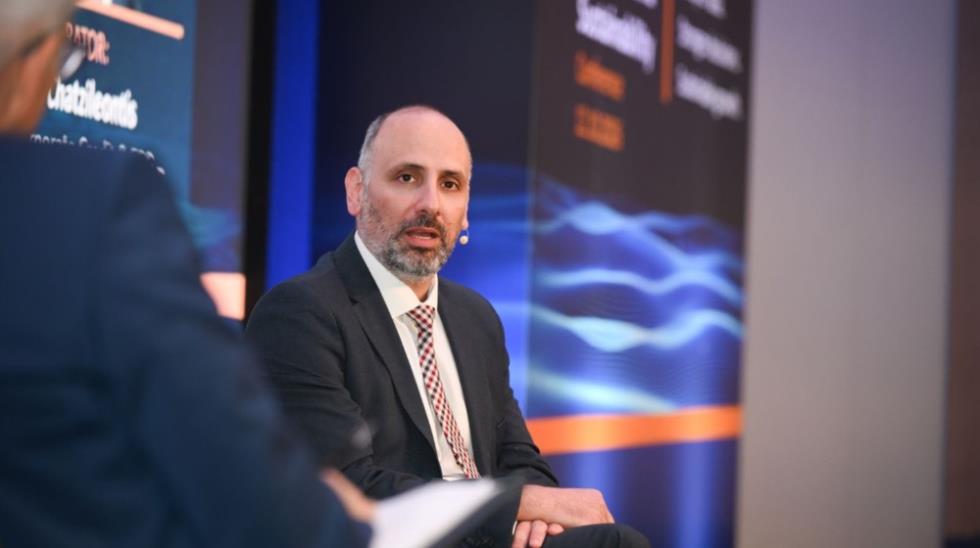
“There is certainly increased geopolitical risk,” Kontopoulos said, adding that companies that have survived recent crises have developed important capabilities to deal with uncertainty. However, he stressed that the role of the credit controller needs to become more strategic. Rather than simply producing an ageing report, credit professionals should play a more active role in understanding the business and its customers.
Kazakis agreed that businesses are changing, but said the process remains gradual. “I believe that businesses are changing slowly. Consistently, yes, but slowly,” he said.
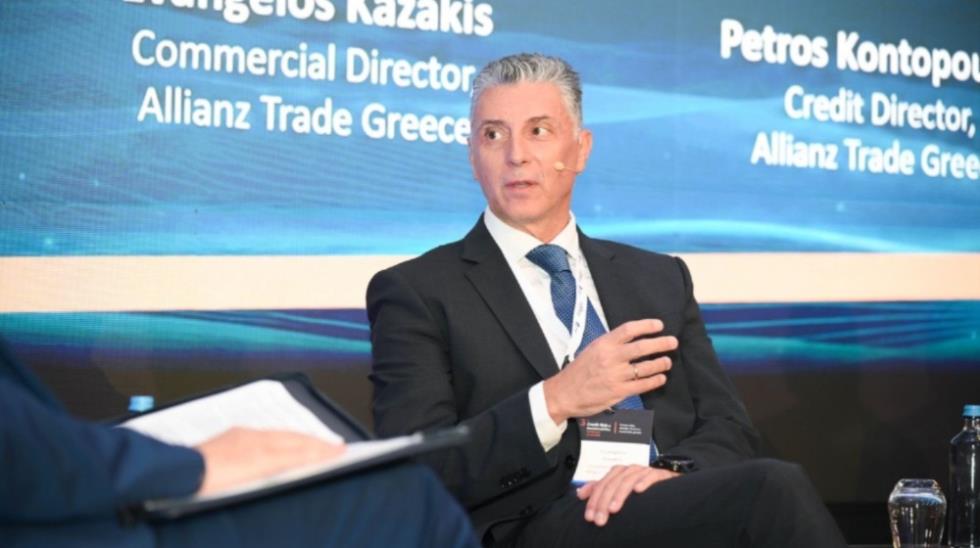
He pointed to credit insurance as one mechanism that can encourage companies to introduce more structured credit-control procedures. Insured businesses, he explained, often develop processes for monitoring customers, setting credit limits and managing payment risks as part of their relationship with the insurer.
For Kazakis, this highlights a fundamental shift in the role of credit insurance. “It is not simply compensation; it is essentially prevention,” he said, explaining that companies build controls, procedures and systems around the information and requirements associated with their credit insurance policies.
The panel also challenged the idea that credit risk management is primarily about avoiding losses. Kontopoulos argued that access to payment data and broader market information can give businesses the confidence to pursue new customers and markets.
“Credit insurance is not only about saying no. We also say yes,” he said, explaining that information gathered across multiple suppliers can help determine whether a company can safely extend more credit to a particular buyer.
Both speakers stressed the importance of information and close cooperation between companies and their credit-risk partners, particularly when unexpected crises occur. Kazakis said that a long-term relationship with a credit insurer can provide businesses with access to timely information and support when major events unfold.
Ultimately, the discussion highlighted a broader evolution in credit management: effective risk control is not about eliminating risk, but about understanding it well enough to make informed decisions. As Kontopoulos put it, the credit controller should increasingly act “like a business analyst”, understanding where a customer is today, where it is heading and how that fits into the company’s wider strategy.