







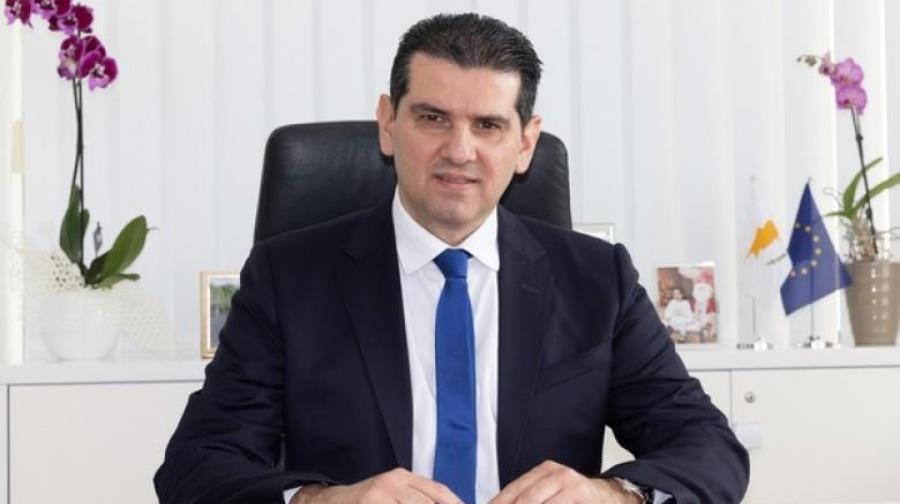
Cyprus' Energy Minister, Michael Damianos, highlighted the importance of making use of existing energy infrastructure in the region, as well as strengthening cooperation among states, energy companies, infrastructure operators and investors, during his participation in a conference organised by the East Mediterranean Gas Forum (EMGF) and HELLENiQ ENERGY, held in Athens.
On the sidelines of the conference, Damianos on 7 October held separate bilateral meetings with Greek Minister of Environment and Energy Stavros Papastavrou and Egyptian Minister of Petroleum and Mineral Resources Karim Badawi. This was followed by a trilateral meeting of the Ministers of Cyprus, Greece and Egypt, during which they discussed, among other things, ways to further strengthen energy cooperation among the three countries, as well as prospects for effectively harnessing the region's energy potential.
According to an official statement, the meetings confirmed the importance of close coordination between Cyprus, Greece and Egypt in promoting projects and initiatives that can enhance both energy connectivity and security of supply in the Eastern Mediterranean and Europe.
As part of the conference, Damianos took part in a discussion involving Ministers and energy industry representatives entitled “Strategic Voices Shaping the Eastern Mediterranean Energy Corridor”. In his remarks, he highlighted the need to develop a coherent regional energy system in the Eastern Mediterranean that would enable the region's energy resources to reach international markets, and particularly the European market, in an efficient and economically viable manner.
The Minister also referred to recent developments concerning the natural gas fields of the Republic of Cyprus, placing particular emphasis on the “Cronos” and “Aphrodite” fields. In this context, he stressed the strategic importance of Cyprus-Egypt cooperation in transporting, processing and commercially exploiting Cyprus' natural gas by making use of Egypt's existing infrastructure and capabilities.
As Damianos pointed out, the development of the Eastern Mediterranean's energy resources requires a broader regional approach. Making optimal use of existing infrastructure, combined with targeted new infrastructure and interconnections where necessary, can reduce costs, accelerate project implementation, contribute to diversifying energy sources and strengthen Europe's energy security.
He also made particular reference to the prospects of the Exclusive Economic Zone (EEZ) of the Republic of Cyprus, noting that it continues to offer significant potential for further exploration and development. In this context, he briefed participants on the discoveries of the “Glafkos” and “Pegasus” fields in Block 10.
Damianos concluded by stressing that the Eastern Mediterranean energy corridor has long-term strategic potential that extends beyond natural gas.
(Source: CNA)
