







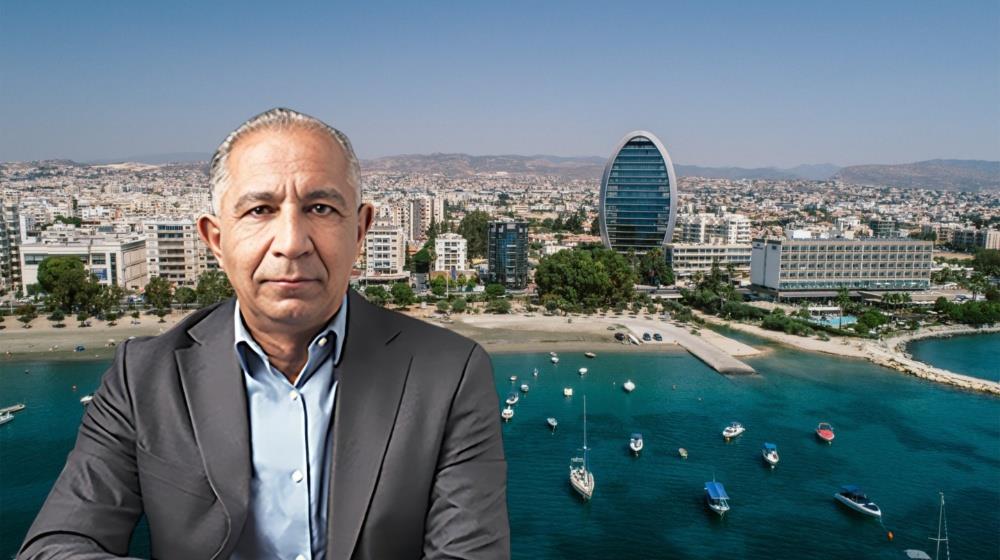
"A prerequisite for rational and purpose-oriented development is the existence of a national strategic plan. What Limassol needs is a clear long-term vision for the type of economy we want to build," Yiannis Tsouloftas, President of the Limassol District Local Government Organisation (LDLGO) suggests.
In a recent interview with GOLD magazine, Tsouloftas discusses how infrastructure needs to keep pace with Limassol’s rapid development if it is to provide a better quality of life for the city’s residents.
"We cannot plan tomorrow’s Limassol with yesterday’s infrastructure," he continues, "We need a long-term, integrated approach to the district’s road and transport networks, water supply, sewerage and drainage system, and its town planning), which is based on projected population and economic growth and, of course, aligned with national strategic objectives. The infrastructure must be planned, expanded and upgraded proactively."
Among other things, the LDLGO President also talks about the organisation's priorities and the role it is playing in making Limassol a more attractive place for businesses and investment.
What are your top three priorities for the Limassol district over the next few years?
Our first and utmost priority is the creation of a modern, efficient, fast-moving organisation with a focus on social, economic and environmental concerns. This is a huge challenge, since we are effectively building a new public organisation from scratch, trying to rescue it from the serious problems and inefficiencies and obsolete mentality of the Cyprus public sector. Second but equally important is the rationalisation and speeding up of the planning and building permit issuing process, which currently suffers from extreme delays and unnecessary non-value-added processes. Limassol is developing at a remarkable speed and it is our responsibility to support this fast-moving dynamic. Third, we need a long-term plan for Limassol’s future, so that its infrastructure keeps pace with economic development and an increasingly large population, provides affordable housing and supports growth and better quality of life.
How can the Limassol district continue growing, while addressing its infrastructural challenges?
Limassol will continue to be not only a well-established, significant and internationally recognised financial centre but also a reputable tourism destination and a friendly and welcoming place for business and residential purposes. We cannot plan tomorrow’s Limassol with yesterday’s infrastructure. We need a long-term, integrated approach to the district’s road and transport networks, water supply, sewerage and drainage system, and its town planning), which is based on projected population and economic growth and, of course, aligned with national strategic objectives. The infrastructure must be planned, expanded and upgraded proactively.
How can the LDLGO help make Limassol a more attractive place for businesses and investment?
The LDLGO can and will play an important role in making Limassol more attractive to businesses and investment by providing the reliable, efficient and fast public services that a growing economy depends on. Reliable infrastructure is essential for supporting existing businesses, new developments and the continued growth of Limassol. Our responsibility is to ensure that this infrastructure is properly maintained, upgraded and expanded in line with the city’s future needs. Equally important is the efficient and fast issuing of planning and building permits. Delays and uncertainty do not simply slow down investment; they directly affect a project’s economics by postponing cash flows, increasing financing and holding costs, and potentially reducing its returns. By improving processes, reducing bureaucracy and utilising smart technologies, we can help ensure that applications are handled as quickly, transparently and consistently as possible. In this way, the Organisation can help strengthen Limassol’s competitiveness and ensure that it remains an attractive location for businesses and investment compared with other economies in the region.
How can cooperation between local government and the private sector be strengthened?
The LDLGO is already strongly committed to cooperation with the private sector and maintains excellent working relationships with professional associations and business bodies. Going forward, we should build on these relationships through more structured and regular consultations, particularly on issues that directly affect investment, development, infrastructure and the business environment. The LDLGO can further strengthen this cooperation through clear procedures, digital services, timely information and regular dialogue with the private sector. Regular meetings with business and professional associations can help identify problems early and develop practical solutions together. To this end, we need the business community’s support and cooperation to advocate for further reform and the modernisation of the obsolete legal and regulatory framework, especially regarding planning and building permits.
What is needed if Limassol is to attract investment that creates long-term economic value?
A prerequisite for rational and purpose-oriented development is the existence of a national strategic plan. What Limassol needs is a clear long-term vision for the type of economy we want to build. The focus should not simply be on attracting more investment but on attracting the right type of investment – investment that creates quality jobs, develops skills and generates long-term economic value. We need to continue building on the sectors in which Limassol already has a competitive advantage: shipping, financial and professional services, Forex, fintech and technology, high-quality tourism and hospitality, while further developing education and healthcare as important economic pillars. Real estate also has an important role to play but it should support the real economy rather than become an end in itself.
The role of the LDLGO is crucial. We must provide reliable infrastructure and efficient, digital and transparent services that facilitate sustainable investment and economic growth, while ensuring that the city’s growth is properly planned and supported by the necessary infrastructure. Ultimately, economic growth must improve local people’s quality of life by creating opportunities, quality jobs and better public services. Our vision should be a diversified and self-reinforcing economic ecosystem where growth creates sustainable prosperity for businesses, the local community and future generations.
Five years from now, what measurable economic indicators will convince you that the new local-government model has been successful?
The success of the new local-government model must be demonstrated by clear and measurable results. The key question is whether the new system has delivered better value for money for citizens and businesses compared with the one it replaced. The first indicator will be the cost and efficiency of providing services. Personnel and administrative costs are another important measure. The objective is not simply to reduce expenditure but to ensure that any increase is justified by better or expanded services. The proportion of resources directed towards infrastructure and investment is equally important. A successful organisation should have the financial capacity to invest in essential infrastructure, rather than allowing an increasing share of resources to be absorbed by administration. Finally, financial sustainability must also be measured through indicators such as liquidity, debt levels, collection efficiency and the ability to finance future investment without placing an excessive burden on citizens.
Our vision is simple but concise: to create a modern, efficient, friendly organisation with an economic, social and environmental focus – one that the citizens of Limassol can be proud of!
This interview first appeared in the September edition of GOLD magazine. Click here to view it.
