






“Maritime cooperation is an important area of interest where Cyprus can work closely with countries in the region, sharing its extensive expertise and best practices. With its strong maritime tradition, international presence in shipping and active role in the IMO, Cyprus is well placed to develop cooperation on issues of common interest and the future of the maritime sector. My recent visit to Bahrain was another step in this effort,” The Shipping Deputy Minister, Marina Hadjimanolis, suggested.
In an interview with GOLD magazine, she discusses the latest endeavours to expand Cyprus’ maritime relations with the Gulf countries and maintain the competitiveness of the shipping sector through partnerships with other EU Member States.
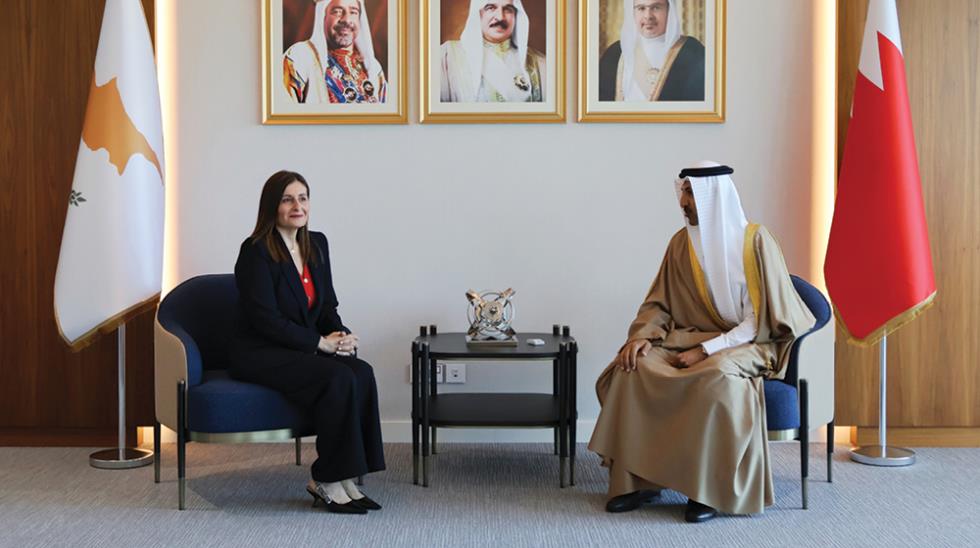
In recent years, Cyprus has placed particular emphasis on strengthening its relations with the Gulf countries. How has your visit to Bahrain earlier this month contributed to this effort and what opportunities could it create for closer cooperation between Cyprus, Bahrain and the wider region?
My recent visit to the Kingdom of Bahrain took place in the context of Cyprus’ broader effort to build on the momentum created during our Presidency of the Council of the European Union, where strengthening relations and cooperation between the EU and the countries of the wider region – particularly the Gulf – was a strategic priority.
Cyprus has been steadily strengthening its relations with the countries of the Gulf, both bilaterally and through broader regional and international cooperation. We have developed closer contacts with countries such as Bahrain, Qatar, Oman and Saudi Arabia, while continuing our longstanding cooperation with Egypt. Maritime cooperation is an important area of interest where Cyprus can work closely with countries in the region, sharing its extensive expertise and best practices. With its strong maritime tradition, international presence in shipping and active role in the IMO, Cyprus is well placed to develop cooperation on issues of common interest and the future of the maritime sector. My recent visit to Bahrain was another step in this effort. Moreover, my presence in Bahrain, in the midst of the current regional situation, was a testament to the weather-proof bilateral relations that Cyprus and Bahrain share, as well as a message of solidarity and support to the Kingdom of Bahrain. Our objective is to translate these relations into concrete cooperation, joint action, exchanges of expertise and new opportunities for the maritime and wider business communities. Cyprus is committed to using its position as an EU Member State and a close regional partner to further strengthen the links between Europe and the countries of the Gulf and the wider Arab world.
What do you consider to be the most significant outcomes of your visit and how can these contacts translate into concrete cooperation and new opportunities for Cyprus and Bahrain?
I would describe the visit as particularly productive and substantive, at both a government and business level. I believe it has given further momentum to the bilateral relations that Cyprus and Bahrain have developed in recent years and provided an opportunity to further strengthen our cooperation. We held a number of important meetings with the Bahraini leadership and relevant authorities, during which we discussed ways of translating the positive political relationship between our two countries into concrete and mutually beneficial cooperation.
A key outcome of my bilateral meeting with my counterpart, Dr Sheikh Abdullah bin Ahmed Al Khalifa, Minister of Transportation and Telecommunications of the Kingdom of Bahrain, was the signing of the Memorandum of Understanding on cooperation in the maritime sector. The MoU had been agreed in principle following our previous meeting in Cyprus and we were pleased to complete the necessary procedures and formally sign it during my visit to Bahrain.
Building on this new framework for cooperation, we agreed on a number of joint actions to be taken forward. These will focus on areas where there is particular potential for cooperation and where Cyprus can share its expertise and best practices.
Overall, I believe that the visit has created a stronger basis for taking our bilateral cooperation forward in a more structured and practical way. We now have a clear framework and a number of areas to work on, and our priority is to maintain this momentum and turn the commitments and contacts established during the visit into concrete results for both countries.
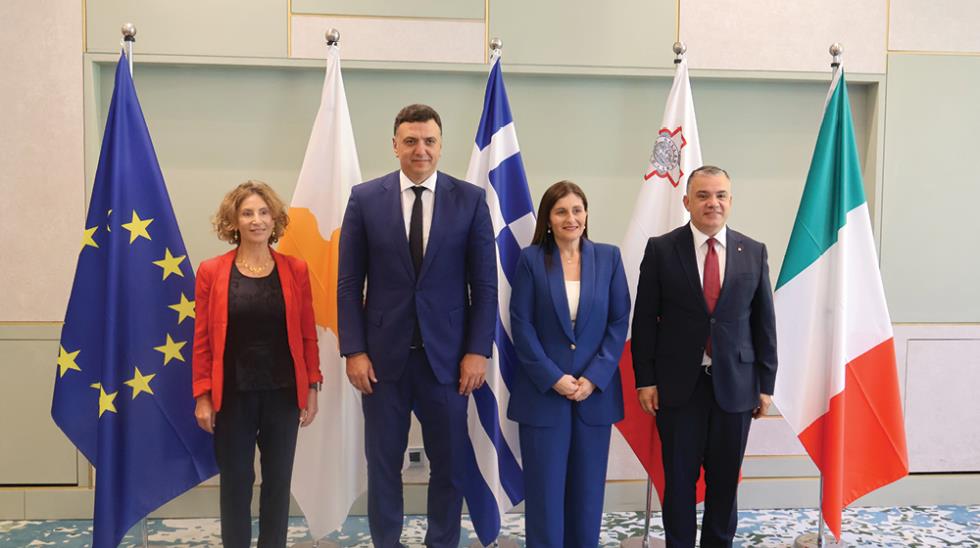
On September 9, Cyprus hosted the 9th Ministerial Tripartite Meeting of Cyprus, Greece and Malta, with the participation of Italy. What is the strategic significance of this 3+1 format for the maritime sector and for the wider Mediterranean region?
The Cyprus-Greece-Malta Ministerial Tripartite has established itself over the years as an important platform for maritime dialogue among like-minded maritime nations which share the same interests. The participation of Italy for the first time this year marks a significant milestone in the evolution of the initiative, broadening its scope and relevance and elevating it into a stronger Mediterranean platform, capable of addressing the strategic challenges and opportunities facing European and international shipping.
The significance of this 3+1 format lies in its ability to bring together four countries with a rich maritime heritage, strong shipping sectors and a shared interest in safeguarding the future competitiveness and sustainability of European shipping. Collectively, Cyprus, Greece, Malta and Italy represent some of the most influential maritime clusters in
Europe, making this dialogue particularly valuable at a time when the industry is navigating profound regulatory, environmental, technological and geopolitical challenges. Italy’s participation further strengthens our collective voice and demonstrates a shared recognition that many of the issues facing shipping today – including competitiveness, decarbonisation and supply chain resilience – require closer cooperation and coordinated approaches. The participation of four leading Mediterranean maritime nations enhances our ability to contribute constructively to European and international discussions, and to ensure that maritime realities are adequately reflected in policymaking.
Beyond the immediate challenges facing shipping, the meeting highlighted the strong convergence of views among Cyprus, Greece, Malta and Italy on the future of maritime transport. Our four countries share common values and objectives in promoting a maritime sector that is safe, secure, competitive and environmentally sustainable. This shared vision provides a solid foundation for closer cooperation, stronger coordination in international fora and more effective engagement on the policies that will shape the future of European and global shipping. For Cyprus, this initiative underlines our role as a bridge-builder and trusted maritime partner. We firmly believe that the future success of European shipping depends not only on national efforts but also on strong alliances, and the expanded 3+1 format provides exactly such a framework of cooperation.
What were the key outcomes of the 9th Ministerial Tripartite Meeting, and what role can they play in safeguarding the long-term competitiveness of European and international shipping in an increasingly challenging global environment?
The most significant outcome of the meeting was the Joint Declaration adopted by the four countries. More than a political statement, the Declaration reflects a shared understanding of our sector’s key challenges and sets common principles and priorities for addressing them. During the meeting, discussions were not confined to the interests of the participating countries alone but concerned the future of global maritime transport and its ability to continue supporting international trade, economic growth and connectivity. To this end, there was broad recognition of the need to avoid fragmentation between regional and global measures and to create the conditions necessary for investment in alternative fuels, innovation and clean maritime technologies. Through the Declaration, the four countries reaffirmed their commitment to strengthening their cooperation and their common determination to work more closely on issues of strategic importance, to exchange expertise and promote shared positions where appropriate. In addition, we stressed the importance of safe and secure maritime routes, freedom of navigation and international cooperation, recognising that these principles are fundamental to global trade and supply chain resilience, particularly at a time of heightened geopolitical uncertainty. The central message emerging from the meeting is clear: maintaining Europe’s maritime leadership requires a balanced approach that combines environmental ambition, economic resilience and international competitiveness. By working together, Cyprus, Greece, Malta and Italy can contribute to shaping a regulatory and business environment that supports investment, innovation and long-term growth, ensuring that European shipping remains a global leader in an increasingly competitive international landscape.
This interview first appeared in the September edition of GOLD magazine. Click here to view it.