








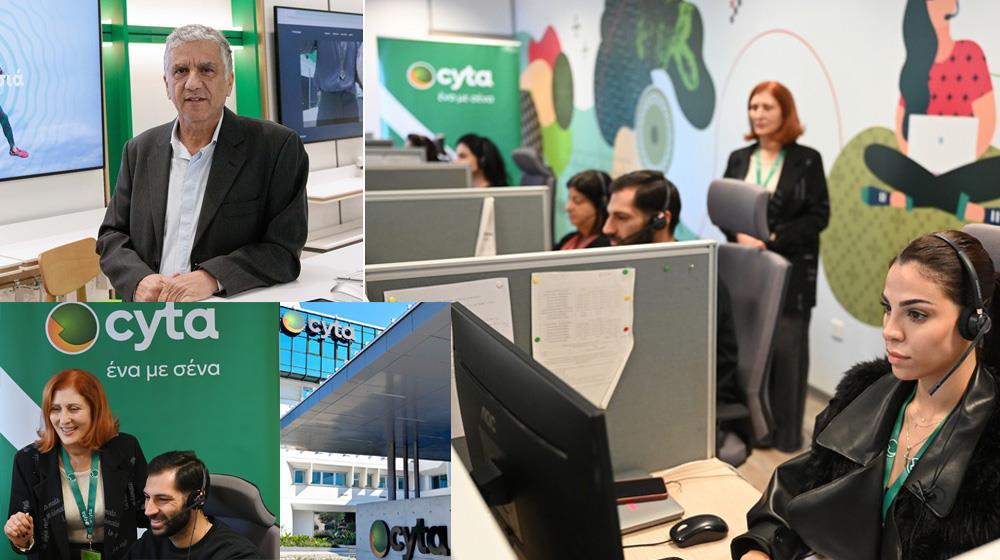
Customer service is moving into a new era, where technology, artificial intelligence and digital tools do not function as an end in themselves, but as means to make everyday communication simpler, faster and more efficient.
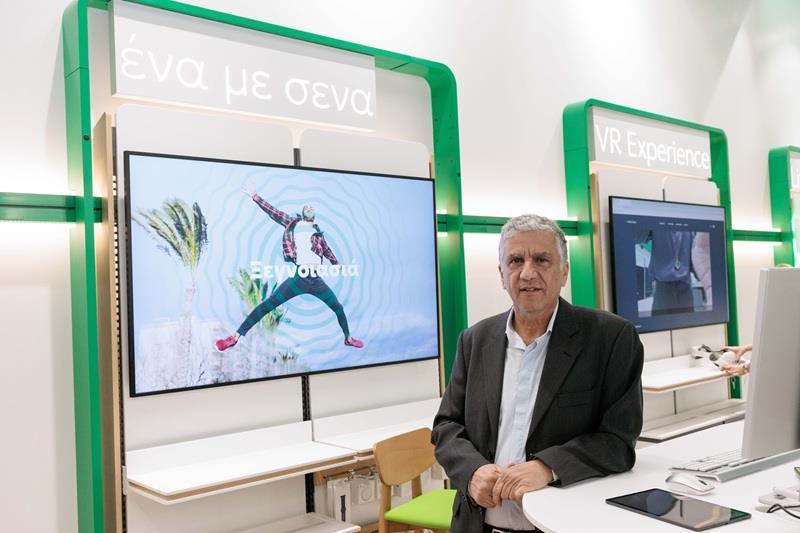
At Cyta, this change is reflected in practical solutions that reduce waiting, speed up the diagnosis of technical problems and provide more possibilities for self-service, while strengthening the role of frontline people. Spyros Christofides, Cyta's Customer Experience Director, talks about the new philosophy in service, the contribution of artificial intelligence and how technology can ultimately make human contact more meaningful.
We've all been in the same position at some point: we're waiting on the phone, we're trying to explain a technical problem that we don't understand, or we're looking for a simple piece of information that we'd like to find right away.
Customer service is changing for this very reason. At Cyta, technology is increasingly being used to make communication easier, lead to solutions faster, and help people on the front lines serve better.
Spyros Christofides explains what has changed and what this means in practice for individuals and businesses.
What does a customer really want today when asking for help?
To find the solution he is looking for as quickly and simply as possible.
If he needs a basic piece of information, he wants to be able to find it himself. If he needs help, he wants to talk to someone who has the right information in front of him and can guide him effectively.
Our job is to make this process as easy as possible, whether the customer is communicating by phone or through another channel.
Has the experience of someone calling Cyta today changed in practice?
Yes, and the difference can be seen in very practical parts of the daily service.
For example, during periods of heavy traffic, the customer may ask us to call him when his turn comes, instead of waiting on the phone. About 30,000 customers a year use this feature.
There is also basic information that he can get directly on his own, such as details of his account, PUK code or Cyta stores.
So a simple request can be served quickly and our officers can spend more time on issues that need real support.
And when the problem is technical? How can it be solved over the phone?
Here, technology has helped us a lot and has significantly changed the data.
In the past, the operator tried to understand from the customer's description how the equipment is connected or what is displayed on its screen.
Today, with the consent of the customer, he can see the equipment through the mobile camera or see the screen with him and guide him step by step.
There are about 8,000 such sessions a year. In most of them, the officials state that the request was resolved using the tool, while in many cases the visit of a workshop is avoided.
For the customer, this means something very important: faster diagnosis and, in many cases, an on-site solution.
Can I solve some things myself?
There are many issues that the customer can easily settle when they have simple instructions in front of them.
That's why we've created short support videos for frequently asked questions, products, and services. Today there are 50 such videos, with about 485,000 views. Someone can find them on their own or the officer can immediately send them the appropriate video on their mobile phone or email.
It's an easy way for the client to have the guidance in front of them and be able to follow it at their own pace.
Where does artificial intelligence come into all this?
AI mainly operates in the background of service.
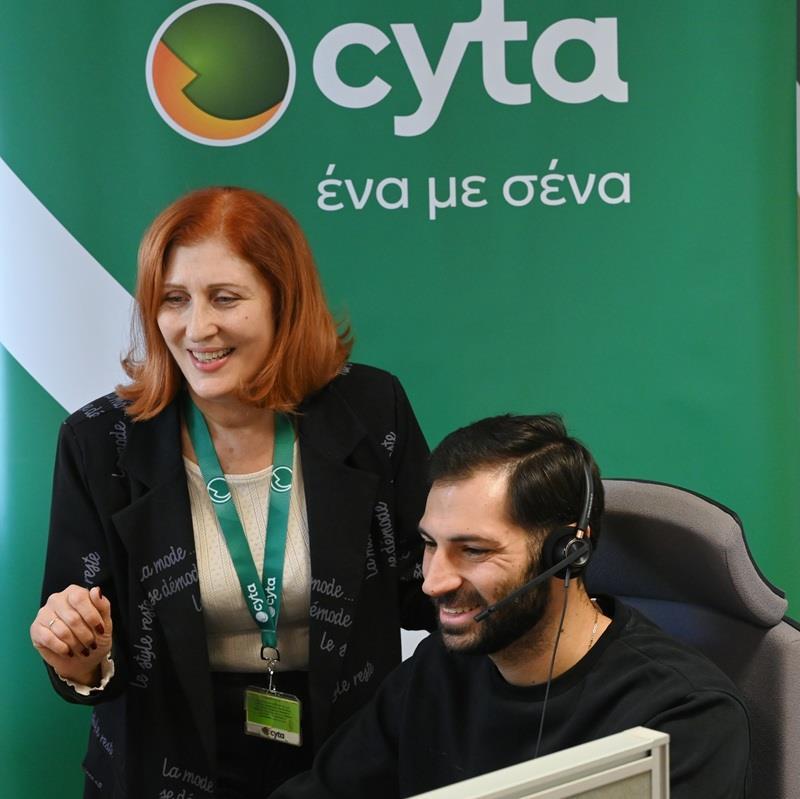
Our people need to know a huge range of information every day: products, services, prices, processes, technical instructions and changes. To help them, we have created a large internal knowledge base, which operators use to quickly find the right information. It includes about 1,250 pages and records 750,000 visits per year.
We now also use artificial intelligence to help operators find what they need even faster.
The customer may not see this technology, but they see the result: the person serving them can find the right answer faster.
How do you ensure that the customer gets proper service regardless of who responds?
With continuous training and with better tools. Services change frequently and operators need to stay up to date. That's why they have access to educational materials that they can use whenever they need it.
At the same time, we use technology to have a better picture of the quality of calls.
In collaboration with the CYENS Centre of Excellence, we have developed a system that allows us to examine a much larger number of calls and identify areas where we can improve. During its pilot implementation, approximately 130,000 calls were examined.
For us, it's important to be able to better identify what's working well, where more training is needed, and how we can continuously improve the customer experience.
For a business, does all this matter even more?
Certainly, because for a business, connectivity is part of its daily operation.
When there is a problem, time is of particular importance. The ability to quickly diagnose remotely, have immediate access to the right information and have an operator able to effectively guide the customer helps to resolve issues as quickly as possible.
This applies to both a small business and a large organisation. The need is common: when you need support, you want to know that someone can quickly understand the problem and help you solve it.
How much has Cyta's Customer Contact Centre changed overall?
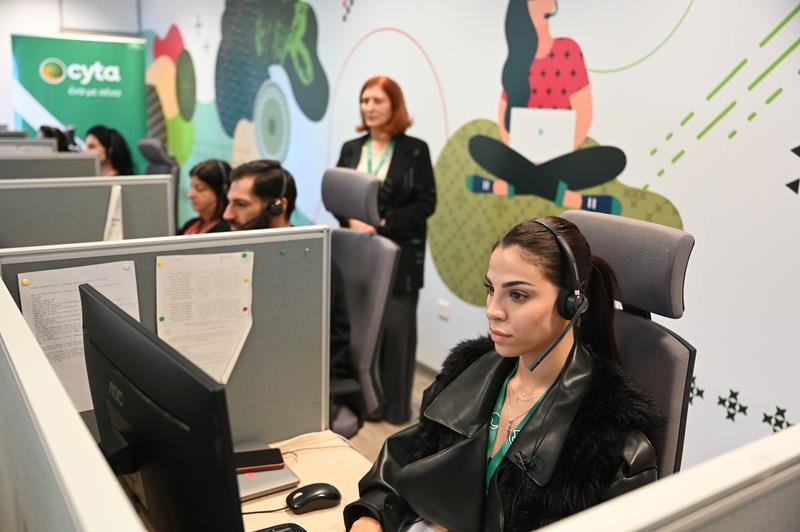
Today, Cyta's Contact Centres manage more than 1.5 million contacts per year.
From a traditional call centre, we have moved to an environment where we manage phone calls, written communication and digital channels through a single environment.
This transition has also given us more flexibility. A typical example was the pandemic period, when within 24 hours about 200 employees were able to continue serving our customers remotely.
In what direction is the service evolving in the coming years?
I believe that the customer will have even more options to choose how and when he wants to be served.
Some things will be solved immediately through simple digital options. In more complex issues, technology will help the operator to have a better picture, more information and the right tools to provide a solution.
For us, that's what it's all about: technology to make service simpler for the customer and empower our people to serve them better.
(Source: InBusinessNews)
