







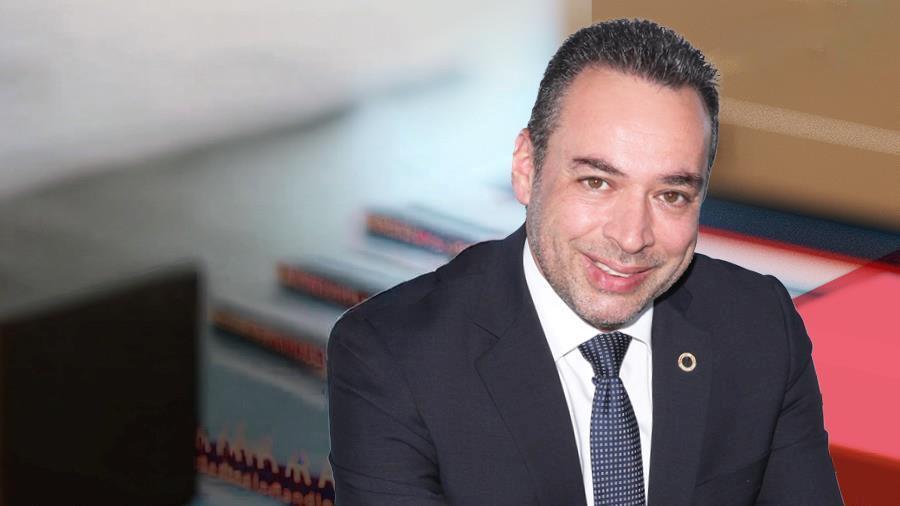
After many years of presence and contribution to Limassol's business scene and 18 years of active participation in the Board of the Limassol Chamber of Commerce & Industry, Vasos Demetriades, Vice President of the Chamber and President of the Association of Industrialists of Agios Athanasios, is now running for the Presidency of the Chamber of Commerce and Industry, submitting his own proposal on what should come next.
At the heart of his priorities is more substantial support for businesses, strengthening industry and small and medium-sized enterprises, improving infrastructure and addressing issues that directly impact the competitiveness of Limassol.
In an interview with InBusinessNews, Demetriades refers to the challenges of the business community, the city's development prospects and the role that, as he argues, the Limassol Chamber of Commerce & Industry (EVEL) is being called upon to play in the coming years.
What led you to decide to run for the Presidency of the Limassol Chamber of Commerce & Industry, and what should the Chamber's future be?
After 18 years of active presence and contribution on the Board of Directors of the Limassol Chamber of Commerce & Industry, and also through my own career as an entrepreneur in Cyprus and abroad, I believe that I have acquired a very clear picture of both the potential of our economy and the real problems that the business world of Limassol faces daily.
This experience is what led me to the decision to run for the Presidency. I believe that I can offer, challenge and, most importantly, contribute to achieving concrete results.
We must not forget that we are a Chamber of Commerce & Industry. Therefore, the focus must be on business and the creation of the appropriate conditions so that it can operate, invest, grow and create jobs.
A business is not just its turnover or profits. Behind every business, there are employees and families; jobs are created, investments are made and real value is generated for Limassol and the entire Cypriot economy.
The future of EVEL, as I understand it, is a Chamber even closer to business. A Chamber that listens, intervenes, demands and brings results. I want every entrepreneur in Limassol, small or large, to know that, through EVEL, they have a voice and meaningful representation.
If you are elected President, what will your first priorities be?
My first priority will be to record and prioritise, in a very practical way, the issues that affect the daily operation of businesses and to focus on those in which the Chamber can really intervene and bring about results.
I want us to place particular emphasis on the problems of industrial areas, infrastructure, energy, and especially alternative energy sources and green development. At the same time, we must deal substantively with issues related to trade, tourism, catering, hotels, ports, customs, transport and the road network.
I will also give great importance to small and medium-sized enterprises. We need to see where they face difficulties, what hinders their development, and how the Chamber can act as a real support.
I don't believe in a Chamber that is limited to listing problems. I want us to prioritise them, propose solutions, demand action from the State and the competent authorities, and monitor each issue until there is a result.
What is your vision for the economy and entrepreneurship of Limassol?
My vision is a Limassol that continues to grow, but with balance and strong foundations. A city that is not dependent on one or two sectors, but has a strong and diversified business environment.
Limassol has significant advantages and great business potential. However, we need to keep all the main pillars of our economy strong: trade, industry, tourism and services, while at the same time giving space to new sectors and new forms of entrepreneurship.
For me, development does not just mean big projects or big investments. Development means enabling small and medium-sized businesses to be sustainable and competitive, to create jobs and to evolve.
We therefore need a productive model that encourages entrepreneurship rather than burdens it. That attracts investment, but at the same time creates the conditions so that existing businesses in Limassol can grow.
Does Limassol's economic base need greater diversification, and where do you see opportunities?
Diversification is important because a strong economy should not be overly dependent on one specific sector. Limassol has managed to develop significant activity in many sectors, and this is an advantage that we must strengthen.
I strongly believe in the potential of industry, but also in green development and alternative energy sources. At the same time, there is significant potential for further development in tourism and the businesses directly or indirectly linked to it – from hotels and catering to small and medium-sized enterprises serving the tourism economy.
The same applies to trade, transport, port-related activities and more generally to all sectors in which Limassol already has expertise and a business base.
Diversification, however, does not mean abandoning what we already do well to chase the next new thing. It means strengthening existing sectors while creating space for new investments and new activities.
What needs to change so that Limassol can attract new productive investments and not be limited to a service economy?
As a person who comes from industry and as President of the Association of Industrialists of Agios Athanasios, I know firsthand both the potential and the problems of the sector.
In the industrial area of Ayios Athanasios, we have managed, through organised effort and cooperation, to achieve a lot. However, I know that much more can be done, both there and in the other industrial areas of Limassol, several of which are facing serious infrastructure issues.
We cannot talk about attracting new productive investments if the investor or existing industrialist does not have the basic infrastructure and the appropriate conditions to operate. They need space, proper infrastructure, access, energy and, in general, an environment that allows the industry to be competitive.
At the same time, the energy transition and alternative energy sources represent a significant opportunity. Energy costs directly affect competitiveness and we need to consider practical ways in which businesses can make more use of green energy.
I want Limassol to continue to be strong in services, but at the same time to maintain and strengthen its manufacturing base. Industry creates jobs, investment and real added value and we cannot afford to leave it behind.
Traffic, housing, operating costs and labour shortage. What do you consider the biggest threat?
I do not think that we can easily isolate any one of these problems, because in practice they are interrelated and all affect the competitiveness of businesses.
Traffic, for example, is no longer just a quality of life issue. It is also an economic problem. When workers, goods, and professionals waste valuable time traveling every day, it has a cost for the business and the entire economy.
Similarly, housing costs affect a company's ability to attract and retain employees, while the lack of human resources creates serious difficulties in many sectors. And of course, the overall cost of operation limits competitiveness, especially for smaller companies.
These are issues that the Chamber cannot solve on its own. However, it can document them, highlight them and, above all, demand specific solutions from the state and the competent authorities.
Limassol has developed very rapidly. Its infrastructure and services must be able to keep up with this growth. Otherwise, in the end, the city's very success risks becoming an obstacle to its further development.
How can the Limassol Chamber become more meaningful and useful for businesses?
I want to send a very clear message to the entire business world of Limassol: through the Chamber, you have a voice.
EVEL must be the entrepreneur's communication channel with decision-making centres. It must listen to the problems of its members, evaluate them, convey them to where decisions are made, and demand solutions.
And this should apply to everyone. From large industry and large commercial or tourist businesses to small family businesses and small and medium-sized entrepreneurs.
Small and medium-sized enterprises in particular often need more support, as they do not have the same resources and capabilities as a large company. Nevertheless, their overall contribution to the economy and employment is very significant.
So I want a Chamber that is accessible and practical. The entrepreneur must feel that he is not alone in facing a problem. That he has an organised body behind him, which can represent him and fight for him.
The success of EVEL should not be measured only by the events it organises or the meetings it holds. It should also be measured by the problems it manages to solve for its members.
What major projects or infrastructure can Limassol no longer wait for?
For me, the issue of infrastructure must be addressed comprehensively and always in relation to the real needs of the Limassol economy.
At the top of the agenda, I would put the infrastructure that directly affects the daily operation of businesses: the road network and access to business and industrial areas, the infrastructure of industrial areas, transportation, as well as issues related to the operation of ports and customs.
Particular importance must be given to industrial areas. We cannot want industrial development and new investments without ensuring the necessary infrastructure and appropriate operating conditions.
At the same time, traffic congestion must be addressed decisively. The economic development of a city requires that people and goods can move efficiently.
The goal, however, is not to simply present a list of projects. It requires prioritisation, timelines, and constant pressure on the relevant bodies for implementation.
This is what I believe the role of the EVEL should be: to identify the real needs of the business community, to transform them into specific demands, and to monitor their progress until there is a result. Limassol does not just need to plan for what comes next. It needs to implement it.
(Source: InBusinessNews)
