






As everyday life becomes increasingly digital, the ability to use a smartphone confidently is no longer simply a convenience. From communicating with family and accessing healthcare services to making payments and finding information online, digital skills have become essential for social and economic participation.
Yet for many older adults and people living in rural and remote communities, navigating an increasingly digital environment can remain challenging. Led by Prof. Fotis Liarokapis of the Extended Experiences (EX) Research Group at the CYENS Centre of Excellence, the team developed Digital Kin, a digital inclusion initiative created in strategic collaboration with Cyta. The initiative aims to strengthen the digital skills of older adults and people living in rural and remote areas of Cyprus, helping them use smartphones and online services with greater confidence, independence and safety. At the heart of the initiative is the Digital Kin platform, which turns potentially complicated digital tasks into simple, practical and easy-to-follow instructions in Greek.
Digital skills for everyday life
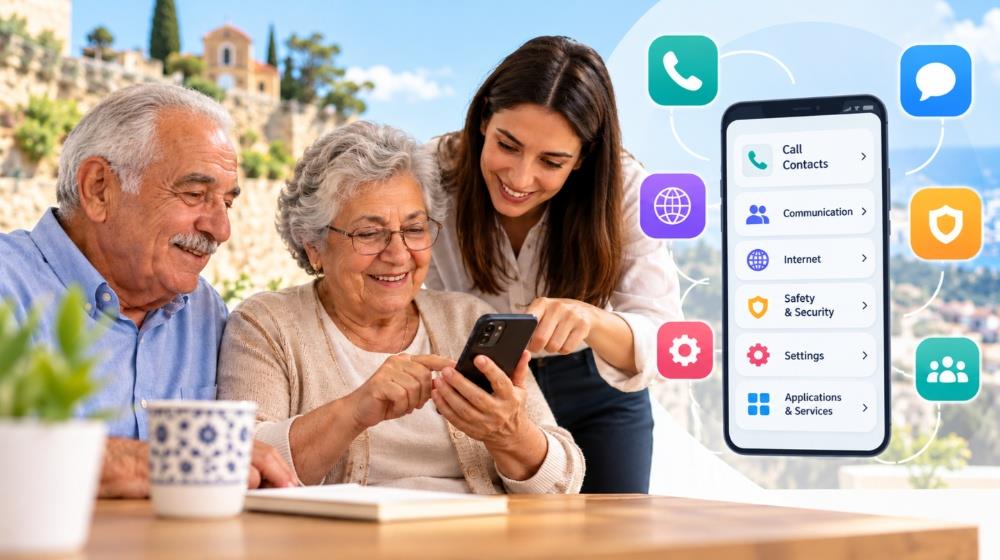
Digital Kin is built around a simple principle: technology should make people's lives easier, not become another barrier. The platform brings together six learning areas and more than 85 step-by-step guides, with material adapted for both Android smartphones and iPhones. All learning material is available free of charge, making the initiative accessible to anyone who wants to strengthen their digital skills. The six areas cover basic smartphone functions, communication, internet use, online safety, digital services and useful applications. Users can learn how to make calls, send messages and take photographs, as well as how to install applications, browse the internet and manage common smartphone settings. Rather than relying on technical terminology, Digital Kin presents each activity through short, visual sequences. Users select what they want to learn, choose whether they are using an Android device or an iPhone, and follow the instructions at their own pace. The guides can also be downloaded as PDFs, allowing users, family members and carers to print them or consult them offline. This is an important aspect of the initiative: digital inclusion should not assume that people are already confident navigating online environments.
From communication to essential services
Digital Kin goes beyond teaching people how to operate a smartphone. It also addresses digital tasks that are increasingly becoming part of everyday life in Cyprus. For example, the platform provides guidance on accessing the GeSY Beneficiary Portal, from locating the service to creating an account and logging in. It also includes instructions for using JCC Smart, helping users become more familiar with digital payments and online services.
This practical focus is increasingly relevant as public authorities, businesses and service providers continue to move more of their activities online. Digital transformation can deliver significant benefits, but those benefits can only be fully realised when citizens have the skills and confidence to access them. Digital inclusion is therefore about more than connectivity and access to devices. It is also about ensuring that people have the knowledge required to participate confidently in an increasingly digital society.
Building confidence while staying safe
Greater participation in the digital world must be accompanied by greater awareness of online risks. For this reason, online safety is a central component of Digital Kin. The platform's guides help users recognise common signs of online scams, understand what personal information should never be shared, block unknown numbers and respond appropriately when something goes wrong. Other material focuses on creating secure passwords and recognising fraudulent messages that may appear to come from trusted organisations.For people developing digital skills later in life, combining practical knowledge with cybersecurity awareness is particularly important. The aim is not simply to encourage greater use of technology, but to help people use digital tools independently, confidently and safely.
Technology that includes everyone
Digital Kin reflects the wider research and innovation mission of the CYENS Centre of Excellence and, in particular, the work of its Extended Experiences (EX) Research Group in developing human-centred technologies that can deliver meaningful societal impact. The initiative also demonstrates the value of collaboration between research and industry. By bringing together the research expertise of CYENS and the strategic collaboration of Cyta, Digital Kin translates technological knowledge into practical resources that respond to a tangible societal need. As Cyprus continues its digital transformation, success will depend not only on the sophistication of new technologies and online services, but also on ensuring that people across society are able to benefit from them. Digital Kin contributes to this goal by making digital knowledge approachable, practical and accessible — one simple step at a time.
Discover Digital Kin: https://digitalkin.cyens.org.cy/
Extended Experiences (EX) Research Group: https://ex.cyens.org.cy/