








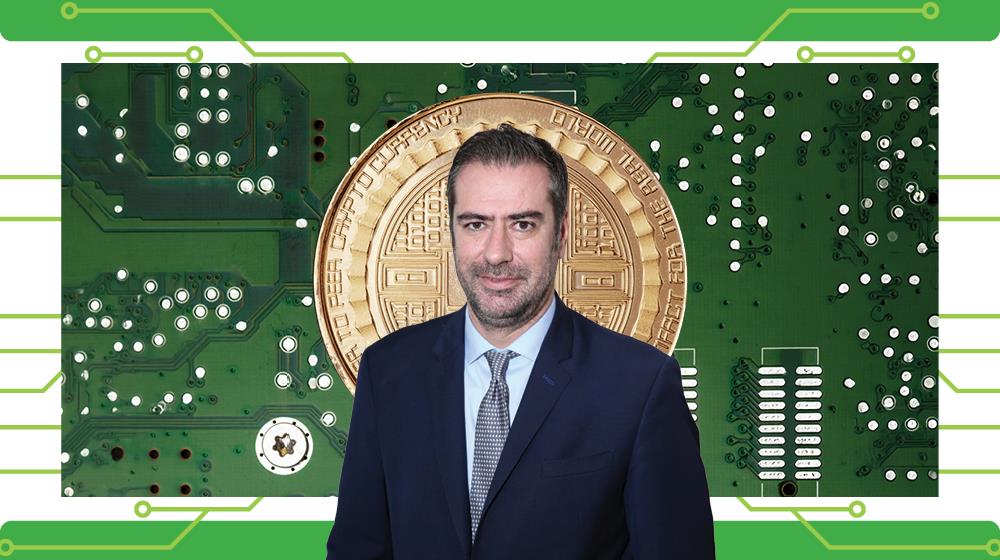
“Unlike traditional institutions, electronic money and payment institutions can rapidly integrate new compliance frameworks directly into their systems. Currently, firms are proactively adapting by investing heavily in automated compliance, biometrics and machine learning algorithms to counter emerging threats. For consumers, this evolving regulatory landscape translates into a vastly safer financial environment without sacrificing speed,” suggests the Chairman of the Association of Cyprus Electronic Money & Payment Institutions (ACEMPI), Ioannis Georgoulas.
As Electronic Money Institutions (EMIs) and Payment Institutions (PIs) continue to grow and thrive, Cyprus has positioned itself at the forefront of Europe’s fintech sector. Here, Georgoulas explains how this was achieved and why the country cannot afford to lose momentum.
In the fast-moving fintech industry, some people may still be unsure of the differences between traditional banks, EMIs and PIs. How would you explain them in simple terms? What practical benefits do EMIs and PIs offer consumers and businesses?
To look at today’s financial ecosystem is to witness a landscape that has been completely transformed by technology. While traditional banks remain the legacy pillars of credit, EMIs and PIs are the agile engines driving the modern, frictionless economy. Traditional banks are fully licensed credit institutions, whose core model relies on taking deposits and offering credit. Although they are vital to the financial infrastructure, their heavy legacy systems can make them structurally inflexible and slower to adapt to rapid technological shifts. In contrast, EMIs are regulatory-authorised entities designed specifically to issue digital alternatives to cash, known as e-money. This electronic store of monetary value acts as a prepaid instrument, facilitating seamless digital transactions by executing payments. PIs focus strictly on executing payment transactions, without regulatory permission to issue e-money. The true differentiator, however, lies in the customer experience, as EMIs and PIs build financial services around our demanding, digital-first generation. For consumers, this translates into lower costs, real-time control via digital wallets and greater financial inclusion. For businesses, it provides highly customisable payment gateways, streamlined B2B payments and agile automation that traditional banking infrastructures simply cannot support at the same speed.
Cyprus has built a reputation as an important jurisdiction for fintechs, including EMIs and PIs. Does Cyprus offer advantages over other competitive jurisdictions in the EU? What must it do to remain attractive?
Cyprus has transitioned rapidly from a Mediterranean business hub into a thriving tech and fintech powerhouse. This evolution is fuelled by several unique advantages that position us ahead of competitive jurisdictions. Our EU membership provides financial firms with seamless passporting rights to the entire European single market. This access is supported by a highly educated, multilingual workforce, particularly in STEM fields, alongside a robust ecosystem of tech-based investment firms that collectively understand how these digital institutions operate. Geo-strategically located at the crossroads of Europe, Asia and Africa, Cyprus also offers an attractive corporate tax rate, an extensive double-tax treaty network and a forward-thinking regulator – the Central Bank of Cyprus – which actively seeks to foster fintech expansion. To remain attractive globally, we must look beyond our current achievements. The next major step for our jurisdiction must be the licensing and integration of fintech banks. By establishing a specialised credit institution framework that is anchored in solid regulatory rules yet fully optimised for technology, Cyprus can provide EMIs and PIs with direct, stable access to banking rails. This will ultimately reduce our sector’s dependence on traditional banking institutions, which have historically been slower to accept rapid digital change.
Major updates to EU-wide regulations such as PSD2 have been praised as balancing transparency and consumer protection while still promoting innovation. How are EMIs and PIs adapting to this regulatory landscape, and what does it mean for consumers?
Regulation should never be viewed as an obstacle. It is the ultimate foundation of consumer trust and market stability. As the regulatory landscape matures beyond PSD2, EMIs and PIs are proving highly skilled at navigating these changes due to their agile, tech-native foundations. Unlike traditional institutions, electronic money and payment institutions can rapidly integrate new compliance frameworks directly into their systems. Currently, firms are proactively adapting by investing heavily in automated compliance, biometrics and machine learning algorithms to counter emerging threats. For consumers, this evolving regulatory landscape translates into a vastly safer financial environment without sacrificing speed. Consumers are gaining unprecedented control over their financial data through Open Banking, which allows secure, third-party providers to deliver highly tailored financial solutions and seamless payment initiation. Ultimately, these regulatory advancements will build a safer digital economy where consumer protection and financial innovation go hand in hand.
What should consumers expect from this industry over the next five years?
Consumers should expect a complete paradigm shift, where the boundaries of traditional money, digital currencies and decentralised assets blur entirely. Physical currency and traditional payment methods will continue to decline as digital-first options take over. With the development of the digital euro by the European Central Bank, we are moving toward a unified public digital payment infrastructure that will act as an opportunity for private fintech innovation. Rather than replacing private electronic money, a digital euro will allow EMIs and PIs to build advanced programmable payment features and highly secure consumer applications. Simultaneously, the implementation of harmonised frameworks like the MiCA regulation will bring unprecedented legitimacy and safety to the digital asset space. This regulatory clarity will allow regulated stablecoins and electronic money tokens to become standard utility options for global, real-time checkouts. Consumers will transition fully to intelligent digital wallets powered by AI-driven personal finance assistants, biometric authentication and frictionless mobile points of sale. At ACEMPI, our vision is to keep Cyprus at the absolute vanguard of this transformation, proving that, with the right foresight, robust regulation and cutting-edge innovation can co-exist to build a truly borderless, cashless economy.
