







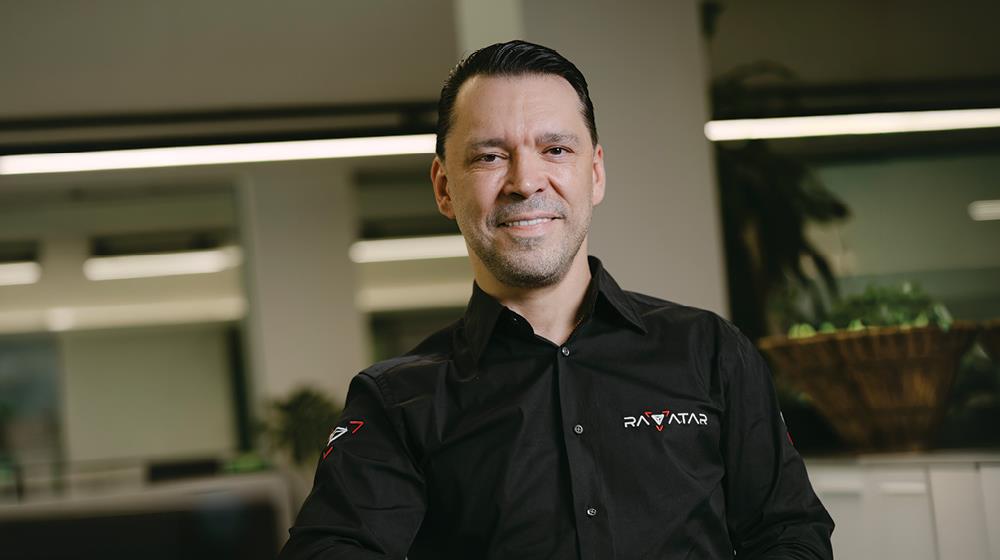
For those working at the cutting edge of technology, this is quite a remarkable moment. They find themselves operating in a landscape where ambition travels at the speed of code and ideas exist simultaneously in the physical world and, beyond it, in cyberspace.
In a recent interview with GOLD magazine, Ruslan Synytsky, founder and CEO of RAVATAR, which is based in Limassol, talks about his entrepreneurial journey, the evolution of AI, and the next chapter of human interaction.
“Let’s think about how we’ve always reached one another,” Ruslan Synytsky says with the quiet conviction of someone who knows his craft intimately. “For centuries we sent letters and a message took weeks. Then electricity gave us the telephone, and distance collapsed into a voice. Then screens gave us video and we could finally see the person on the other end. AI is walking that same path – only far faster.”
Face-to-face conversations with AI
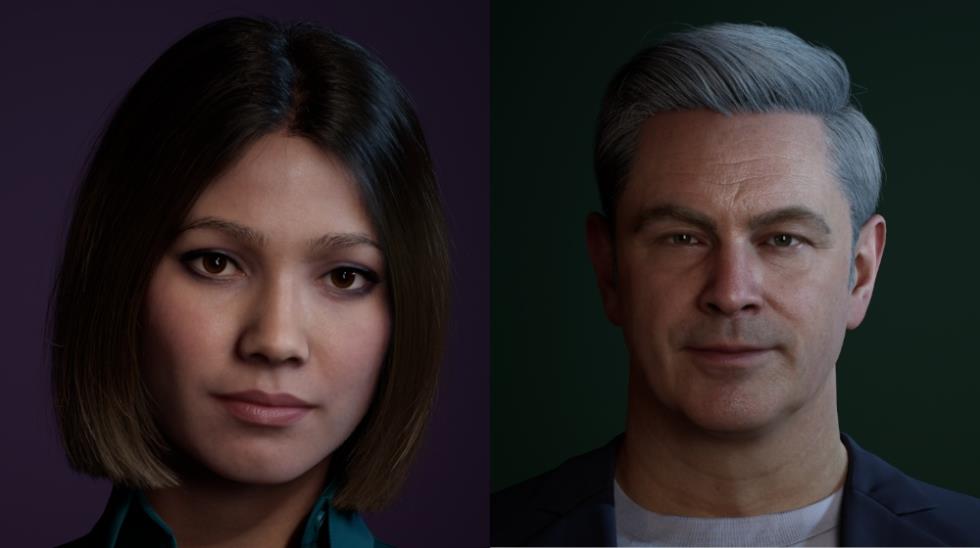
Humanity has already tapped into artificial intelligence (AI) and begun speaking to it. The next step, Synytsky believes, is equally obvious: face-to-face conversations with AI that can understand emotion and respond naturally in real time. It is an idea that sounds almost cinematic, yet when listening to this man speak, the extraordinary quickly becomes matter-of-fact. There is no trace of the science fiction evangelist about him. Instead, he approaches the future with the calm pragmatism of someone who has spent decades building technologies that once seemed equally improbable.
Long before Generative AI entered everyday conversation, as co-founder and CEO of Jelastic, Synytsky helped transform the economics of cloud infrastructure through an innovative pay-as-you-use model, growing the platform from a startup into a global business operating in more than 100 data centres across over 40 countries. The journey brought him into collaboration with some of the industry’s most influential figures, including Java creator James Gosling, PHP creator Rasmus Lerdorf and MySQL founder Michael Widenius.
When Jelastic reached maturity, he found himself asking the question familiar to every entrepreneur who thrives on invention: “What comes next?” The answer arrived as he reflected on the rapid emergence of Generative and Conversational AI. The technology was becoming smarter but something fundamental still felt absent. Everyone was focused on improving the intelligence behind the machine. Very few were thinking about how people would actually experience it: that was the genesis of RAVATAR.
RAVATAR concentrates on giving AI a believable, approachable presence. For Synytsky, intelligence may power the conversation but it is presence that transforms it into something genuinely human. It is perhaps no surprise that many companies have embraced chatbots as the public face of AI. Yet he never believed that conversation should end in a text box. The company’s avatars do not rely on carefully scripted exchanges or pre-recorded responses. “That’s because we built one engine that handles speech, understanding, emotion and rendering together” he explains. “No chaining of separate tools, no lag, fast enough to feel instant. Just a natural back-and-forth. Second, we go beyond a talking head. Most competitors stop at a face on a screen. We build avatars of all sizes, including full-body, and obsess over the details: body animation, facial expression, lip-sync. And the same avatar adapts to any surface, from a phone to a life-size hologram, with no separate builds – so businesses can meet customers wherever they are. A moment of curiosity becomes a conversation. A conversation becomes a happy customer.”
The importance of usefulness
While many AI platforms depend entirely on public cloud infrastructure, RAVATAR’s technology can be deployed inside a client’s own secure environment. Banks, hospitals and government organisations can run the entire system on their own servers, ensuring that sensitive information never leaves their premises. For highly regulated industries, that distinction is critical. Security requirements often prevent organisations from adopting conventional AI services, regardless of how capable they may be. By removing that obstacle, it has solved one of the industry’s most significant barriers to adoption.
Yet despite building avatars that can appear strikingly lifelike, Ruslan Synytsky is quick to dismiss what he considers one of AI’s greatest misconceptions. The assumption that realism alone creates value, he argues, entirely misses the point. A convincing digital face may capture attention but what ultimately matters is whether the avatar can simplify complex information, respond to individual needs and make services easier to access. The most successful avatars are not necessarily those that look the most human but the ones that prove the most useful.
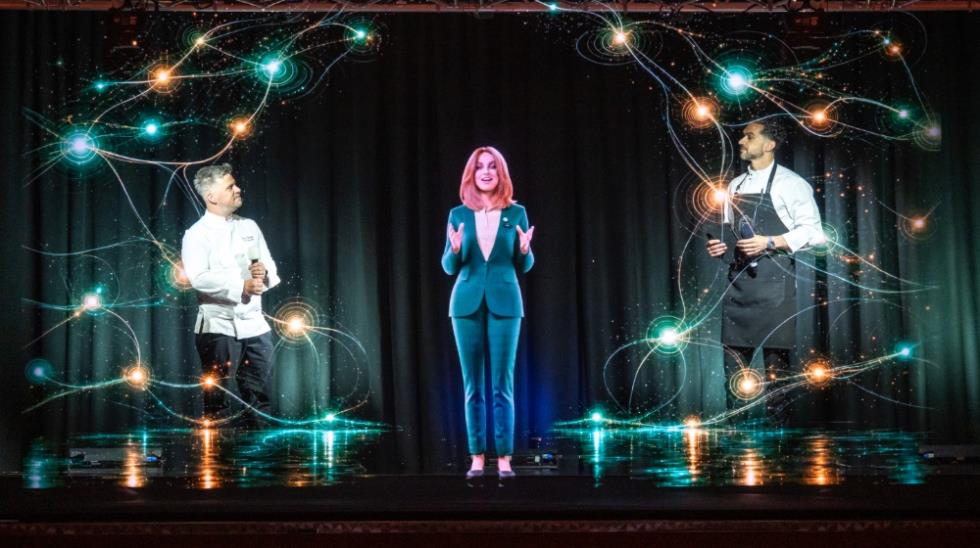
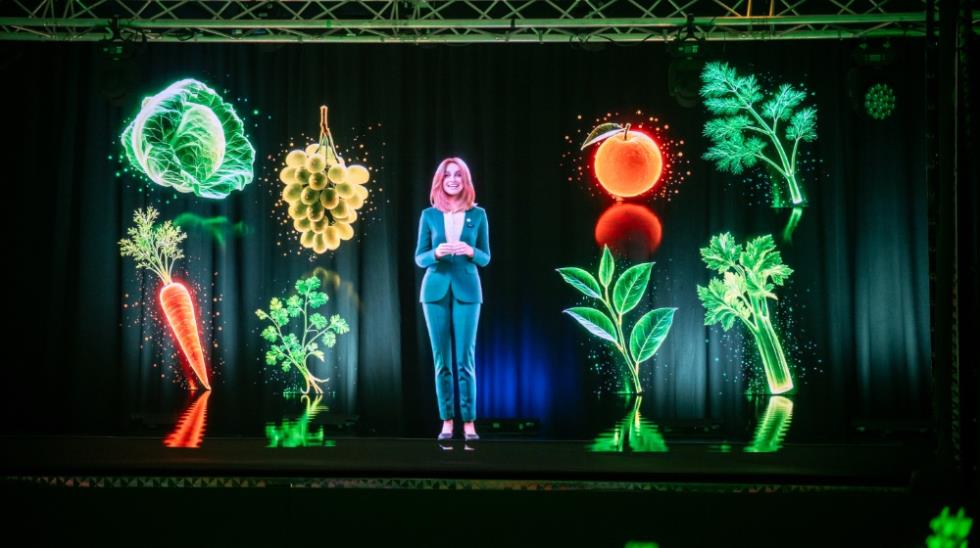
That philosophy has led RAVATAR into places few would have predicted. Earlier this year, London’s Pullman St Pancras hotel hosted The Future We Taste, an evening exploring experimental cuisine. Synytsky recalls with a smile how, as guests sampled dishes that included a three-dimensional printed plant-based steak, they were greeted by Anna, a photorealistic AI hologram created by RAVATAR. Rather than delivering rehearsed presentations, Anna spent the evening engaging guests in conversation and answering spontaneous questions. Likewise, at the new AI Experience Centre of Luxembourg’s House of Financial Technology (LHoFT) visitors were introduced to Kristal, RAVATAR’s financial adviser avatar. Presented as a hologram, she explained financial products, answered questions and demonstrated how AI can transform customer engagement within banking. The launch formed part of Luxembourg’s national AI strategy and attracted some of the country’s most senior political figures, including the Grand Duke, Prime Minister Luc Frieden and Finance Minister Gilles Roth.
For Synytsky, milestones like these are deeply satisfying, yet when asked what achievement makes him proudest, his answer is unexpectedly modest – the fact that RAVATAR has reached this point on its own terms. “We’re self-funded. Our customers place repeat orders. Our revenue is growing and the technology gets better every day.”
Choosing Cyprus
Cyprus may at first seem like an unexpected home for a company attempting to give AI a human presence, yet Synytsky describes the island not as a compromise but as a place where ambition and high quality of life can exist in balance. “Cyprus offers a genuinely favourable business environment. The IP Box regime is very attractive for IT companies, corporate tax is competitive and the legal framework is aligned with the EU, lowering the cost and risk of investing in research and development. World-class engineers can work from anywhere, so they’ll choose where they actually want to live. Cyprus already offers that life – so it should build on it, keep backing the ecosystem and the talent will follow.”
After years spent in technology, it would be understandable if some of the wonder had faded but Ruslan Synytsky appears even more energised by the future. “Honestly, after decades in this field, I’m more excited now than when I started,” he tells me. “The pace hasn’t slowed; it’s accelerated and we’re living through one of those rare moments when the ground genuinely shifts under your feet,” he says with the excitement of someone who can already see the outlines of what is coming. Of all the possible applications for RAVATAR’s technology, the one he speaks about most passionately is healthcare. “The application I truly believe in is an AI healthcare assistant that checks in on patients with warmth, answers their questions and gives them attention at any hour of the day, easing the load on nurses and doctors rather than replacing them.”
Synytsky is, above all, an explorer – drawn to unfinished worlds and industries whose rules have not yet been written. Building is not merely what he does; it seems to be the way he understands the world. When I ask what he might have been doing if he were not the CEO of RAVATAR, his answer reveals that the company is less a destination than the latest expression of a lifelong instinct. “Honestly, I’d still be building, or at the very least exploring. I’ve been an entrepreneur my whole career and my curiosity doesn’t switch off. If it weren’t avatars, I’d be deep in another emerging frontier – quantum or probabilistic computers, bio-hacking, brain-computer interfaces, synthetic biology, humanoid robotics. Fields where the technology is still being invented.”
He pauses before returning to the idea that has guided much of his career. “What pulls me is always the same thing: being early, where the rules aren’t written yet.” Listening to him, I find myself confirming that our greatest challenge is not the technology itself but the choices we make with it. Building new worlds has always been one of humanity’s greatest tests. And if, rather than destroying the ones we already have, technology helps us create new ones guided by curiosity, compassion and purpose, then perhaps the future is not something to fear but something worth building.
(Original photo by Giorgos Charal.)
This interview first appeared in the August edition of GOLD magazine. Click here to view it.