






In the heart of the Solea Valley, where olive cultivation has shaped the landscape for generations, Atsas Organic Products Ltd has built a reputation for producing some of Cyprus's highest-quality organic extra virgin olive oils.
Combining scientific knowledge, sustainable farming and full control of the production process, the company has successfully positioned Cypriot olive oil among the world's premium products while demonstrating how innovation can drive rural development.
Its journey also highlights how the European Union's Common Agricultural Policy (CAP) supports sustainable agriculture, innovation and the long-term competitiveness of rural businesses.
As part of the Eat Wisely Cyprus project, co-funded by the European Union under the IMCAP programme and implemented by IMH, Eat Wisely spoke with the Atsas team about the company's vision, production philosophy and international growth.
Transforming a vision into reality
Atsas Organic Products was founded with an ambitious goal: to transform land located within Cyprus's buffer zone into a productive organic farm producing premium-quality olive oil.
As Commercial Manager Nicholas Savvides explains:
"The vision was to create something unique in a place considered 'dead'—to prove that life, quality and value can emerge through nature."
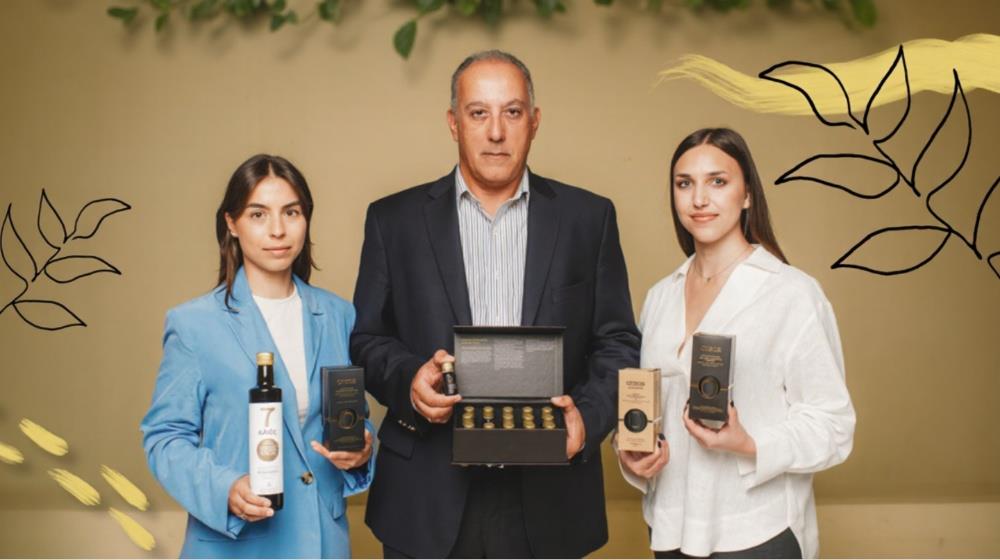
Today, the company operates through a multidisciplinary team, including Operations Manager Anastasia Panteli and Food Scientist Maria Okkaridou, who oversee production, quality assurance and product development.
Its product portfolio includes Atsas Silver Edition, Atsas Gold Blend Edition, Atsas Limited Edition, 7 Elies, and the Atsas Natural Food Supplement, all produced from certified organic olives.
Quality begins in the grove
The Solea Valley offers ideal conditions for olive cultivation thanks to its unique microclimate, soil composition and long agricultural tradition.
Maintaining quality, however, requires continuous adaptation.
Climate change has increased the challenges facing producers, making efficient water management and sustainable cultivation practices more important than ever.
"We continuously adapt our farming practices, invest in modern irrigation systems and apply soil-cover techniques to retain moisture," explains Maria Okkaridou.
The company follows certified organic farming methods, including crop cover, natural soil improvement and environmentally responsible cultivation practices designed to protect biodiversity and maintain soil health.
Controlling every step
Atsas follows a fully integrated production model, controlling every stage from cultivation and harvesting to milling, bottling and final quality control.
Harvest timing, rapid processing and cold extraction are carefully managed to maximise the nutritional value and preserve the sensory characteristics of the olive oil.
"By controlling every stage of production, we ensure maximum quality while preserving the product's unique characteristics."
The company also applies strict quality controls and internationally recognised standards throughout production, ensuring consistency and full traceability.
Building an international reputation
Today, Atsas Organic Products exports to markets across Europe, Asia and North America, where demand for premium organic products continues to grow.
International recognition has played a major role in building the company's reputation.
"Winning more than 80 international awards has been instrumental in strengthening our brand and expanding our presence abroad," says Nikolas Savvides.
One of the company's strongest competitive advantages is the exceptionally high concentration of natural polyphenols in its olive oil, a characteristic increasingly valued by health-conscious consumers worldwide.
Supporting rural development
Beyond producing premium olive oil, Atsas contributes to the wider development of the Solea region by creating employment opportunities, collaborating with local suppliers and promoting rural entrepreneurship.
European support programmes have also contributed to the company's development through investment in modern technology, sustainable farming and export growth.
"These programmes help businesses become more competitive while reducing the technology and knowledge gap."
The company's experience illustrates how innovation, scientific expertise and targeted policy support can strengthen the resilience and competitiveness of rural enterprises.
Looking ahead
For the Atsas team, producing olive oil goes far beyond agriculture.
Their ambition is to continue promoting Cyprus as a producer of premium-quality olive oil while investing in sustainable farming practices, scientific innovation and international market development.
By combining environmental responsibility, advanced production techniques and a clear long-term vision, Atsas Organic Products has become a leading example of how Cypriot agriculture can compete successfully on the global stage.
About Eat Wisely Cyprus
This feature was produced as part of the Eat Wisely Cyprus project, co-funded by the European Union under the Information Measures Relating to the Common Agricultural Policy (IMCAP) programme and implemented by IMH.
The views and opinions expressed are those of the authors and do not necessarily reflect those of the European Union.
This interview first appeared in the July edition of InBusiness magazine. Click here to view it.
