







For more than a century, the cultivation of Rosa damascena has been inseparable from the identity of Agros. Today, the Rose Cultivation Cooperative of Agros Ltd. continues that legacy by combining traditional cultivation methods with modern production standards, producing certified Agros Rose Distillate (PGI) and a growing range of value-added products that support both the local economy and the long-term sustainability of rose cultivation.
The cooperative's journey also illustrates how the European Union's Common Agricultural Policy (CAP) can support traditional agriculture, encourage sustainable production and strengthen rural communities through quality, innovation and collaboration.
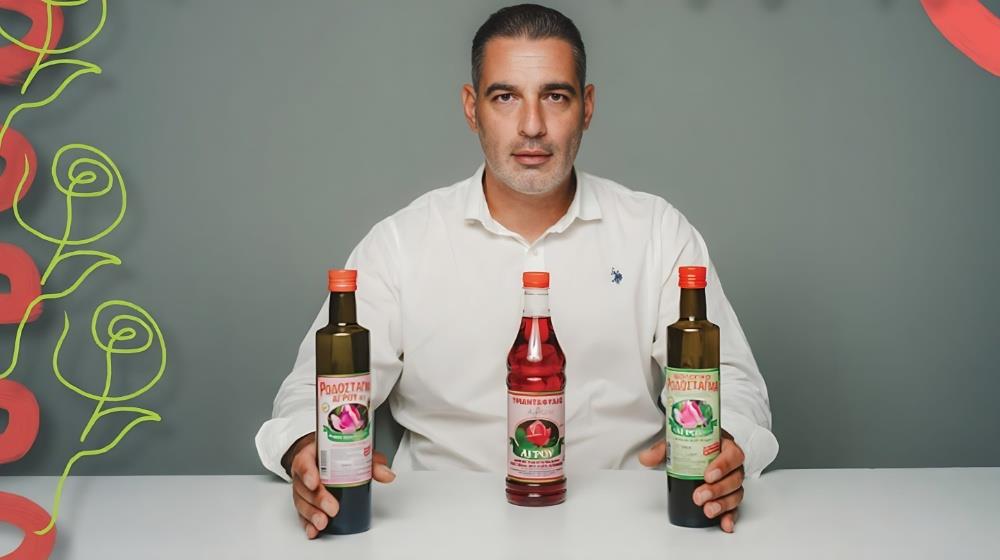
As part of the Eat Wisely Cyprus project, co-funded by the European Union under the IMCAP programme and implemented by IMH, Eat Wisely spoke with Yiannos Chatzipetris, President of the Rose Cultivation Cooperative of Agros Ltd., about the cooperative's history, production philosophy and vision for the future.
A tradition that continues to flourish
The story of rose cultivation in Agros dates back to 1917, when teacher Nearchos Clerides introduced the cultivation of Rosa damascena, recognising both its agricultural potential and its value for the local community.
The following year, the village carried out its first rose distillation, laying the foundations for an activity that would gradually become one of Agros' defining traditions.
Since 1961, the Agros Rose Producers Cooperative has coordinated the production and marketing of Agros Rose Distillate, bringing together around 100 growers, all cultivating Rosa damascena exclusively within the designated geographical area of Agros.
Each harvesting season, the cooperative collects between 15 and 20 tonnes of fresh rose petals, combining generations of expertise with modern production standards to ensure consistent quality.
"Our work focuses on cultivating aromatic roses and producing rose distillate, while also developing products such as syrups, sweets and cosmetics," says Yiannos Chatzipetris.
Nature's role in creating quality
The exceptional quality of Agros Rose Distillate begins in the fields.
The altitude of Agros, together with its cool nights, mild temperatures and clean mountain air, creates ideal conditions for cultivating Rosa damascena, enhancing the flowers' natural fragrance and essential oil content.
Harvesting takes place during the early morning hours, when the flowers are at their aromatic peak, before they are transported directly to the cooperative's distillery for immediate processing.
This careful handling helps preserve the delicate characteristics that distinguish Agros Rose Distillate from similar products.
The cooperative has invested in modern distillation equipment while maintaining the traditional methods that define the product's authenticity and quality.
Certified quality and continuous innovation
One of the cooperative's most important achievements has been securing Protected Geographical Indication (PGI) status for Agros Rose Distillate, recognising its strong connection to the Agros region and the traditional production methods that have been preserved for generations.
Building on this achievement, the cooperative has recently expanded its production to include organic PGI Agros Rose Distillate, responding to growing consumer demand for certified organic products while maintaining the same high standards of quality and authenticity.
Strict quality controls, traceability and the exclusive use of locally cultivated roses ensure that every bottle reflects the unique identity of Agros.
Beyond its traditional culinary uses, Agros Rose Distillate is also widely appreciated for its natural fragrance and its applications in cosmetics and personal care products, creating new opportunities for product diversification and market growth.
Creating value beyond rose cultivation
For the Rose Cultivation Cooperative of Agros Ltd., producing rose distillate is only part of a broader strategy to create added value from a traditional crop.
By expanding into syrups, sweets, cosmetics and, more recently, organic PGI Agros Rose Distillate, the cooperative has diversified its product portfolio while responding to evolving consumer demand for authentic, high-quality and sustainably produced goods.
This approach has strengthened the economic resilience of the cooperative and created new opportunities for local producers, allowing the same raw material to generate value across multiple product categories.
At the same time, maintaining production in Agros ensures that the benefits of this growth remain within the local community.
Supporting producers and the local economy
The cooperative plays a central role in sustaining rose cultivation in Agros by providing growers with a stable market for their harvest and ongoing technical support.
Its activities contribute directly to preserving agricultural traditions while creating employment and supporting businesses linked to production, processing and tourism.
As Yiannos Chatzipetris explains, the cooperative's long-term objective extends beyond commercial success.
"Our vision is to further develop rose cultivation in Agros while respecting tradition and maintaining the highest standards of quality."
Encouraging younger generations to become involved in rose cultivation is equally important.
Training, knowledge transfer and creating sustainable employment opportunities are essential to ensuring that this unique agricultural tradition continues to thrive.
The role of the Common Agricultural Policy
Operating in a mountainous region presents challenges, including higher production costs and the need to maintain traditional cultivation methods while remaining competitive.
European support measures have played an important role in helping the cooperative strengthen its production, improve quality and invest in innovation.
The introduction of organic PGI Agros Rose Distillate is one example of how traditional products can continue to evolve while remaining firmly connected to their geographical origin.
Support provided through the Common Agricultural Policy has also encouraged sustainable cultivation practices, strengthened producer cooperation and enhanced the long-term viability of rose cultivation in Agros.
Looking ahead
For the Rose Cultivation Cooperative of Agros Ltd., the future lies in continuing to build on more than a century of experience while adapting to changing consumer expectations.
Expanding awareness of PGI Agros Rose Distillate, developing new value-added products and strengthening the cooperative's presence in both domestic and international markets remain key priorities.
At the same time, preserving the authenticity of the product and supporting the people who cultivate it will continue to define the cooperative's mission.
A tradition that continues to bloom
The story of the Rose Cultivation Cooperative of Agros Ltd. demonstrates how collective effort, local expertise and continuous innovation can transform a traditional agricultural activity into a sustainable business model with long-term value.
By preserving a century-old tradition while embracing certified quality, organic production and responsible growth, the cooperative continues to strengthen the economy of Agros and promote one of Cyprus's most distinctive agricultural products.
Its experience is a reminder that when tradition is supported by cooperation, innovation and a shared vision, rural communities can continue to grow while preserving the heritage that makes them unique.
About Eat Wisely Cyprus
This feature was produced as part of the Eat Wisely Cyprus project, co-funded by the European Union under the Information Measures Relating to the Common Agricultural Policy (IMCAP) programme and implemented by IMH.
The views and opinions expressed are those of the authors and do not necessarily reflect those of the European Union.
This interview first appeared in the July edition of InBusiness magazine. Click here to view it.
