


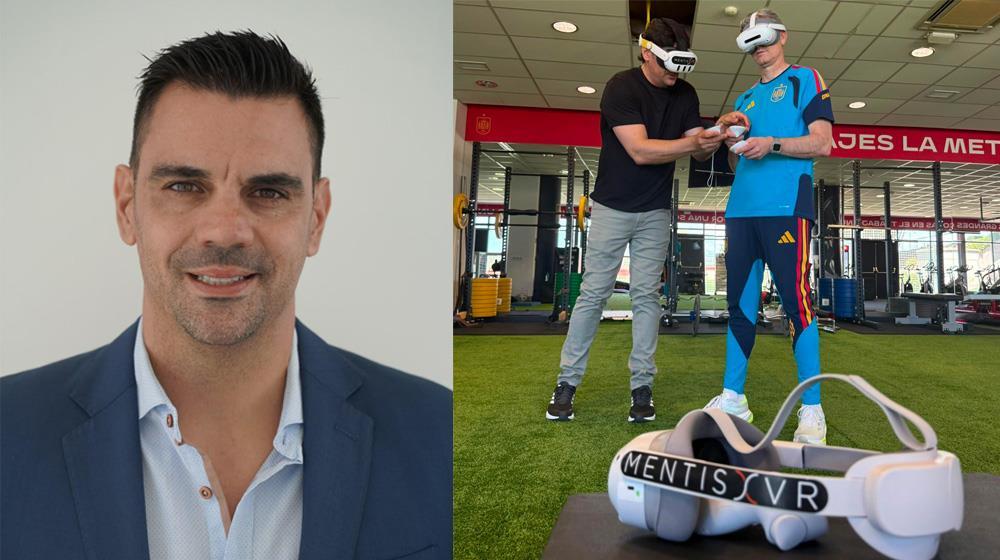
Spain’s World Cup triumph was not just a footballing achievement, it was further proof of how decisive science and technology have become in modern sport. Contributing to the world champions’ journey was MentisVR, an innovative Cypriot Virtual Reality (VR) platform.
Its co‑founder and CEO, Urko Pardo, a former professional goalkeeper and La Masía (Barcelona) academy graduate, explains how the company’s technology is used by top football organisations, how EU/ Cyprus cohesion funding (“THALEIA 2021–2027”) helped turn a research idea into a globally competitive product, and what comes next for Cypriot innovation in international markets. He also addresses whether the same technology can be applied to other sports or sectors.
From Cyprus to the world’s biggest stadiums
Technology is constantly reshaping professional sport, but innovation no longer stops at fitness or match data analysis. The next frontier is training the brain itself, so athletes make faster, higher‑quality decisions under real‑match pressure.
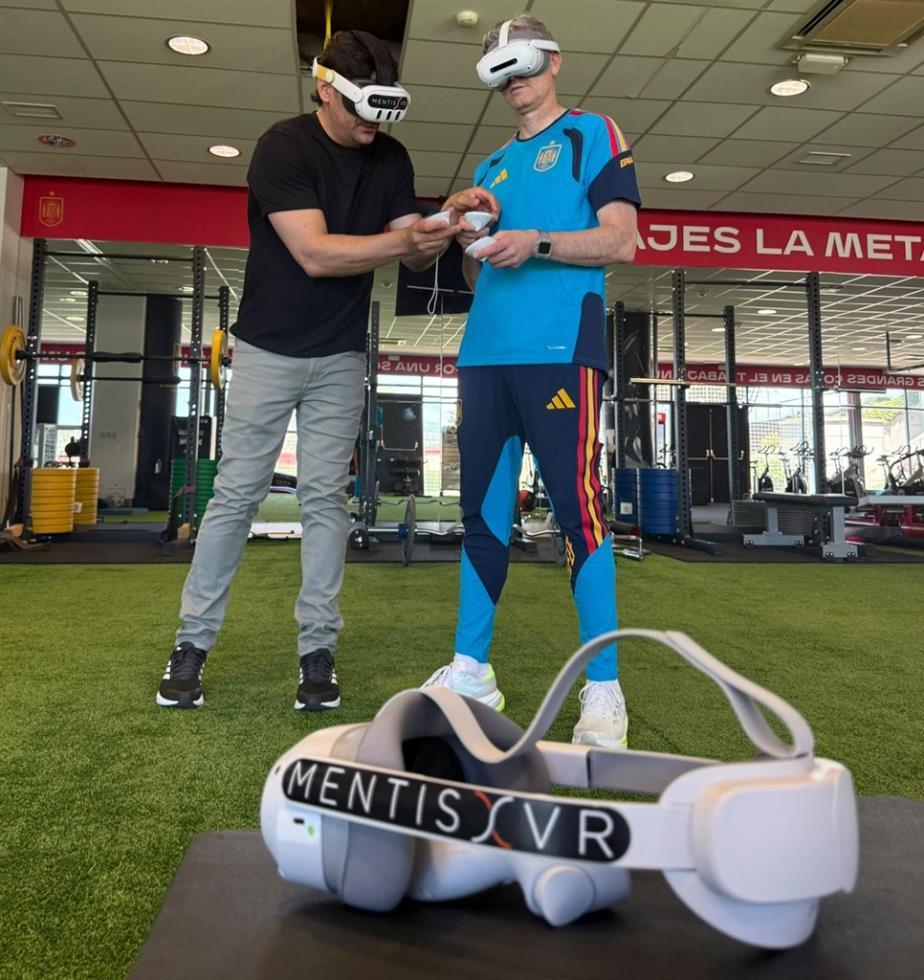
That is exactly what MentisVR does. The Cyprus‑based startup has built a pioneering mental training platform using Virtual Reality, already attracting interest from elite football organisations and forming part of Spain’s preparation before their World Cup win, showcasing its capabilities at the highest level of global football.
Behind the effort is Urko Pardo, co‑founder and CEO, whose top‑level playing career helped shape MentisVR’s philosophy: bridging science, sport and technology through an interdisciplinary team.
The starting point was simple but powerful: while clubs invest heavily in physical and technical training, systematic cognitive skills training remains limited.
From 2018, the MentisVR team began experimenting with VR as a mental training tool, aiming to create an environment where athletes can practise attention, perception, memory and—crucially—decision‑making under intense time pressure, closely simulating real match demands.
Today the platform serves professional teams, academies and individual athletes. While football is the core use case, the technology has been adapted or trialled in other sports including basketball, volleyball, handball, badminton and martial arts.
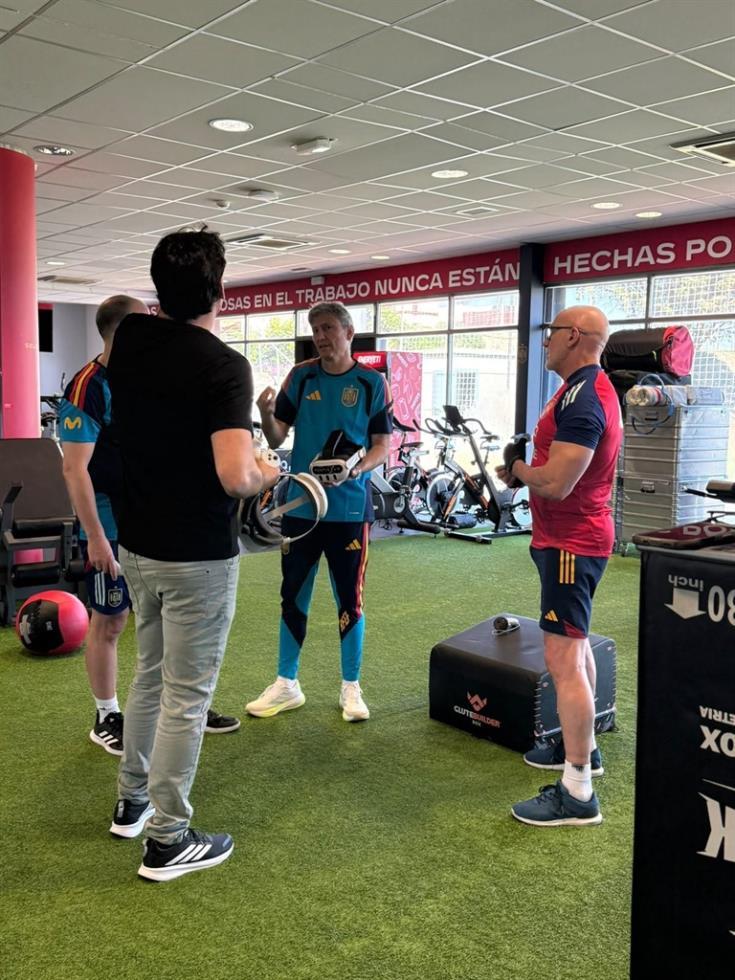
Turning a research concept into an internationally competitive product required significant investment. To date, MentisVR has invested over €1.2 million in developing its technology.
Critical was the MENTIS project (total budget €588,000) under the Seed business innovation scheme of the Research and Innovation Foundation, co‑financed by the EU and the Republic of Cyprus within the Cohesion Policy Programme “THALEIA 2021–2027”.
This support reduced the risk inherent in R&D and enabled the company to build the technological base on which it continues to invest today.
MentisVR’s core innovation lies in combining Cognitive Psychology, Neuroscience and Virtual Reality.
Through realistic match simulations, athletes must make decisions in seconds, as in a real game. The platform not only trains these skills but also measures them objectively, turning mental training into a data‑driven process.
This addresses a long‑underutilised gap in professional sport, linking theoretical scientific knowledge to real on‑pitch performance.
From research to the global market
Beyond the tech, MentisVR has built a service‑based business model for professional sports organisations, not just selling VR hardware.
The platform offers multiple levels of cognitive and tactical training, plus a cloud‑based analytics system so coaches and athletes can track progress, evaluate performance and design personalised training scenarios aligned to each team’s tactical model.
The company also provides scientific and research support via collaborations with universities and research institutes.
Commercially, MentisVR now works with professional teams and academies across Europe, the United States and other countries, with many partnerships under confidentiality agreements.
MentisVR has moved beyond prototyping into a fully commercial product, already generating revenue and validated in real conditions by top sports organisations.
The next step is accelerating growth via more long‑term contracts with clubs and academies, while expanding into the individual athlete market, leveraging the credibility built over recent years.
The biggest challenge
Paradoxically, the biggest hurdle for a Cypriot startup is not necessarily access to elite clubs. Organisations with a culture of investing in science and human development -such as major clubs and leagues like La Liga- are highly receptive to evidence‑based technologies.
The real difficulty is shifting mindsets in parts of the market where mental training is still seen as secondary to fitness and technique. Adopting new tech takes time, education and, above all, trust, built through measurable results, scientific proof and high‑profile collaborations.
This is MentisVR’s key advantage: it is not “just another VR app”, but a comprehensive mental training platform grounded in Cognitive Psychology and Neuroscience, tested in real competitive settings.
Development rests on a broad network of academic and research partners, including the University of Cyprus, CYENS Centre of Excellence, UCLan Cyprus, and universities in the Czech Republic and Belgium.
Linking scientific research with advanced tech and elite sport needs allows MentisVR to deliver a solution combining reliability, objective assessment, personalisation and direct on‑field application, differentiating it in a fast‑growing global market.
The World Cup
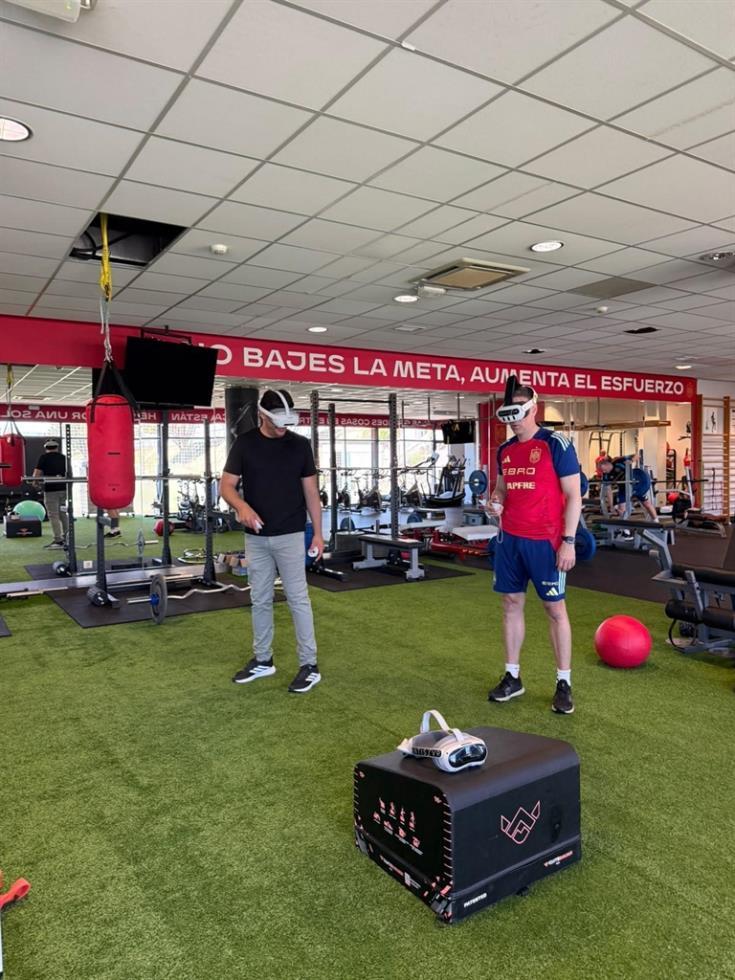
Every innovator has a turning point. For MentisVR, it came when its technology was integrated into Spain’s FIFA World Cup preparation.
The collaboration grew from trust built over time. Urko Pardo’s contacts with Juanjo Roa, then goalkeeping coach at Getafe CF, led to an introduction to Miguel Ángel España, the Spanish national team’s goalkeeping coach.
After a presentation in Madrid to the national team’s technical staff—and a hands‑on experience of the platform—the decision was made to include it in the squad’s World Cup build‑up.
For MentisVR, this was more than a commercial deal: it was the strongest validation yet that Cypriot‑developed technology can meet the demands of the highest level of world football and win the trust of a top international organisation.
Working with the world champions became a reference point for MentisVR’s global profile. Alongside existing partnerships, the company is in talks with major European clubs, organisations in top international competitions, US academies, and professional footballers—many under confidentiality.
In Cyprus, it continues to invest locally, collaborating with academies and sports bodies for research, collecting valuable data, evaluating effectiveness across athlete levels and continuously improving the platform.
Its international footprint extends further via collaboration with the Brazilian Paralympic Committee, showing the technology’s applicability beyond traditional professional football.
Beyond football
While football remains the core focus, the technology’s potential goes further. MentisVR has already trialled applications in basketball, volleyball, handball, martial arts and badminton, developing specialised tools for each sport’s cognitive demands.
The tech also opens significant prospects in rehabilitation. Athletes sidelined by injury can continue training critical cognitive skills until return to play, maintaining functions that directly affect performance.
A standout case is Real Madrid goalkeeper Thibaut Courtois, who used MentisVR during his rehabilitation, highlighting its potential even in the most demanding professional sport scenarios.
A Cypriot success story
MentisVR’s trajectory shows the potential of Cypriot innovation when it combines scientific knowledge, entrepreneurial vision and global ambition.
From a 2018 research idea, it evolved into an organisation with commercial presence, international partnerships and technology used by top sports bodies. With support from “THALEIA 2021–2027”, it accelerated development and turned research into a product with real value for the global market.
The next challenge is bigger still: to become a global reference point in athletes’ mental training and prove that technology designed and built in Cyprus can help shape the future of world sport.