







In my experience, periods of uncertainty reveal the true meaning of wealth. Wealth is not only measured by assets accumulated, portfolios built or businesses created. It is also measured by resilience: the ability of families, entrepreneurs and organisations to withstand disruption, preserve what they have built and continue moving forward with confidence.
This is particularly relevant today. The Cypriot economy continues to operate amid complexity, opportunity and uncertainty. Geopolitical tensions, inflation, energy volatility, climate risks and rising regulatory expectations are reshaping decisions for households, businesses and financial institutions. Yet Cyprus remains resilient, supported by growth, robust public finances, a healthy labour market and strengths in services, tourism, technology, real estate and financial intermediation.
Within this landscape, the insurance industry has a more important role to play than is often recognised. Insurance is sometimes viewed narrowly as a necessary product or regulatory requirement. In reality, it is one of the essential mechanisms through which societies organise risk, mobilise long-term capital and protect economic progress.
The insurance sector in Cyprus has demonstrated considerable resilience. Premium growth has consistently outpaced the wider economy, the industry remains well capitalised and, as a major institutional investor, collectively manages more than €3 billion in assets. Insurance companies therefore act not only as payers of claims but also as long-term stewards of capital, stability and trust.
For High Net Worth Individuals (HNWIs) and families, this role deserves particular attention. A sophisticated wealth strategy cannot be limited to generating returns alone. It must also consider continuity, liquidity, succession, protection and the capacity to absorb shocks. The relevance of insurance is best understood through two complementary dimensions: wealth creation and wealth protection. I have always believed that insurance sits uniquely at the intersection of both.
Access to capital markets remains one of the most powerful sources of long-term wealth creation. Real estate will continue to support wealth preservation, particularly as a hedge against inflation, but much of its value is concentrated in illiquid assets. Capital markets, by contrast, offer diversification, liquidity and the compounding potential required to build wealth across generations.
At the same time, market headwinds remain firmly in place. Geopolitical instability, renewed inflationary pressures and elevated asset valuations continue to test investor confidence. In such an environment, disciplined diversification, long-term planning and robust risk protection become even more important.
At an individual and corporate level, insurance protects wealth by transferring catastrophic risks such as death, disability, liability, property damage, business interruption or medical emergency to a wider collective pool. For families, this preserves stability during difficult moments. For businesses, it enables calculated risk-taking and growth without the fear that a single incident could threaten continuity.
Insurance also contributes directly to wealth creation. Globally, insurers are among the largest institutional investors. By collecting premiums today and paying claims over future years or decades, they accumulate reserves that are invested prudently and at scale.
This capital supports government bonds, corporate debt, infrastructure, energy transition projects and broader capital market activity. In doing so, insurers provide long-term liquidity and stability, helping the financial system remain healthy and capable of compounding wealth for their customers and for society as a whole.
This is why the wealth dimension of insurance will become increasingly important. Long-term wealth requires capital to be allocated to vehicles that can outpace inflation and compound over time, while remaining protected from unforeseen or catastrophic events. A complete wealth strategy therefore needs both disciplined investment and intelligent protection.
Investment plans: Structured investment solutions help individuals and families accumulate wealth according to their risk appetite, time horizon and objectives. Modern solutions may include UCITS, exchange-traded funds or unit-linked insurance products, where part of the premium provides protection and the rest is allocated to investment portfolios. This allows insurance to evolve from a defensive safety net into a disciplined wealth-compounding framework.
Pension plans: Pension plans are long-term vehicles for retirement planning and intergenerational security. Their horizon allows capital to benefit from multi-decade compounding, while tax incentives support disciplined saving. Under a Class 7 licence, an insurance company may also manage investments of large-scale institutional pension funds, combining actuarial expertise, risk management and investment capability.
Property and business protection: Property remains central to wealth for many families. Where it is linked to business activity, such as factories, offices, hotels or commercial premises, protection must extend to loss of profits and business interruption. The objective is not only to repair damage, but to preserve continuity and long-term value.
For ERB Cyprialife and ERB Asfalistiki, members of the leading Financial Group of Eurobank, this broader role is central to our responsibility. We do not simply provide products. We help individuals, families and businesses plan more effectively, invest more intelligently, protect what they have created and build resilience across generations.
This responsibility is becoming more important as households become more financially aware, companies face more complex risks and retirement planning becomes more urgent. The insurance industry has both the opportunity and the obligation to help shape a more secure, better-prepared and financially resilient society.
For me, insurance is more than a contract. It is a framework of confidence. It protects today, prepares for tomorrow and creates the conditions for people, families and businesses to move forward with greater certainty.
In an age of uncertainty, such certainty has real value. It is the value of protection, foresight and long-term trust. This is where I believe the insurance industry must lead: by helping transform risk into resilience, savings into opportunity and protection into lasting wealth.
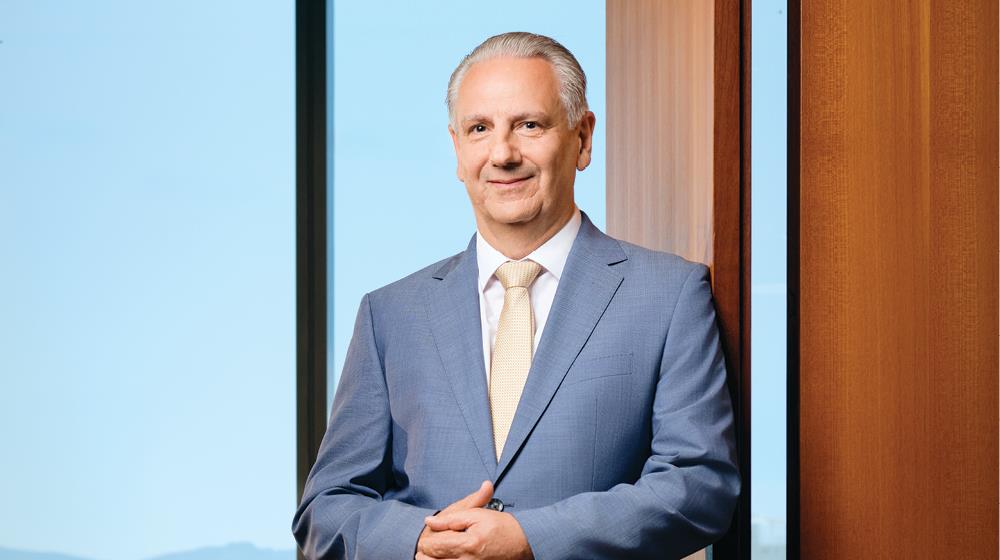
*By Takis Phidia, CEO, ERB Cyprus Insurance Holdings Ltd
This article first appeared in the 2026 edition of The Cyprus Journal of Wealth Management. Click here to view it.
