








The legal profession has always evolved alongside the needs of businesses, investors and society. What constituted success for a law firm twenty years ago may not necessarily reflect the expectations of today's increasingly sophisticated clients. This naturally raises an interesting question: should professional firms continue to offer every conceivable service under one roof or is there value in a clearer separation of expertise?
In many mature legal markets, growth often comes through mergers, acquisitions and strategic alliances. Larger firms are formed by combining complementary practices, allowing lawyers to develop highly specialised expertise while benefiting from broader organisational resources.
Cyprus has followed a somewhat different path.
Although consolidation has occurred in limited instances, the market remains characterised by a large number of independent firms, many of which seek to provide a comprehensive range of legal services, often alongside fiduciary, corporate administration, accounting or other professional offerings. The full-service model has undoubtedly served the market well for many years, particularly given Cyprus' position as an international business and investment centre.
However, as legal matters become increasingly specialised, one may ask whether this traditional approach will continue to be the optimal model for the future.
Clients today frequently seek advisers with deep sector-specific knowledge. Whether dealing with complex cross-border transactions, regulatory compliance, technology, data protection, international tax, shipping, investment funds or dispute resolution, expertise is becoming more nuanced and increasingly difficult to master across every field.
This is not to suggest that full-service firms lack quality. On the contrary, many have built outstanding reputations precisely because they have successfully combined multiple disciplines within one organisation.
Yet there may be another perspective worth considering.
Imagine a professional landscape where firms become recognised leaders in particular areas of expertise while maintaining trusted relationships with other specialised firms. Speaking from experience, this is perhaps one of the most rewarding aspects of the profession. Rather than viewing each other primarily as competitors, firms could collaborate more naturally, referring work with confidence, knowing that each party brings distinct value to the client.
Such a model may also strengthen professional trust.
Where service offerings overlap extensively, firms can sometimes find themselves competing not only for new work but also for existing client relationships. This may create understandable hesitation when collaboration opportunities arise.
By contrast, greater differentiation between firms could encourage more open cooperation. A firm specialising in commercial litigation, for example, could comfortably work alongside another known for corporate structuring or regulatory matters without concerns over competing for the same mandates. Ultimately, the client benefits from receiving advice from professionals whose primary focus lies within their respective areas of expertise.
The discussion extends beyond legal services alone.
In Cyprus, many professional firms also provide corporate administration, fiduciary, company secretarial and other related services. This integrated approach has become one of the country's distinguishing characteristics and has undoubtedly contributed to its attractiveness as an international business jurisdiction.
At the same time, as regulation continues to increase and client expectations become more sophisticated, it is reasonable to consider whether certain ancillary services may, in some cases, benefit from greater operational independence or stronger strategic partnerships with firms whose core business lies in those particular disciplines.
None of this suggests that there is a universally correct model.
Some clients value the convenience of obtaining every service from a single trusted adviser. Others may prefer assembling a team of highly specialised professionals, each recognised for excellence within a particular field.
Perhaps the more important question is not whether one approach is superior to the other, but whether the Cyprus professional services market should continue evolving towards greater flexibility. Could firms differentiate themselves more clearly? Could collaboration become a competitive advantage rather than a perceived risk? Could professional relationships increasingly be built on complementary expertise instead of overlapping services?
The legal profession has always adapted to changing commercial realities. As Cyprus continues to fortify its position as an international business centre, the conversation may no longer be about whether firms should become larger or smaller, broader or narrower. Instead, it may be about identifying where each professional services firm can create greater value and whether the future of the profession lies not only in what each firm does independently, but also in how effectively it works alongside others.
There may never be a single answer to these questions. Yet asking them today may help shape the legal profession that Cyprus wishes to build for tomorrow.
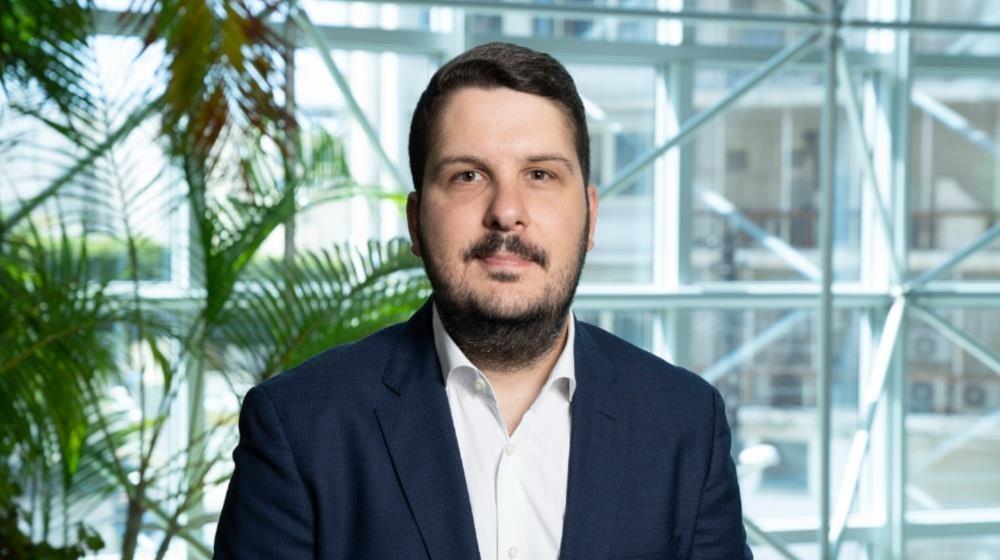
* By George Economides, Vice-Chairman of Totalserve
