








The Social Welfare Deputy Ministry is proceeding with one of the largest social policy reforms in recent years, through the implementation of a multi-level restructuring plan for the Social Welfare Services (SWS), with a total budget of €31 million. This is a strategically important project being implemented under the Cohesion Policy Programme "THALEIA 2021-2027" with co-financing from the European Union, aiming at a comprehensive modernisation of the state's social services, with emphasis on child protection, support for vulnerable groups, and improvement of social welfare services.
The restructuring concerns the entire operation of the SWS and includes changes in structures, procedures, intervention mechanisms, and the tools used daily by officers. The goal is to create a more modern, effective, and human-centred social protection system, capable of responding to increasing social needs.
A necessary reform
Today, the Social Welfare Services manage more than 40 social protection and support programmes through an extensive network that includes a Central Office, five District Welfare Offices, eight local offices, and 23 state institutions, employing over 500 professionals. The increased social needs of recent years, as well as the complexity of cases that the SWS are called upon to manage, make the reform more necessary than ever. This is especially true given the large number of children under state guardianship, as well as cases requiring multi-thematic and interdisciplinary approaches.
Responding to these needs, the reform under implementation provides for the modernisation of the organisation, processes, and working tools of the SWS, the upgrading of internal capabilities and support means, and the strengthening of synergies among all stakeholders involved in the child and vulnerable persons protection network. At the same time, the working environment and social welfare services are being reshaped, with the aim of improving the quality and speed of services provided.
An important role in the reform is also played by the establishment of Central and District Multi-Thematic Teams, in which professionals of different specialities and services participate, seeking to achieve holistic assessment and management of complex social cases, especially when they concern children and families in vulnerability.
Strengthening child protection
Particular emphasis is also placed on strengthening child protection, as services of Companions-Mentors and other professional specialities are introduced, which will reinforce support for vulnerable children, whether they are in their family environment or under state care. These services aim to cover specialised needs, strengthen parenting capacity, and improve the overall intervention of the SWS.
At the same time, since May 2026, the Deputy Ministry of Social Welfare, in cooperation with the Ministries of Education, Justice and Public Order, and Health, is implementing an action aimed at developing and implementing a National Strategy and Action Plan for Child Protection in Cyprus. The coordination of this action, which is scheduled to be completed by the end of 2029, has been undertaken by the Social Welfare Services.
"Neighbourhood Social Worker"
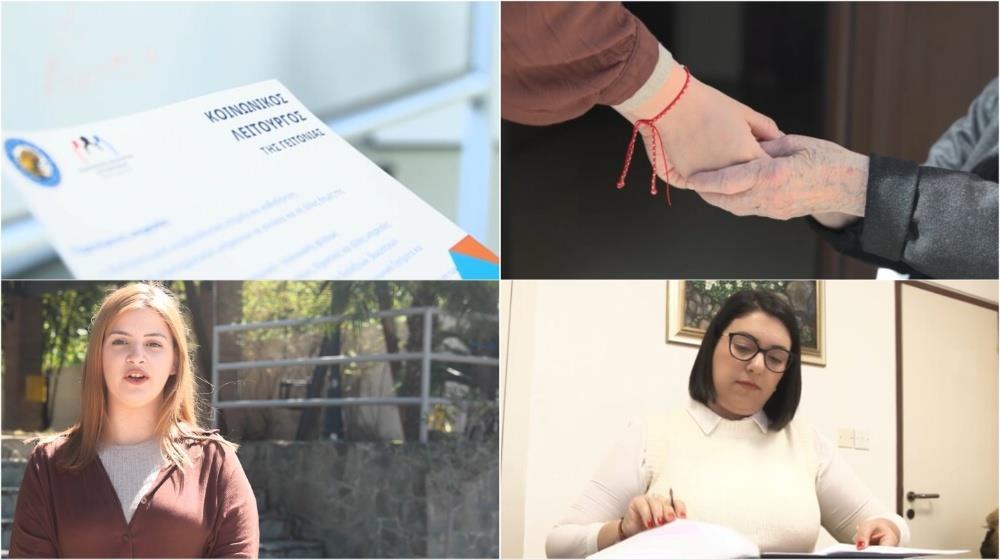
A significant pillar of the reform is also the "Neighbourhood Social Worker" programme, which brings social services closer to the public and strengthens early intervention at local level. Following its successful pilot implementation, the programme is now being extended throughout Cyprus through cooperation with Municipalities and Community Clusters.The "Neighbourhood Social Worker" Programme contributes substantially to the development of a local support network, which promptly identifies and supports individuals and families in need of psychosocial support, as well as to the design of necessary social intervention programmes for the effective management of the community's social challenges. In addition, it strengthens cooperation between the Social Welfare Services and the Local Authorities (LA), expanding the role of LAs in the field of social care and establishing the neighbourhood as a basic unit of social cohesion.
Among the benefits of the programme are the immediate identification and management of social issues at local level, such as supporting vulnerable individuals and families and connecting them with other services they may need. At the same time, community assessments are carried out to record and quantify needs, thus contributing to the design of programmes based on real and varied needs. A feature on this institution was made in June 2026 by Euronews, highlighting through its report testimonials from beneficiaries about the positive impact of the "Neighbourhood Social Worker" on their lives.
At the same time, the digital upgrade of the SWS is being promoted through the implementation of a new information system, which is expected to substantially enhance the effectiveness of the SWS, improve case management, and modernise overall administrative processes and officers' working tools.
In a statement, the Director of the SWS, Maria Kyratzi, said: "Through this specific project, a comprehensive and holistic modernisation of the Social Welfare Services is being promoted for the first time, touching all pillars of their operation. This is a reform that aims to improve the functioning of the SWS, and additionally to substantially upgrade the country's social protection system itself, with a focus on social cohesion, equal opportunities, and ensuring a decent quality of life for all citizens."
