







In 2000, a professor at Howard University, Marilyn Sephocle, wrote an entire book because twelve women were serving as ambassadors in Washington at the same time. Not seven, not five: twelve, and that alone was enough for a book title: “Then There Were Twelve: Women Ambassadors of Washington's Embassy Row.”
Among them was one Cypriot: Erato Kozakou-Marcoullis, who a few years later would become the first, and to this day the only, woman Minister of Foreign Affairs in the history of the Republic of Cyprus. Today the number twelve doesn't impress anyone in any capital anymore. What concerns me, though, is why, in so many corners of the profession and in so many countries, the balance remains as uneven as it was back then.
A reception at the Presidential Palace
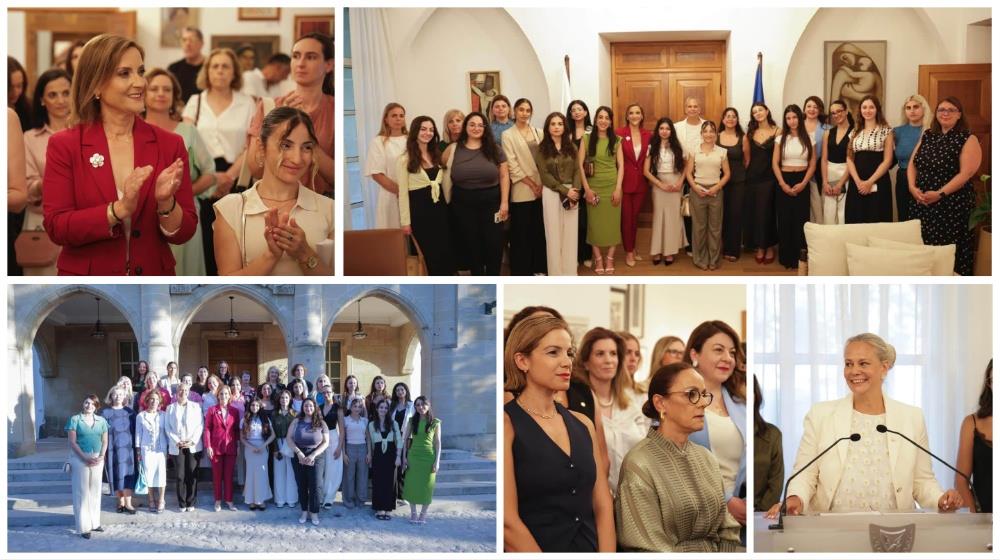
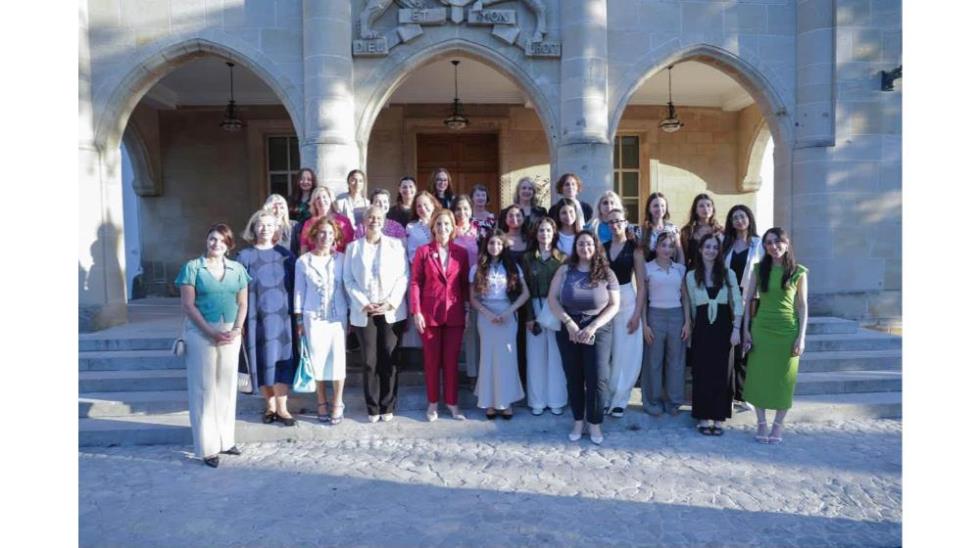
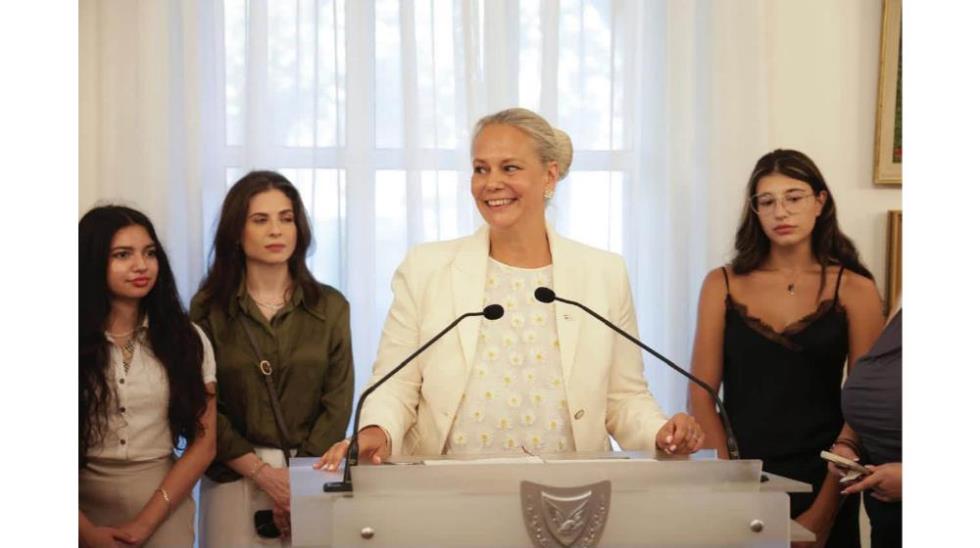
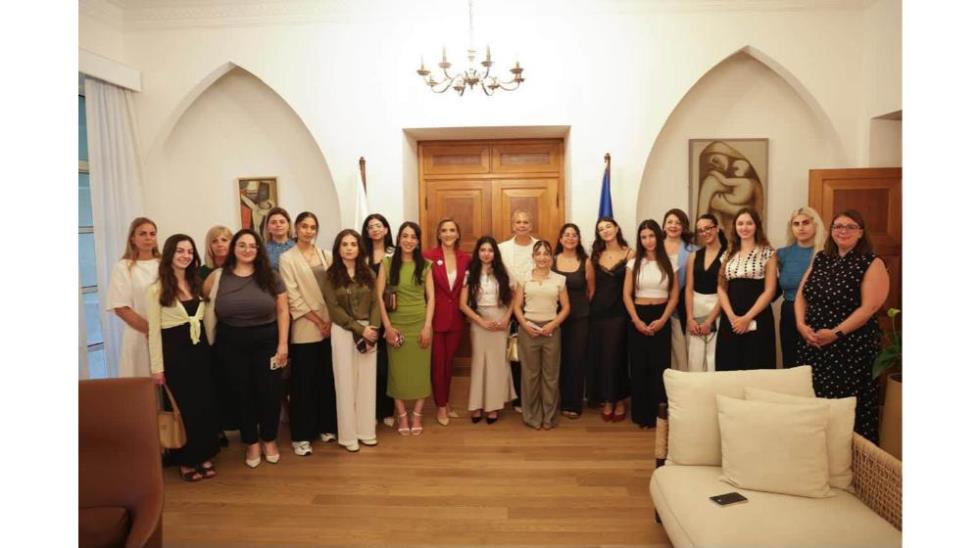
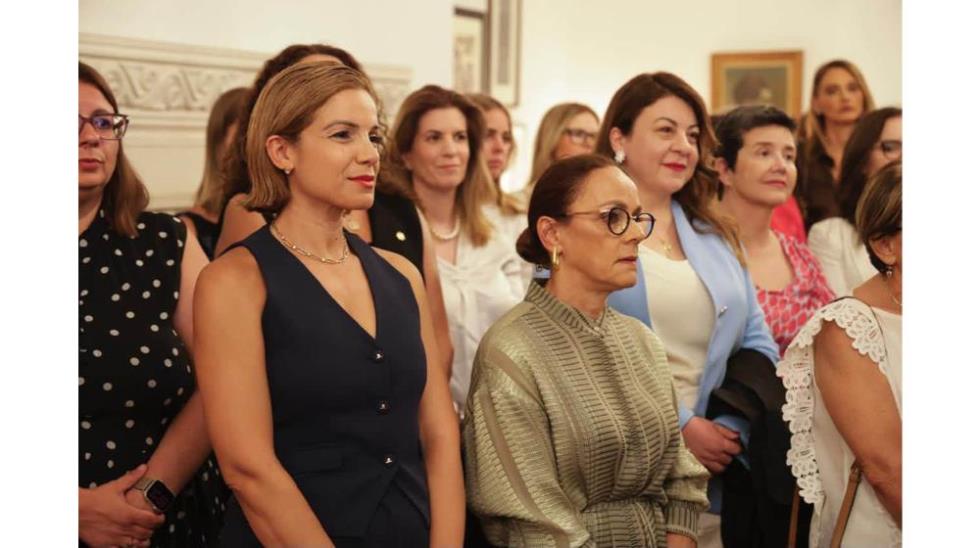
On 24 June, International Day of Women in Diplomacy, Cyprus once again hosted the “Woman Ambassador for a Day” programme. In Nicosia, the programme was coordinated by the Ambassador of Hungary, Dr. Krisztina Lakos, and it is now run in several European capitals. This year, fourteen young women spent an entire day alongside a woman ambassador: in meetings, in discussions, in the everyday life of a mission. The programme closed with a reception at the Presidential Palace hosted by the First Lady, Philippa Karsera Christodoulides, in honour of the participants, of the women ambassadors serving in Cyprus and of the women Commissioners present in the room. This is not a protocol event. It is, however grand that may sound, one of the most effective tools of institutional change I have seen in recent years, because it doesn't talk, it shows.
“I remember myself at 22”: The First Lady's message
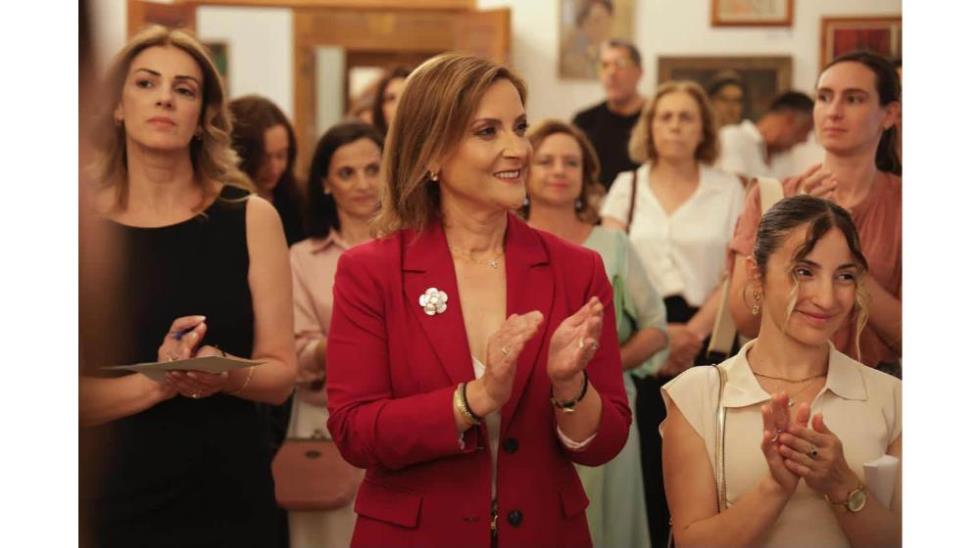
The First Lady spoke of her own first contact with the diplomatic service, at 22, recalling how unprepared she felt for a profession that demands dedication, resilience, constant adaptability and sacrifices, particularly in balancing career and family. She described her path as one of the most meaningful privileges of her life: to meet people from different cultures, to represent her country with dignity, to give back to it. She said that diplomacy, in essence, turns hope into real prosperity, and that it keeps fighting for peace even in times of war. She noted, and this is no small thing, that Cyprus, under President Christodoulides, is recording today the highest rate of women's representation in decision-making positions in its history. Her message to the fourteen participants was, in essence, a life instruction: believe in yourselves, seize every opportunity and never underestimate your ability to make a difference.
A Hungarian initiative, a European moment for Cyprus
Dr. Lakos thanked, by name, the women ambassadors of Armenia, Australia, Austria, Brazil, Finland, France, Ireland, Italy, Portugal and Serbia, as well as the Chargée d'Affaires of Georgia. The Ambassadors of the Czech Republic and Spain were unable to attend this year. She also congratulated the First Lady on her promotion to the rank of Career Ambassador, recognising her tenure as Director of Schengen, Consular Affairs and Crisis Management, and congratulated the Republic of Cyprus on its successful Presidency of the Council of the EU, which concluded on the very day of the reception. Two institutional achievements, one day. I note this because the coincidence says something about where Cyprus stands today: a country that has begun to prove, on several fronts at once, that it can be a credible mediator. To the fourteen participants, Dr. Lakos recalled something I have heard said to every generation of diplomats, and which still holds true: diplomacy is not reserved for the chosen few. It is shaped by those who decide to take part.
Not one girl. Fourteen and thousands more
It would be easy to focus on a single story; a story moves people more easily than a statistic; I know that well from the profession. But what matters in “Ambassador for a Day” is not one isolated case, it is the fourteen: students, young professionals in the first, most fragile years of their careers, some still studying international relations, others who have just taken their first step into an office. At this age, between eighteen and thirty, as the programme itself defines it, most young women have not yet formed a clear picture of where their career might take them and rarely get to see up close what a life devoted to diplomacy looks like. Among them, this year, the youngest participant stood out, just eighteen years old, who accompanied the Ambassador of Italy, Antonella Cavallari. Her dream, since childhood, had been a “glass building”, the Cyprus Ministry of Foreign Affairs, where her grandmother had served for some years. And here, fate lent a hand: the application deadline for the programme was extended by one week, and that very week she turned eighteen, without that extension, she would not even have been able to apply. A small detail. But it is one of the fourteen chapters written this year, and the other thirteen deserve the same attention, however little known they may be to us. Because this is exactly what such initiatives do: they don't select a single protagonist. They multiply role models. And by multiplying role models, they raise the odds that, in ten or twenty years, several of these fourteen will be sitting on the other side of the table.
Why we need more women in Diplomacy
The UN did not establish the International Day of Women in Diplomacy in 2021 as a symbolic gesture. Its own data is stark: women remain largely absent from the positions of heads of state and government worldwide, hold less than a quarter of ministerial posts globally and are particularly underrepresented in Foreign Affairs, Defence and Security portfolios. Among Permanent Representatives to international organisations, they remain a minority and several countries have never appointed a woman to these posts. This is not just about numbers. The Canadian diplomat Erin Koenig, president of Women in International Security Canada, put it plainly in a speech to the EU network of women diplomats: excluding women from the peace table is not a missed opportunity, it is a strategic failure. Peace agreements are up to 35% more likely to last at least fifteen years when women participate meaningfully in negotiations. This is not an argument about equality. It is an argument about effectiveness and whoever ignores it loses the durability of solutions, not just in fairness. Koenig added something few say publicly: empowerment must also be intersectional, women of different racial, ethnic or communal backgrounds are still further behind, even within the profession itself.
Europe's numbers
The average share of women ambassadors in Europe, according to the Women in Diplomacy Index, stands at around 27%. In the European Union the figure is roughly 30%, up from 28% in 2023, though with gaps that don't close easily: Sweden at 51%, Finland at 50%, while Italy and Belgium sit at 15% and 12% respectively. Only six of the EU's twenty-seven countries currently have a woman Foreign Minister. Five have a woman Defence Minister. The European External Action Service has for years operated under the Gender Action Plan III, extended to 2027 and has set up the WEDIN EU network, which connects the EU's women diplomats with the corresponding networks of member states' foreign ministries, meeting every year precisely on the International Day of Women in Diplomacy. In 2026 the Commission also presented the new Gender Equality Strategy 2026-2030. And yet, the European Institute for Gender Equality estimates that, at the current pace, it will take another fifty years to achieve full gender equality in the Union. Fifty years is a long time to wait for something we already know works.
Cyprus's numbers
In Cyprus, the picture is more encouraging than many assume. At least six of the ten Commissioners currently serving under the Presidency are women: Josie Christodoulou (Gender Equality), Maria Stylianou-Lottides (Administration and Protection of Human Rights), Sofia Kleopa Hadjikyriakou (Legislation), Maria Manolis Christofidou (Data Protection), Elena Perikleous (Children's Rights), and Valentina Georgiadou (Financial Commissioner). The majority are far from a given in any country in Europe and I say this with confidence, because I have compared. And to the question everyone kept asking me these past weeks “how many women ambassadors serve in Nicosia today”, I now have an answer, drawn directly from the Ministry of Foreign Affairs' official Diplomatic List, June 2026 edition: of the roughly one hundred and twenty-one (121) foreign missions with a named head of mission, at least forty-one (41) are led today by a woman: thirty-six (36) Ambassadors or High Commissioners, plus another five (5) women Chargées d'Affaires heading missions without an accredited Ambassador. That's roughly 34%, above the European average of 27%. This is not a minor detail. It is a fact that Nicosia should be publicising, not something one has to dig up page by page.
And what about Cyprus's own Ambassadors abroad?
The other side of the coin concerns me just as much: how many Cypriot women represent the Republic abroad today? Koula Sophianou serves as Ambassador to the People's Republic of China and describes diplomacy less as a career and more as a calling. The work, she says, ultimately concerns people: their safety, their dignity, their right to peace and prosperity. Erato Kozakou-Markoullis, the record-setting Washington ambassador mentioned at the start, puts it more bluntly: sixty-six years after independence, Cyprus has still not given the necessary attention to building a strong diplomatic service. And she is right. According to a 2022 parliamentary discussion, the Cypriot diplomatic corps numbered just 163 diplomats at the time, with fifty more posts vacant, while thirty-four missions abroad were and, in many cases, still are operating with a single staff member, who also serves as head of mission. In such an environment, the question is not only which women will fill the few available posts. It is how seriously Cyprus invests in the tool of diplomacy, a tool in which, as its recent Presidency of the Council of the EU demonstrated, it has every reason to believe.
Ambassadors, but also ambassadorial voices for Cyprus
Let me put it simply: the women ambassadors serving in Cyprus today are not merely officials representing their countries in Nicosia. They are, at the same time, the first voices of Cyprus in their own homelands. Every contact they have with this place, every impression they form of our culture or economy, travels back to their capital and shapes how Cyprus is seen abroad. This is not a hypothesis, it is a public diplomacy mechanism that is already at work, even if we don't officially recognise it. Cyprus would do well to harness it with a strategic plan, not occasionally, through a single event a year, by recognising these ambassadors for what they truly are: bridges of trust and among the most credible “ambassadors” of our image abroad.
The glass building
Fourteen young women passed through the gates of embassies in Nicosia this year. Among them, one who had once dreamed of a “glass building”, the Ministry of Foreign Affairs, where her grandmother had served, finally passed through the gates of the Presidential Palace. She was not dreaming of a title or a post. She was dreaming of resembling someone she admired. The same, in different words and for different reasons, is what the other thirteen dream of as do thousands of students and young professionals across Cyprus. This is the real gain of initiatives like “Ambassador for a Day”: they don't just add a line to a CV. They build role models. They show an entire generation of women that a seat at the table where decisions are made is not just possible. It is a road that can begin today. The glass building, in the end, never had a ceiling, it only had a door waiting to be pushed open. And this year, fourteen more women learned how it opens.
By Maria Georgiou, Communications, Culture, Public Affairs and Strategy Consultant
