








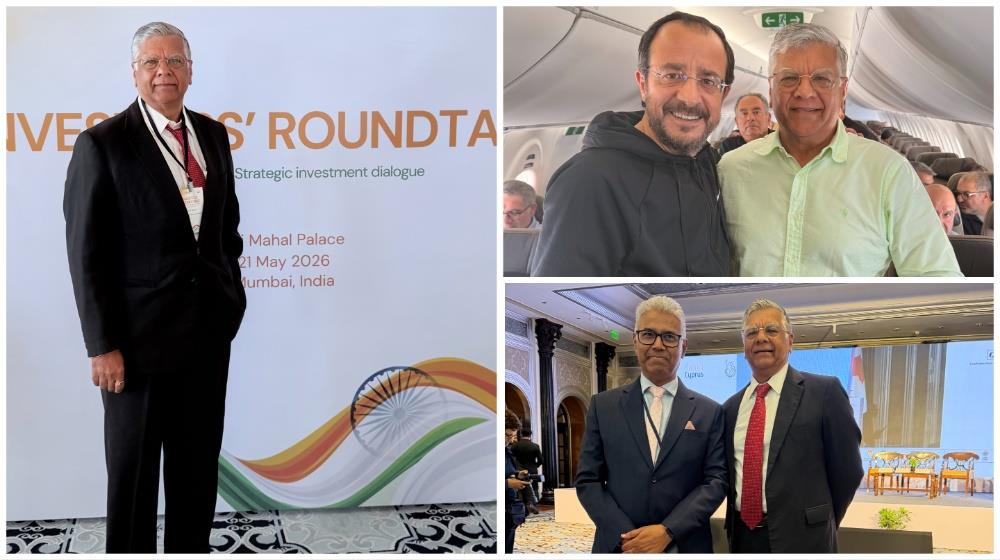
A phone call from my friend Marios Tannousis, CEO of Invest Cyprus, caught me between meetings in Cyprus.
"Sunil, are you available to travel to India next month?"
Before I could ask why, he continued.
"You will be joining the Cyprus delegation during the State Visit of President Nikos Christodoulides. You are also invited to participate in a high-level Investors' Roundtable in Mumbai.
A few minutes later, the formal invitation arrived. The Roundtable would be held on 21 May at the Taj Mahal Palace Hotel as part of the President's official visit to India.
I was excited — and immediately full of questions. Who else was going? What was the programme? Where would we stay? How would everything be arranged?
Marios listened patiently before giving a simple reply.
"Wait. Everything will be told to you in time."
As it turned out, he was right.
This was not, in truth, my first time navigating a high-level bilateral visit between India and Cyprus.
Less than a year earlier, in June 2025, I had been invited to participate in the Roundtable discussions held during Prime Minister Narendra Modi's historic visit to Cyprus — the first visit by an Indian Prime Minister in over fifty years.
Being included in that gathering was an honour in itself. But it also reminded me of something I have come to believe over many years of working across borders: trade agreements are signed by governments, but business corridors are built by people.
That visit planted seeds. Mumbai, I suspected, would be an opportunity to water them.
During the flight to Mumbai, President Christodoulides took the time to meet many members of the delegation personally. When he reached me, I remarked with a smile:
"Mr President, I believe I am the only Indian on the aircraft. If I arrive safely in Mumbai, I can tell everyone at the Roundtable that Indians are very safe in Cyprus."
The President burst into laughter.
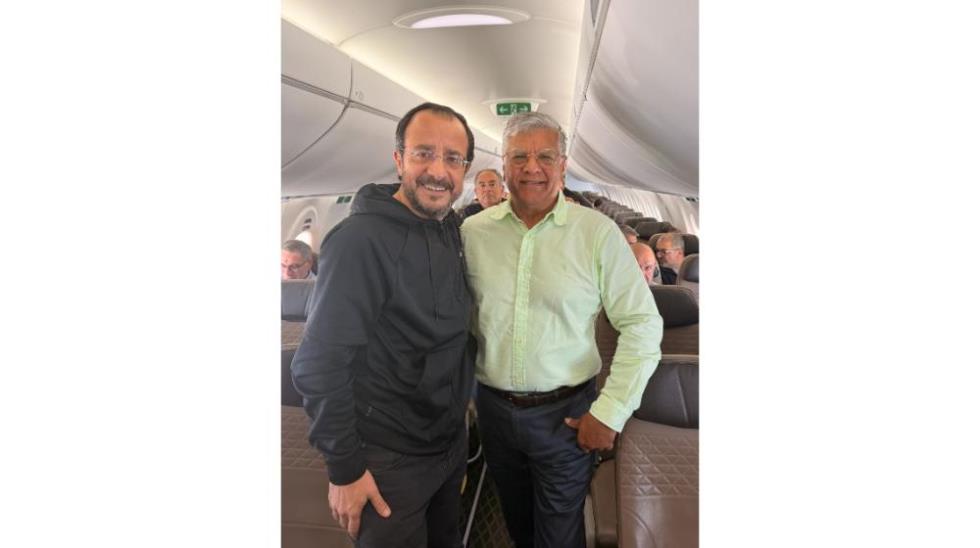
It was a light moment, but it touched on something real. Cyprus has become home to a growing Indian community, and the ties between the two countries now extend well beyond diplomacy and trade statistics. I was, in a modest way, living proof of that.
The moment we arrived at the Taj Mahal Palace Hotel, something shifted.
After the quiet calm of Nicosia — a city that moves at its own unhurried pace — Mumbai hit all at once.
The hotel entrance was alive with colour. Marigold garlands were being placed around the necks of arriving guests, an aarti welcome ceremony was underway, and somewhere nearby a sitar was playing.
The air smelled of flowers and incense. People moved in every direction with a purposeful energy that, to an outsider, might resemble chaos — but was, on closer inspection, a very particular kind of organised intensity that India does better than almost anywhere else in the world.
The following day, 21 May, was the centrepiece of the visit. The Cyprus-India Business Forum attracted a packed hall and a genuine sense of enthusiasm. Business leaders, entrepreneurs, investors, and government representatives were keen to explore what the two countries could build together.
The day also saw the signing of several Memoranda of Understanding between Cypriot and Indian institutions — a tangible marker that this visit had moved well beyond goodwill and into intent.
Following the forum, a smaller group proceeded to the high-level Investors' Roundtable. What impressed me most was not simply the attendance but the quality of engagement. These were not ceremonial discussions. People were asking practical questions, pressing for specifics, and looking for pathways to real partnerships.
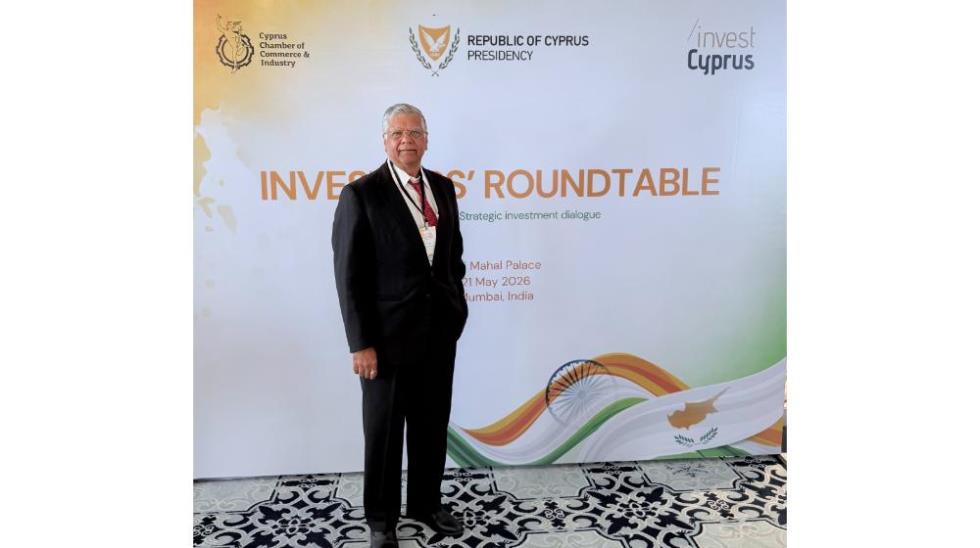
Having spent nearly twenty years building and running businesses in Cyprus, and more than four decades in the international shipping industry, I was able to speak from experience rather than theory. I spoke about what it takes to establish a company on the island, what the advantages genuinely are, and where patience and realistic expectations are required.
The message I heard repeatedly, from the President and from the delegation, was consistent: Cyprus is ready to be a gateway to Europe, and the government is willing to actively support investors who want to use it as a platform for expansion.
And in the context of the India-Middle East-Europe Economic Corridor — IMEC — that positioning carries particular significance. Cyprus's role as a maritime bridge is becoming more than just a geographic advantage. It is a strategic necessity. IMEC was raised in conversations more than once across those two days, and rightly so. For a corridor of that ambition to function, it needs nodes — reliable, well-connected, commercially sophisticated nodes. Cyprus, at the crossroads of three continents, is an obvious candidate.
I spoke with representatives of a Bollywood production group, a healthcare company exploring a wellness resort in Cyprus, a shipping venture looking at Eastern Mediterranean options, a banking group interested in the island's financial services infrastructure, and a technology firm considering Cyprus as its European base.
Across all of these conversations, the questions were essentially the same: How straightforward is it to set up? What is life on the island genuinely like? How welcoming is Cyprus for families relocating from India?
I found myself answering not as a consultant but simply as someone who had made that journey himself — nearly two decades ago, with a suitcase and no guarantee of anything.
The most valuable outcome of any business delegation is not the speeches delivered, but the conversations that continue after everyone has gone home.
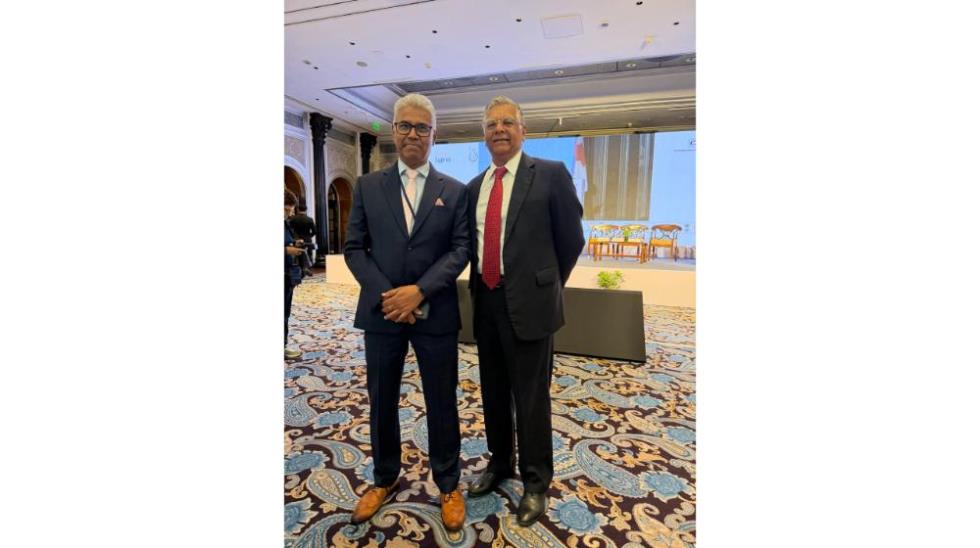
As the visit drew to a close, I found myself with one final task — though nobody had formally assigned it to me.
The delegation was returning to Cyprus on a charter flight, and not from a regular terminal. Somehow — and I am still not entirely sure how it fell to me — the responsibility of ensuring that all delegation members reached the aircraft safely and on time became mine. The coordination involved the local police, officials from the Ministry of External Affairs, protocol officers, and a small army of other coordinators, all working under time pressure.
It was controlled chaos of the most productive kind. I spent those final hours on the phone, tracking people down, smoothing logistics, and making sure that nobody or the bags were left behind. By the time the aircraft door closed, the thanks had already come — a handshake here, a word there.
For someone who had started this journey as the only Indian on a Cyprus-bound aircraft, ending it as the person who got everyone home felt, quietly, like the right kind of full circle.
As the lights of Mumbai faded behind us, I thought back to Marios's early advice: wait, everything will be told to you in time.
In a typical Indian wedding, the journey may be chaotic — but the ending is always beautiful, because somehow, everything falls into place.
As we look toward the second half of 2026, the momentum from Mumbai suggests that the partnership between India and Cyprus is no longer just a possibility — it is an unfolding reality.
After all, people invest in countries — but first, they invest in people.
*Sunil Kapoor, COO & Partner of OL Shipping Group
