




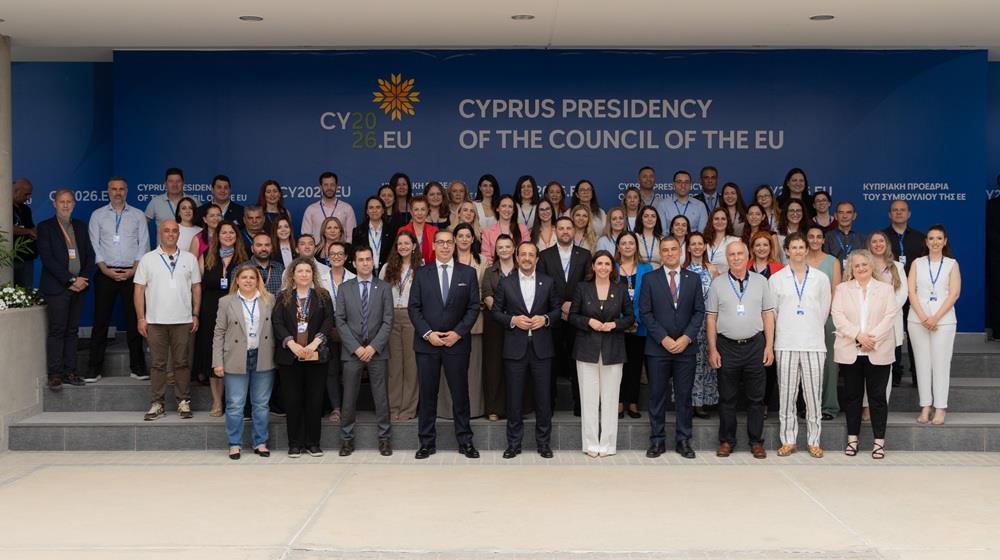
Cyprus’ Presidency of the Council of the European Union has been described as one of the most substantive and productive in recent years, with President Nikos Christodoulides stating that it “exceeded all expectations” during a closing ceremony held at the Filoxenia Conference Centre.
Addressing hundreds of civil servants, volunteers, and contributors to the six-month effort, Christodoulides credited the success to months of preparation, professionalism, and collective work. He also announced that the Deputy Ministry for European Affairs and dedicated EU units across ministries will be retained to capitalize on the expertise gained.
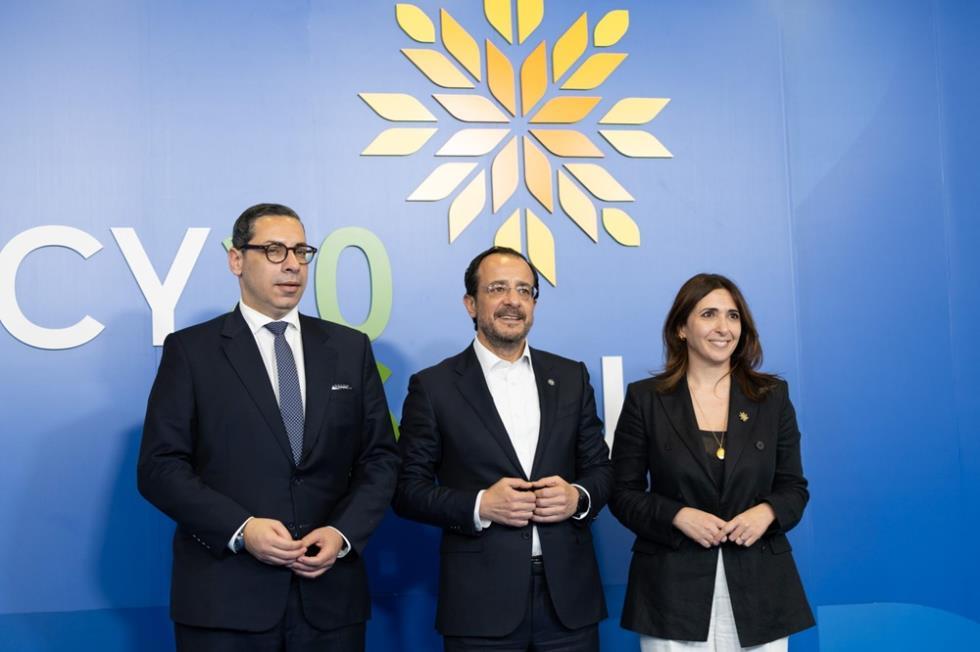
“Behind every successful meeting, every agreement, and every positive comment we heard over these six months were people—and those people are all of you,” he said.
The President said that Cyprus demonstrated its ability to lead and coordinate at the highest European level despite its small size and ongoing division. “Cyprus, the only EU member state still under occupation, proved it can lead such an important process in a way that earns the respect of all,” he noted, adding that the country approached its role with confidence and ambition, achieving tangible results even amid complex geopolitical conditions.
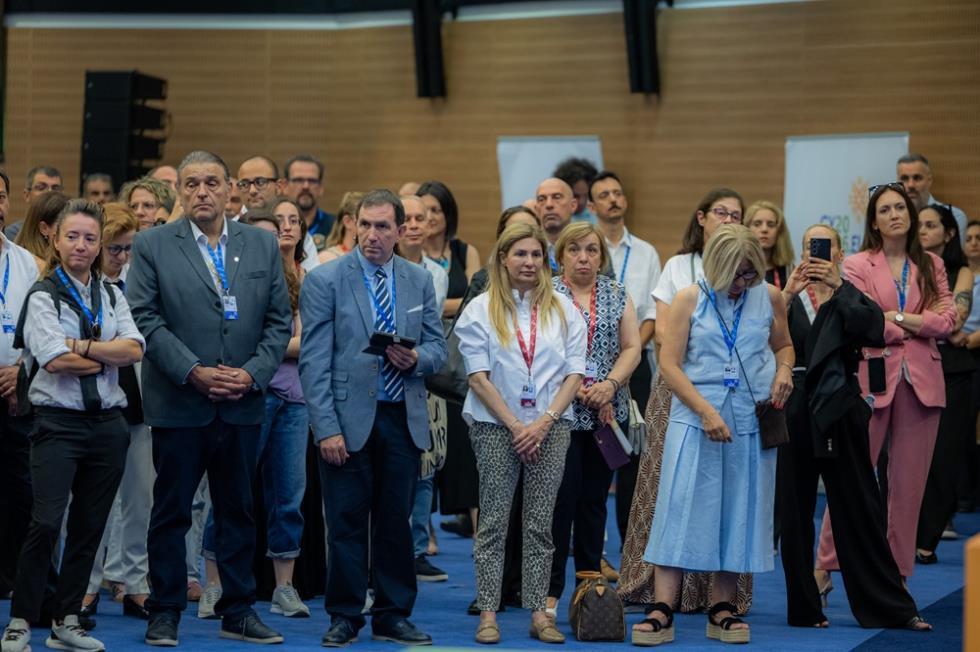
Christodoulides also highlighted the multiple international crises faced during the presidency, stating that Cyprus responded “with absolute success.”
Deputy Minister for European Affairs Marilena Raouna described the presidency as proof that effectiveness outweighs size. “What matters is not square kilometers, but what we bring to the table,” she said, noting Cyprus’ role as a credible and honest broker in advancing key EU dossiers, including defence and security, competitiveness, enlargement, child protection online, and the Multiannual Financial Framework.
According to Raouna, the presidency involved approximately 1,600 meetings in Brussels, over 300 events in Cyprus, 19 informal ministerial meetings, and the first-ever informal European Council hosted in the country. Cyprus welcomed more than 30,000 visitors during the six-month period.
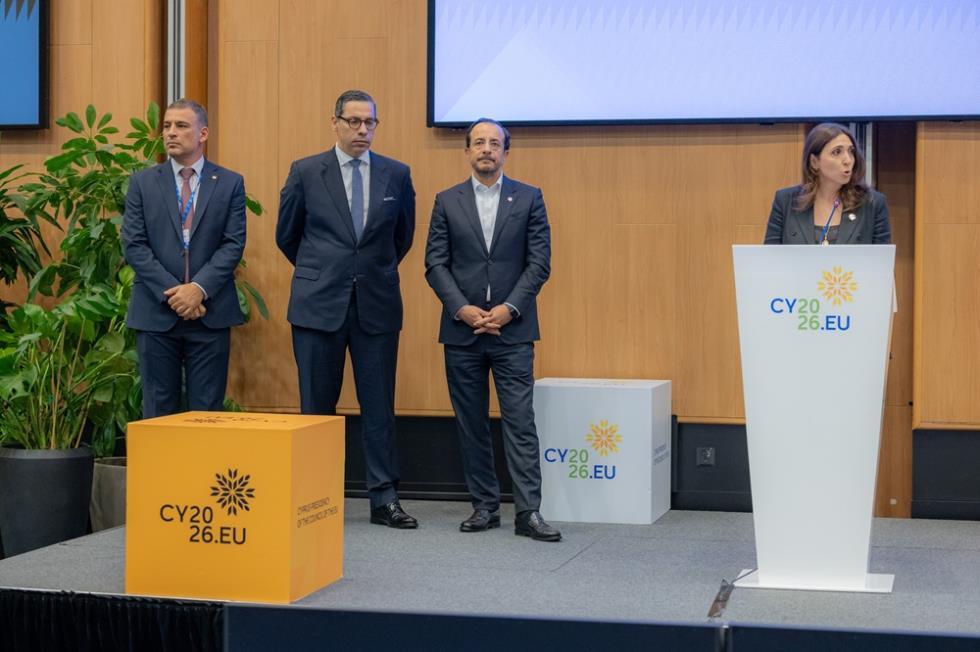
She also emphasized that a new coordination mechanism, linking the presidency secretariat, ministries, and Cyprus’ Permanent Representation in Brussels, was built from scratch and would serve as a lasting institutional legacy.
Foreign Minister Constantinos Kombos described the presidency as a successful “national mission,” noting that its positive assessment came not only from Cyprus but from EU partners and institutions.
“It is one of the rare occasions where everyone else says it was a success,” he remarked, adding that despite crises in regions such as Venezuela, Greenland, and Iran, Cyprus managed to maintain momentum and deliver results.
Kombos also pointed to the challenges faced at the outset, including the lack of infrastructure, personnel, and funding. “We had to find a building, build a team, and secure resources from nothing,” he said.
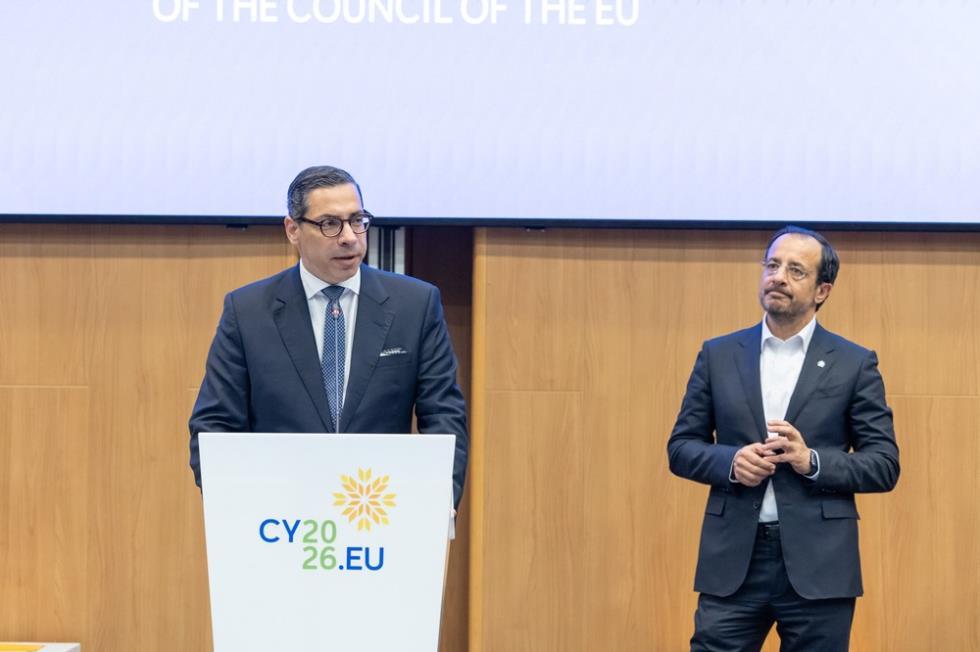
Concluding the ceremony, President Christodoulides urged all those involved to take pride in their contribution, describing the presidency as both a collective and personal achievement.