








The business landscape is changing at a pace that no longer allows for static structures, traditional systems, or fragmented technological solutions. Artificial Intelligence is no longer merely a tool for optimisation; it has become a catalyst for the complete redesign of how organisations operate.
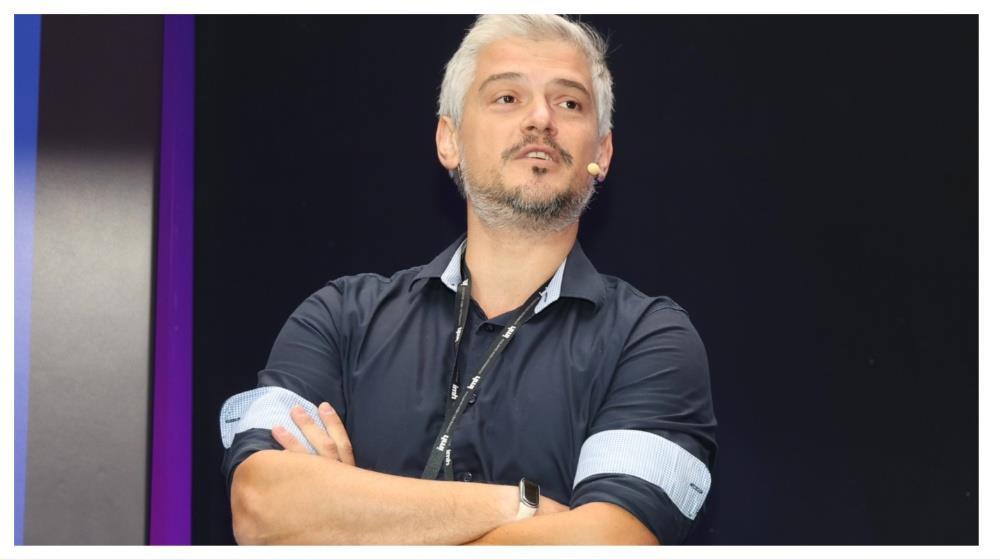
This was the central message of the presentation delivered by Stiv Sterjo, Chief AI & Digital Transformation Advisor at Nerisia and a former Google executive, during the 5th Digital Cyprus Conference 2026, organised by CITEA and IMH.
Sterjo highlighted that the greatest challenge facing businesses is not access to technology, but their ability to integrate it into a new, agile operating model that evolves alongside the market.
He focused on the concept of the 'Organic Enterprise'—an organisation in which people, systems and processes dynamically adapt to changing environmental conditions. Within this model, speed and adaptability take precedence over traditional structures and rigid hierarchies.
Sterjo presented compelling examples from the market where the use of Artificial Intelligence has already resulted in significant cost reductions and substantial productivity gains, confirming that technology only creates value when it is fully integrated into business operations and workflows.
He stressed that traditional ERP systems are no longer capable of meeting the demands of today's business environment, as they were designed for an era of stability rather than continuous change. Modern business models, by contrast, require adaptive layers that enable continuous evolution, seamless connectivity and real-time decision-making.
Particular emphasis was placed on the role of people in this transformation. As Sterjo noted, value no longer lies in carrying out repetitive tasks, but in applying judgement, demonstrating creativity, and guiding intelligent systems effectively.
Sterjo urged businesses to move beyond experimentation towards meaningful AI adoption, beginning with the direct observation of real work and the systematic identification of operational friction points that can be addressed through Artificial Intelligence.
In closing, he stressed that the critical question for every organisation is not whether it will change, but how quickly it can transform technology into a competitive advantage in an environment that is constantly evolving.
(Source: InBusinessNews)
