








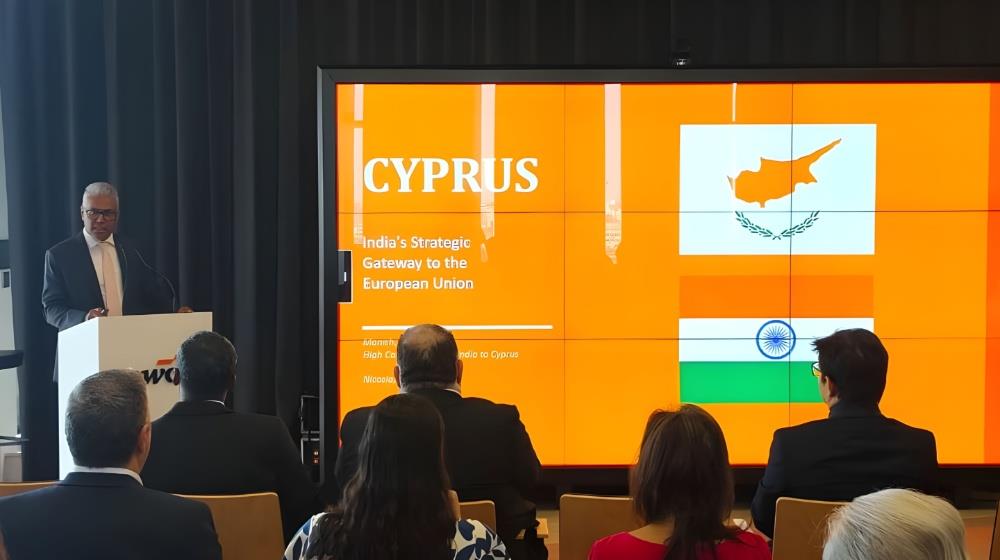
India and Cyprus have elevated their relationship "to a Strategic Partnership, with clear emphasis on trade, investment, financial services, maritime cooperation, technology, innovation and connectivity," India's High Commissioner to Cyprus, Manish, has said.
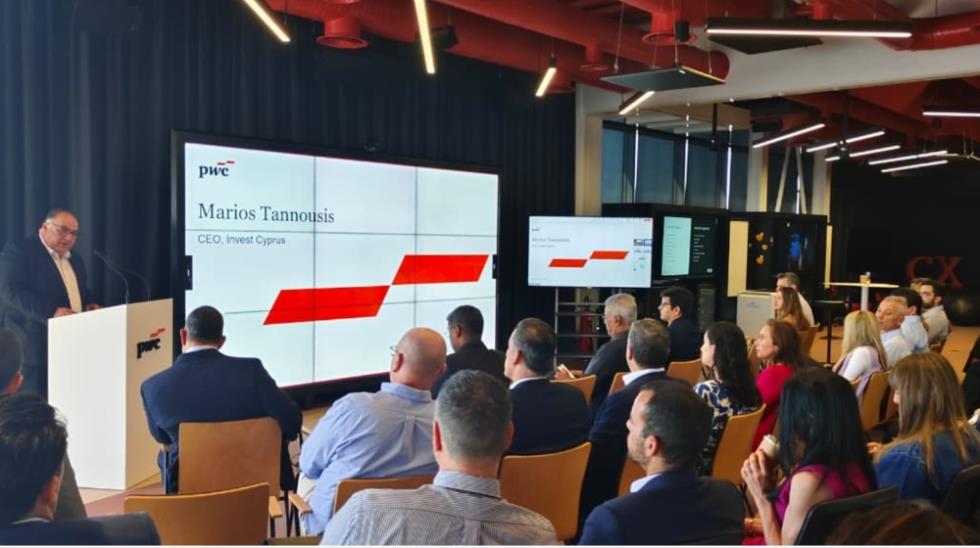
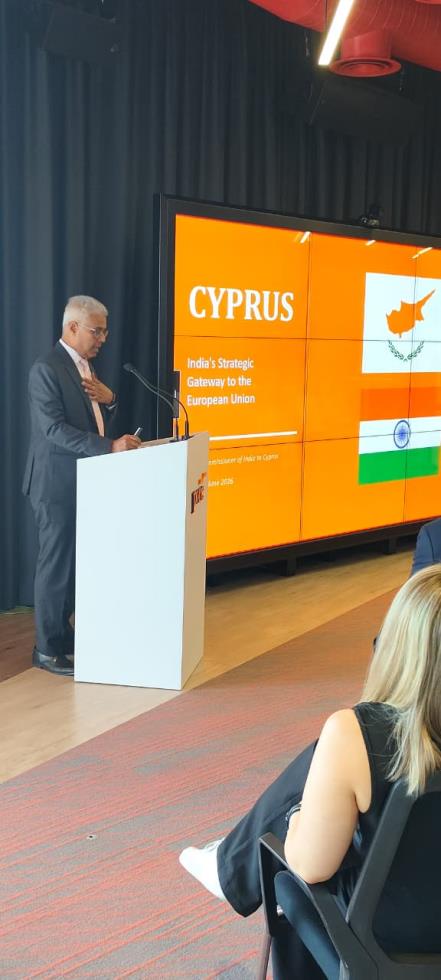
He was speaking to CBN in the context of a recent seminar organised by the High Commission entitled 'Indian Income Tax Act 2025 – Changes and Implications'. Held at the PwC Experience Centre in Nicosia, the event saw High Comissioner Manish, President of the Cyprus-India Business Association Chrysilios Pelekanos and Invest Cyprus CEO Marios Tannousis expand on the thriving relations between the two countries and the many prospects for further development in a variety of sectors.
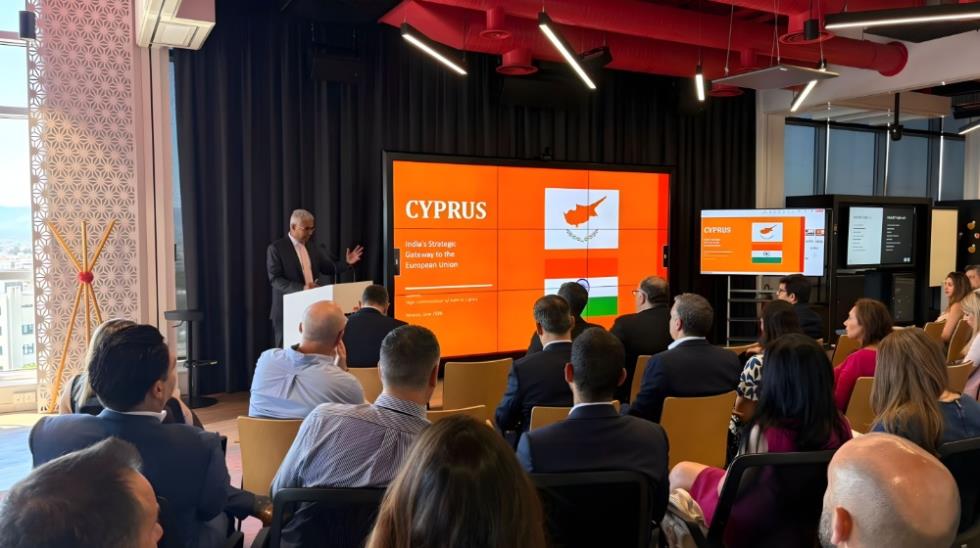

The First Secretary at the High Commission of India, Subhash Jangla, gave the keynote presentation on the recent changes to India's Income Tax Act, which came into effect from 1 April. Among other things, Jangla described how the Act had been condensed and made more user-friendly, while also outlining some of the changes considered the most pertinent for Cypriot businesses working with India.
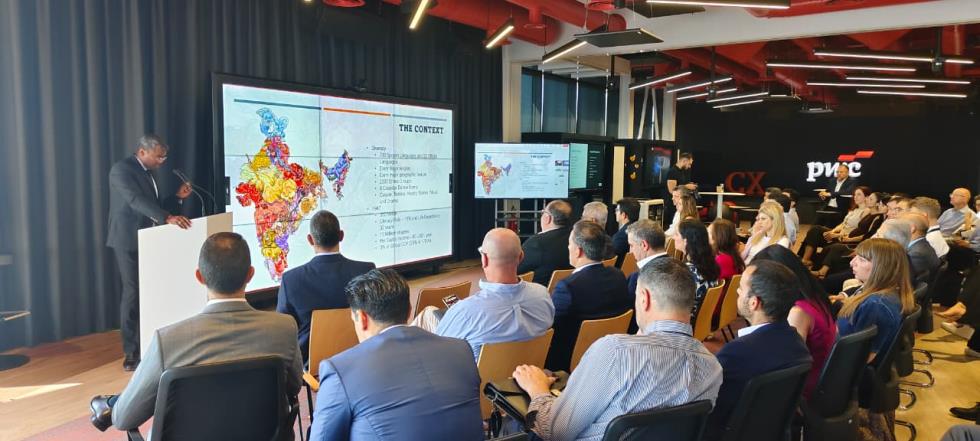
Among other things, India's new Income Tax Act, 2025 replaces the 1961 legislation, aiming to simplify compliance, consolidate over 819 sections into 536, and shift to a digital-first administration.
Just ahead of the presentation, High Commissioner Manish spoke to CBN about the aims of the 25 June event, as well as wider efforts to further promote India-Cyprus business relations.
What are some of the reasons that prompted the organisation of the 'Indian Income Tax Act 2025 – Changes and Implications' seminar and what are its main aims?
The event was organised in response to a very practical need. India has brought into force the new Income Tax Act, 2025 with effect from 1 April 2026, and this reform is of direct relevance to businesses, investors, accountants, legal professionals and advisers in Cyprus who engage with India. The objective of the event is therefore to present, in a structured and accessible manner, the broad philosophy of the reform, the transition from the earlier framework, the simplification introduced in key areas such as international taxation and transfer pricing, and the recent jurisprudential developments that are relevant for cross-border business decision-making.
Following the historic visit of Prime Minister Narendra Modi to Cyprus in June 2025 and the subsequent State Visit of President Nikos Christodoulides to India in May 2026, our bilateral relationship has moved from goodwill to structured implementation. The two countries have now elevated the relationship to a Strategic Partnership, with clear emphasis on trade, investment, financial services, maritime cooperation, technology, innovation and connectivity.
In that context, the seminar serves two main aims. First, it equips the Cyprus business and professional community with up-to-date knowledge of India’s tax and regulatory framework, thereby reducing information barriers to entry. Second, it reinforces confidence that India is committed to simplification, transparency and ease of doing business.
The event had a specific theme. Do you believe that similar happenings will be useful in the future to explore other aspects of India-Cyprus business cooperation?
Certainly. In fact, I would say such sector-focused engagements are now essential. If India–Cyprus economic ties are to move to the next level, we need more specialised conversations of this kind-events that bring together businesses, regulators, professional advisers and sectoral experts around specific themes rather than only general discussions on bilateral relations.
Taxation is a natural starting point because tax certainty and regulatory clarity are foundational for investment decisions. But the same model can and should be extended to other areas where the India–Cyprus partnership is gaining momentum. Financial services and fund management is one such area, particularly given Cyprus’ strengths as a regulated EU financial centre and India’s expanding capital markets and outbound investment profile. Maritime and shipping is another obvious area, considering Cyprus’ global shipping ecosystem and India’s rapidly growing port, logistics and maritime ambitions. Technology, digital innovation, AI, cybersecurity, higher education linkages, and mobility of skilled professionals are equally promising areas for future thematic events.
I would also add that these events are valuable because they convert diplomatic momentum into commercial understanding. High-level visits and strategic declarations create the framework; business seminars, investment summits and sector-specific roundtables are what translate that framework into actual partnerships, transactions and institutional cooperation.
Relations between India and Cyprus are thriving. How do you foresee them developing further in the coming years? For example, are there certain sectors you believe can be further explored?
I believe India–Cyprus relations are entering a particularly promising period. What we are witnessing is the emergence of a genuine economic and strategic corridor between India, Cyprus and Europe.
The first major area of opportunity is financial services, investment structuring and fund management. Cyprus has long-standing strengths in legal, accounting, fiduciary and financial services within an EU regulatory framework. India, on the other hand, is one of the fastest-growing major economies in the world and continues to attract substantial foreign investment across infrastructure, manufacturing, services, technology and financial markets.
The second major area is maritime, shipping and logistics. This is, in my view, one of the most underexplored but strategically important sectors in the bilateral relationship. Cyprus is one of the world’s leading shipping centres and offers a sophisticated maritime services ecosystem. India is investing heavily in ports, logistics, shipbuilding, multimodal transport and maritime connectivity. Both sides have recognised maritime cooperation as a strategic pillar, including the possibility of Cyprus serving as a European maritime gateway and operational base for Indian shipping interests.
A third area is technology, innovation and digital cooperation. The recent bilateral understandings on innovation and technology, as well as the growing interest in startup collaboration, are important signals. Cyprus is actively positioning itself as a gateway for Indian technology and AI enterprises into Europe, while India offers scale, talent, digital public infrastructure and a highly dynamic startup ecosystem.
The fourth area is professional services and talent mobility. India produces a very large pool of highly skilled professionals in technology, finance, law, engineering and management. Cyprus, as a growing services and business hub, can benefit from structured cooperation in skills, accountancy, advisory services and knowledge-intensive sectors. The recent institutional cooperation between professional bodies, and the ongoing discussions on mobility frameworks, can support this dimension further.
Is there anything you would like to add about India-Cyprus relations today?
India and Cyprus today have a rare alignment of interests, timing and opportunity. India offers scale, growth, innovation, talent and one of the most compelling long-term economic stories in the world. Cyprus offers credibility within the European Union, strategic location, a sophisticated services ecosystem, maritime depth and the agility of a smaller but highly connected economy. When these strengths are combined intelligently, the result can be the creation of a durable India–Cyprus business and investment corridor linking India to Europe through a trusted and strategically aligned partner.
