





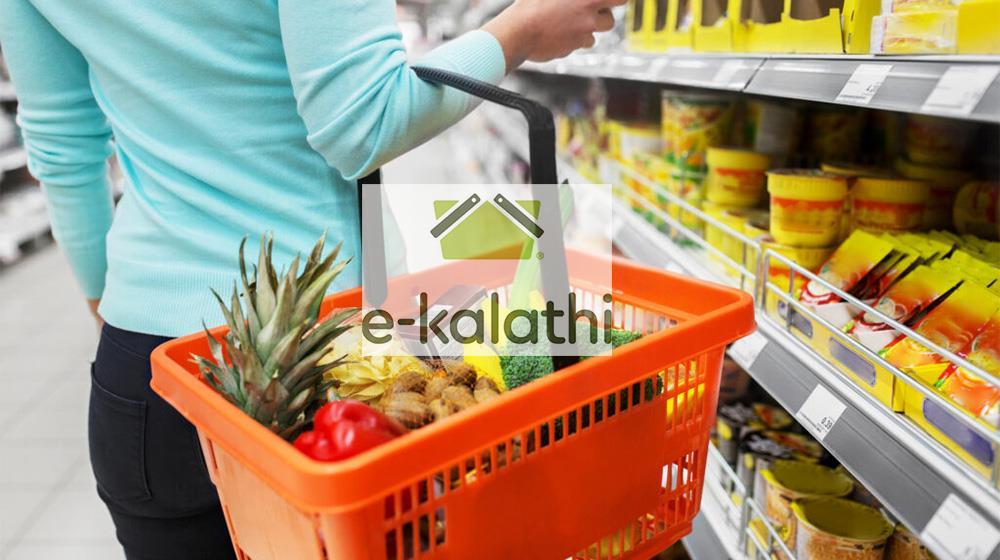
The 'e-kalathi' digital platform, put into operation in June 2025, was an intervention in a sector characterised by sharp and intense competition. A year on, it does not appear to have achieved its goal of strengthening competition, consumer protection and their purchasing power.
The concerns and reservations of retailers about the effectiveness of the tool, which constituted an intervention in the market, proved to be well-founded, as the platform failed to have the expected impact on consumers.
The General Secretary of the Pancyprian Retail Trade Association (PASYLE), Marios Antoniou, made a relevant statement in at the 23rd Retail Trade Conference, noting that both retailers and other involved associations were right that the tool would not offer any substantial assistance to the consumer public. “This is clearly demonstrated by the fact that 10 months after the operation of the platform in question, not even 2% of the population has downloaded it,” he had noted in this regard, last April, in the context of the conference.
Educated consumers
Asked by InBusinessNews to explain why the digital platform failed to effectively help consumers compare prices of basic products, Antoniou attributed the low response to the fact that consumers are educated, informed and know the advantageous options for themselves, as well as the products they will choose from each supermarket based on their own budget and preferences.
In addition, the Consumer Protection Service platform managed, instead of providing real value, to create disruption, more bureaucracy and additional costs for food retail businesses, a sector that has historically been characterised by intense competition for the benefit of consumers.
Private labels are gaining ground
Another main reason for the failure of the venture is the non-inclusion of private own-label products, which proved to be particularly competitive against branded products.
"Within every supermarket, there are much cheaper products than the branded ones, which are included in 'e-kalathi'. These are either products that each supermarket imports at low prices or private label products that have strongly penetrated into all categories," Marios Antoniou noted, explaining that private label products have firmly entered the household shopping basket, have been adopted by consumers and are no longer just an alternative option but a competitive and quality product compared to the branded ones.
Given that the label of these products bears the name of each supermarket, the chain will undoubtedly choose the right producers to create the appropriate product, which will, on the one hand, be a quality alternative for consumers and, on the other hand, will justify its reputation.
It is worth mentioning that, based on recent research, private label products in the Greek market reach 25% of the value of the shopping basket.
The difference between a more expensive and a cheaper supermarket
Comparing prices of common and specific products and not including private label products, which are the trump card of every supermarket, may be one of the main reasons why the digital platform did not demonstrate intense competition among retailers.
On its part, the Cyprus Consumers' Association finds that fierce competition is observed only in a small number of supermarkets participating in e-kalathi, while in the vast majority of supermarkets there does not seem to be fierce competition, as, as it states in a recent announcement, "the discrepancies between their selling prices are so great that they do not constitute an indication of fierce competition."
However, in a recent announcement, the Consumer Protection Service also notes that data from the 'e-kalathi' platform shows the fluctuation in the number of completely common products in seven large supermarkets, which gradually increased from 228 on 15 October, 2025, to 253 products on 15 June, 2026.
Indicatively, as the competent Service emphasises, the ranking of the seven supermarkets has changed compared to the previous month and the difference in the value of the "basket of 253 absolutely common products" between the most expensive supermarket and the cheapest supermarket amounted to €108.62 or 11.2% for 253 products on 15 June, 2026, compared to €119.70 or 12% for 257 products last May.
(Source: InBusinessNews)