








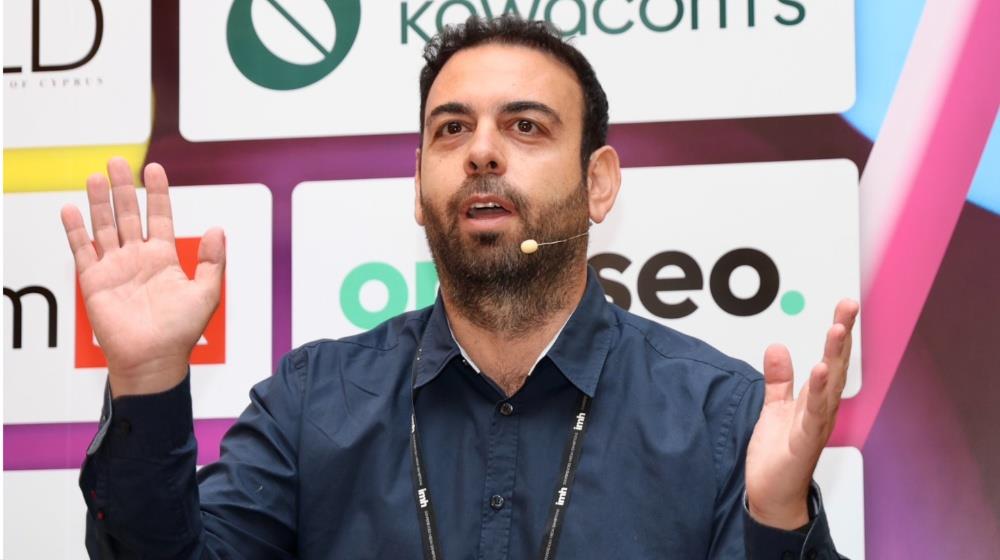
Artificial intelligence has ceased to be a future promise and is already becoming a catalyst for change in the way businesses, marketing departments and communication professionals operate. According to Pantelis Vladimirou, Co-Founder of Webarts, the biggest mistake businesses can make today is to treat AI as a simple technological trend and not as a fundamental shift in the way value is created.
During his presentation entitled 'Transform Your Marketing with AI You Can Use Today,' at the 23rd Marketing, Advertising, Media & Communication Conference, Vladimirou argued that the discussion around artificial intelligence is primarily about people and how they choose to adapt to the new reality. As he noted, organisations are called upon to choose the “right side” of change, avoiding the trap of complacent success and the belief that what has worked so far will continue to produce the same results in the future.
According to him, one of the biggest risks for professionals and businesses is the inability to recognise the magnitude of the change that is already underway. He specifically mentioned that many professionals are currently being paid for skills and tasks that will soon be automated, emphasising that the issue is not about protecting existing processes but about repositioning human value in a new environment.
In this context, he presented one of the key messages of his speech: artificial intelligence is not necessarily coming to replace jobs, but to redefine the value that each professional produces within the organisation. As he explained, the more repetitive and administrative tasks AI takes over, the more time is freed up for strategic thinking, creativity, decision-making and human judgment.
Vladimirou focused on the concept of “Human-in-the-Loop”, emphasising that the most effective use of artificial intelligence occurs when humans remain at the center of control, supervision and strategic direction of processes. In his view, the real opportunity lies in the collaboration of humans and machines, and not in the complete replacement of one by the other.
Presenting practical application examples, he said that AI agents can already undertake a wide range of tasks, such as answering emails, managing and evaluating potential customers (leads), checking invoices, analysing reports, producing content, monitoring team work, publishing material, sending notifications for critical performance indicators, creating campaigns and managing data.
He also made special mention of the possibilities of creating personalised content. Through the use of previous material, personal writing style, selected topics of interest and industry best practices, as he explained, professionals can create branded content that maintains their own identity and voice, while leveraging the speed and capabilities of artificial intelligence.
At the same time, he presented examples of optimising advertising campaigns through AI, pointing out that modern tools can identify performance problems, analyse the competitiveness of ads, suggest improvements to creative material, targeting and landing pages, as well as offer specific action plans based on real data.
Concluding, Pantelis Vladimirou sent the message that the biggest challenge for businesses is not artificial intelligence itself, but the speed with which they will adapt to the changes it brings. According to him, the organisations that will promptly utilise the new tools, while investing in the creativity, critical thinking and strategic perception of their people, will be the ones that will shape the next chapter of business development.
(Source: InBusinessNews)
