






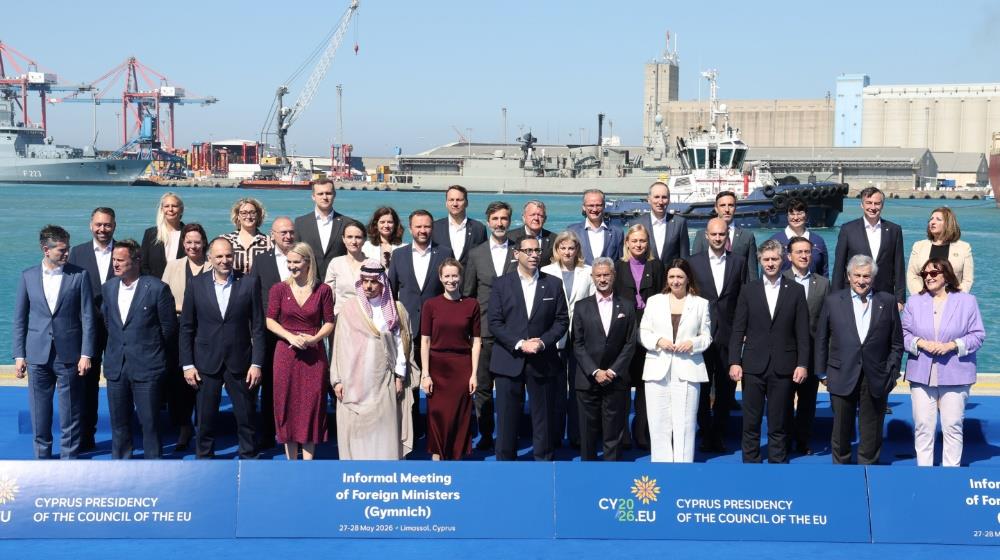
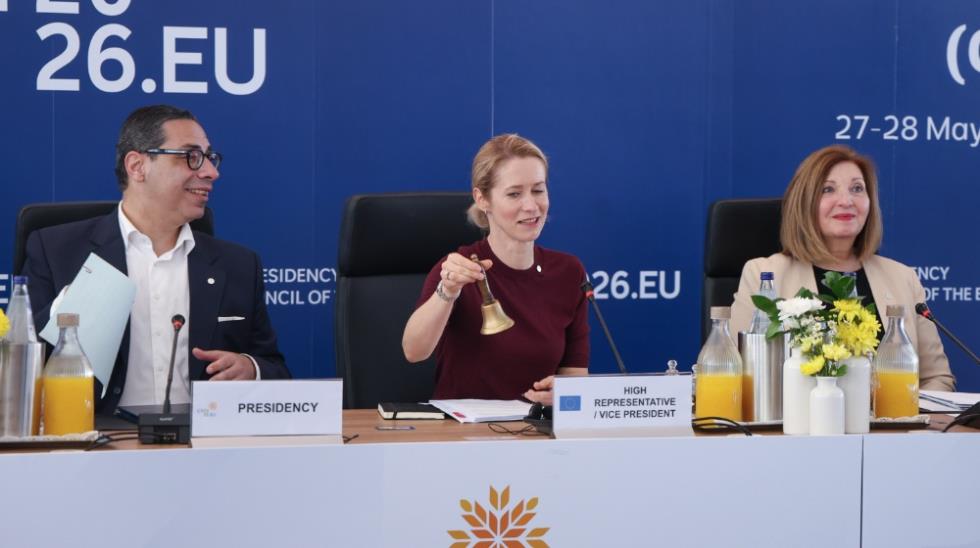
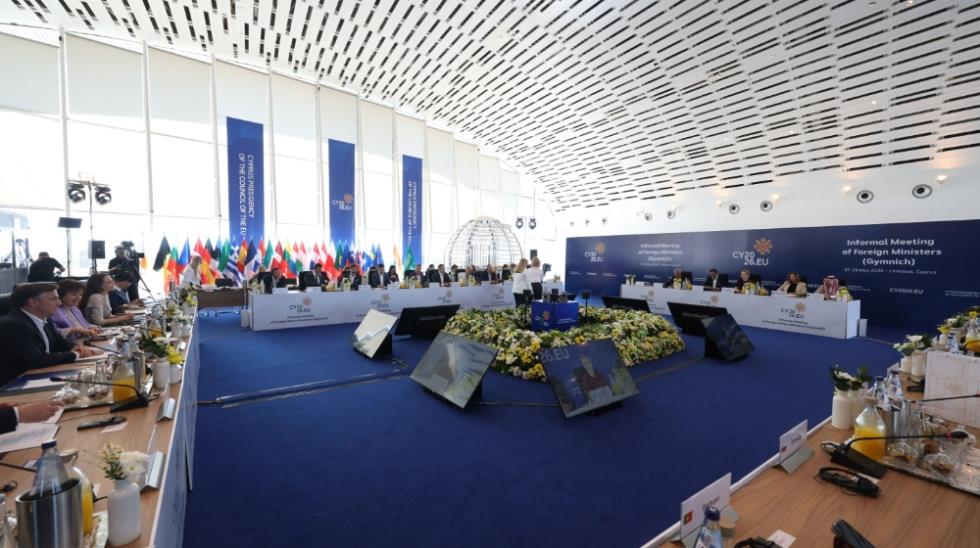
EU Foreign Ministers arriving for the informal Gymnich meeting in Cyprus on Thursday called for tougher pressure on Russia, continued support for Ukraine and a stronger European security role amid growing geopolitical tensions.
In doorstep remarks before the start of the meeting at the Port of Limassol, in the framework of the Cyprus EU Presidency, several Ministers warned against premature negotiations with Moscow, stressing that Europe must remain united and continue sanctions pressure while strengthening its own strategic autonomy.
Artjoms Ursulskis
Latvian Foreign Ministry Parliamentary Secretary Artjoms Ursulskis said that Russia remained an “existential” and long-term threat to Europe, calling for tougher sanctions and a stronger European security posture ahead of any future peace negotiations on Ukraine.
Ursulskis said the EU must remain united and increase economic pressure on Moscow because Russia was “not ready and not willing to start real peace negotiations.”
“If we are able to harm them economically, they would have no chance but to start talking about peace,” he said.
Ursulskis also warned against any temporary settlement that would allow Russia to regroup militarily.
“Peace must be just and lasting,” he said. “We will not agree to something that stops the war for a month or two and then allows Russia to start again.”
He also backed opening EU accession clusters with Ukraine and Moldova “as soon as possible” and called for stronger European defence production and energy security.
Beate Meinl-Reisinger
Austrian Foreign Minister Beate Meinl-Reisinger said the EU should prepare for future negotiations on Ukraine by appointing a chief negotiator to represent European interests, while maintaining pressure on Russia through sanctions.
Meinl-Reisinger said Ukraine had “gained strength” in recent months and that the economic impact of sanctions on Russia was becoming increasingly visible.
“It is not about dialogue or pressure,” she said. “We need both.”
She also called for work on a “strong” 21st EU sanctions package and warned that Russia continued to pose security threats to Europe through cyberattacks, sabotage and energy insecurity.
“Either we sit at the table and speak for European interests ourselves, or others will do it,” she said.
Dubravka Suica
European Commissioner for the Mediterranean Dubravka Suica said Cyprus was the “best place” to discuss Mediterranean issues, as EU Foreign Ministers gathered for talks focused on the Middle East, Ukraine and European security.
Suica highlighted the strategic importance of India and Saudi Arabia’s participation, particularly in relation to the India-Middle East-Europe Economic Corridor (IMEC) and regional stability.
“For us, it is important to resolve the situation in the Strait of Hormuz,” she said, warning that tensions in the Gulf carried “huge consequences” for Europe and the wider world.
Suica said the EU was seeking to contribute diplomatically while avoiding direct involvement in the conflict.
“Europe is strong,” she said. “We are 450 million people and every member state feels equal in Europe.”
Neva Grasic
Slovenian State Secretary for European Affairs Neva Grasic said Ministers would discuss the Middle East, Russia’s war against Ukraine and Europe’s future security strategy amid growing global instability.
Grasic said the participation of Ministers from India and Saudi Arabia highlighted the importance of keeping “channels of discussion open” with international partners.
She said Ministers would also discuss how to strengthen the EU’s role in future peace efforts on Ukraine while maintaining pressure on Russia.
“The main interest of the European Union is a safe and secure Europe, and that means also a safe and secure Ukraine,” Grašič said.
She also condemned recent Russian attacks on Kyiv, stressing that “our presence in Kyiv will remain and our support to Ukraine will remain.”
Oana Toiu
Romanian Foreign Minister Oana Toiu said Ministers would discuss support for a “sustainable peace” in Ukraine, tensions around the Strait of Hormuz and Europe’s future security strategy.
Toiu strongly backed the immediate opening of EU accession clusters with Ukraine and Moldova.
“We need to stand by our word and open the negotiation clusters for Moldova and Ukraine immediately,” she said. “June is the perfect moment to do that.”
Toiu also stressed the strategic importance of the Black Sea in Europe’s future security architecture, describing it as a “strategic” economic and geopolitical corridor linking Europe with the South Caucasus and the Middle East.
She said Europe needed to take greater responsibility for its own defence while maintaining close coordination with NATO.
Margus Tsahkna
Estonian Foreign Minister Margus Tsahkna said Europe should focus on increasing pressure on Russia and strengthening support for Ukraine rather than debating who could negotiate with President Vladimir Putin.
Tsahkna argued that Moscow was not currently interested in meaningful peace talks and warned against what he described as a Russian “trap” aimed at pushing Europe into a neutral mediating role.
“Putin doesn’t want to negotiate anything,” Tsahkna said. “We need more pressure on Russia and more support for Ukraine.”
He called for the rapid adoption of a 21st EU sanctions package and backed opening all EU accession clusters with Ukraine and Moldova.
“There cannot be any neutrality zones or buffer zones between the European Union, NATO and Russia,” he said.
Tsahkna also stressed that Europe needed “strategic patience” while continuing military and economic pressure on Moscow.
Gunther Krichbaum
German Minister of State for Europe Gunther Krichbaum said pressure on Russia must continue to increase before discussions about any potential mediator or envoy for Ukraine could move forward.
Krichbaum said Germany remained firmly committed to supporting Ukraine both militarily and economically, while backing its path toward EU membership.
“The pressure on Russia must rise,” he said, pointing to preparations for a 21st EU sanctions package.
Krichbaum also warned that instability around the Strait of Hormuz could boost Russian energy revenues and help finance Moscow’s war effort.
“With the blockade of the Strait of Hormuz, oil becomes scarce globally and Russia profits from higher revenues,” he said.
He added that any future mediator in negotiations would need to be accepted by Ukraine, stressing that “Russia does not dictate the rules.”
Kęstutis Budrys
Lithuanian Foreign Minister Kęstutis Budrys said EU Ministers should focus on increasing pressure on Russia and strengthening support for Ukraine rather than discussing potential negotiators or peace talks.
Budrys called for a “strong” 21st EU sanctions package, including measures against Russia’s nuclear sector, Lukoil and maritime exports.
“This is not the time to discuss names or places at the table,” he said. “We have to discuss how to put additional pressure on Russia and provide more assistance to Ukraine.”
Budrys also urged the EU to open all six accession clusters with Ukraine and Moldova in June and warned that Europe’s future security architecture must be based on “deterrence of Russia.”
“Existential threats are now on the eastern flank,” he said. “We have to strengthen it immediately.”
Tom Berendsen
Dutch Foreign Minister Tom Berendsen said the European Union should focus on defining a clear mandate and common position on Ukraine before discussing who could represent Europe in potential negotiations with Russia.
Berendsen said “content is the most important thing” and stressed that European unity should come before discussions over possible negotiators or envoys.
“Content is leading, unity is leading, and a clear mandate before we present someone,” he said.
Berendsen also called for stronger European defence efforts within NATO amid uncertainty over the long-term US security role in Europe.
“We need to invest more in the European pillar under NATO,” he said. “That is not only answering concerns from the United States, but it is also in our own interest.”
He also backed EU measures against Israeli National Security Minister Itamar Ben-Gvir, calling his behaviour “unacceptable.”
José Manuel Albares
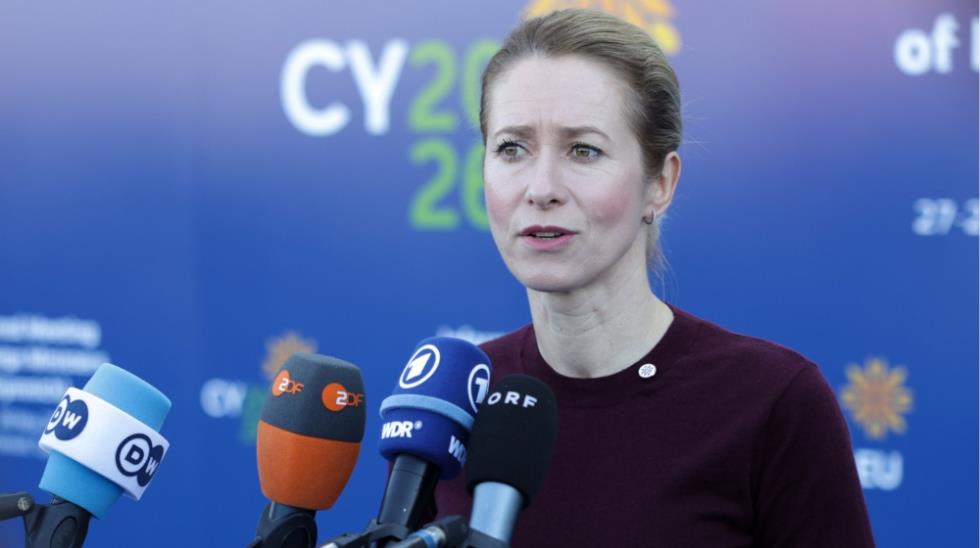
Spanish Foreign Minister José Manuel Albares said Europe must speak with “one voice” on Ukraine and the Middle East, while calling for continued support for Kyiv and stronger pressure on Israel over Gaza and Lebanon.
Albares said Russia’s latest attacks on Kyiv showed Moscow had “no willingness for peace, a ceasefire or negotiations.”
“We must be prepared to continue backing Ukraine for as long as it takes,” he said.
Albares also called for the suspension of the EU-Israel Association Council and backed measures against Israeli National Security Minister Itamar Ben-Gvir.
“Democracies do not violate international law. They do not violate human rights,” he said.
On proposals for a possible EU envoy on Ukraine, Albares said the key issue was not “one person” but ensuring Europe acted with “one voice.”
Georgios Gerapetritis
Greek Foreign Minister Georgios Gerapetritis said Europe’s strategic autonomy must be based on competitiveness, resilience and solidarity, while warning against revisionism in an increasingly fragile geopolitical environment.
Gerapetritis called for a “360-degree” European strategy focused not only on Europe’s immediate neighbourhood but also on the Global South.
He highlighted the participation of Ministers from Saudi Arabia and India, describing both countries as “extremely important partners” with which Greece maintains strategic relations.
“We must raise a united and strong voice against all forms of revisionism,” he said. “In an extremely fragile geopolitical environment, revisionism creates global instability at the expense of citizens around the world.”
Gerapetritis also stressed that attacks against civilians and civilian infrastructure “cannot be tolerated” and called for universal respect for international law.
(Source: CNA)
Also read: EU Foreign Ministers holding informal meeting in Limassol
