







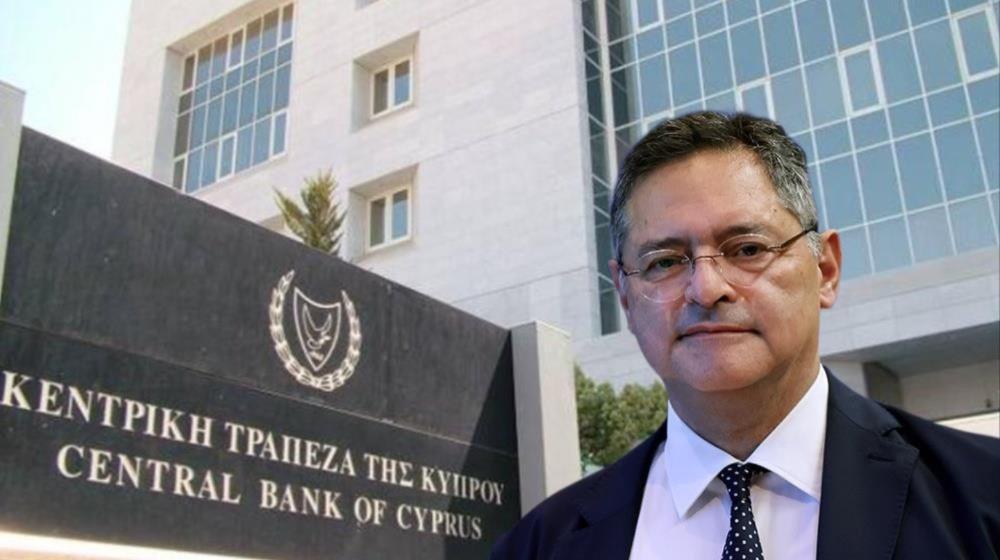
A significant boost to economic activity during the period 2026–2028 is expected from large private investments in infrastructure and from the rise in exports, the Governor of the Central Bank of Cyprus, Christodoulos Patsalides, stresses, in a message included in the bank’s annual report for 2025.
According to the Central Bank’s report, the Cypriot economy continues to show positive prospects despite the constantly changing international environment, including the war in the Middle East. “Based on the working assumption of the baseline scenario for a gradual de-escalation of the war, inflation is expected to be close to 2% over the medium term, contributing to the maintenance of a stable macroeconomic framework capable of supporting sustainable and balanced growth,” it is stated.
Citing the Central Bank’s March 2026 projections, which take into account the effects of the war in the Middle East and the outbreak of foot-and-mouth disease in Cyprus, Patsalides notes that the growth rate is expected to slow to 2.7% in 2026, from 3.8% in 2025, while for 2027 and 2028 an acceleration is expected, with growth rates of 2.9% and 3.1% respectively.
He adds that domestic demand during 2026–2028 is expected to be strengthened by the continued rise in private consumption, due to increased real disposable income and a resilient labour market, despite a decline in consumer confidence linked to the war.
“A significant boost to economic activity is also expected from large private investments in infrastructure, as well as from the rise in exports, mainly in technological, financial, and professional services,” he notes.
Regarding tourism, the Governor of the Central Bank states that it is expected to be negatively affected in 2026, but to recover from 2027.
He adds that inflation is expected to rise significantly to 2.7% in 2026, mainly due to higher energy prices, supply chain disruptions, and increased international prices of fertilizers and food.
He notes that in 2027 inflation is expected to ease to 2%, thanks to lower energy and services prices, while in 2028 a slight increase to 2.2% is expected, mainly due to the implementation of the expanded Emissions Trading System (ETS2), which is estimated to increase fuel costs.
Regarding the banking sector, the Governor of the Central Bank states that it “maintained high resilience” in 2025, showing strong solvency and liquidity indicators.
In addition, he notes that the Non-Performing Loans (NPL) ratio fell to 1.6% at the end of December 2025, a level lower than the corresponding European Union average, which stood at 1.8% in December 2025.
With regard to the Central Bank, Patsalides states that it “remains fully committed to its mission of ensuring price stability and financial stability.” Furthermore, he refers to the proposal for modernising the governance model of the Central Bank, which he submitted to the President of the Republic and the Minister of Finance.
Central Bank Report
According to the report, the Cypriot economy continues on a strong growth trajectory despite ongoing uncertainty in the international environment, and “GDP continued to record high growth rates, supported by a wide range of economic activity sectors.”
It also notes that the labour market remains resilient, while inflation was quite low in 2025 and rose to levels consistent with the medium-term target in early 2026, with the positive picture also reflected in public finances.
According to the report, the public debt-to-GDP ratio has now fallen below the 60% threshold, while the creditworthiness of the Republic of Cyprus has been upgraded by international rating agencies.
It is noted that the Central Bank’s forecasts (March 2026) indicate that the positive course of the economy is expected to continue in the coming years, adding that GDP growth reached 3.8% in 2025.
According to the Central Bank, unemployment is projected to stabilise around 4.5% during 2026–2028, within the context of continued labour market tightness, reflecting full employment conditions.
(Source: CNA)