




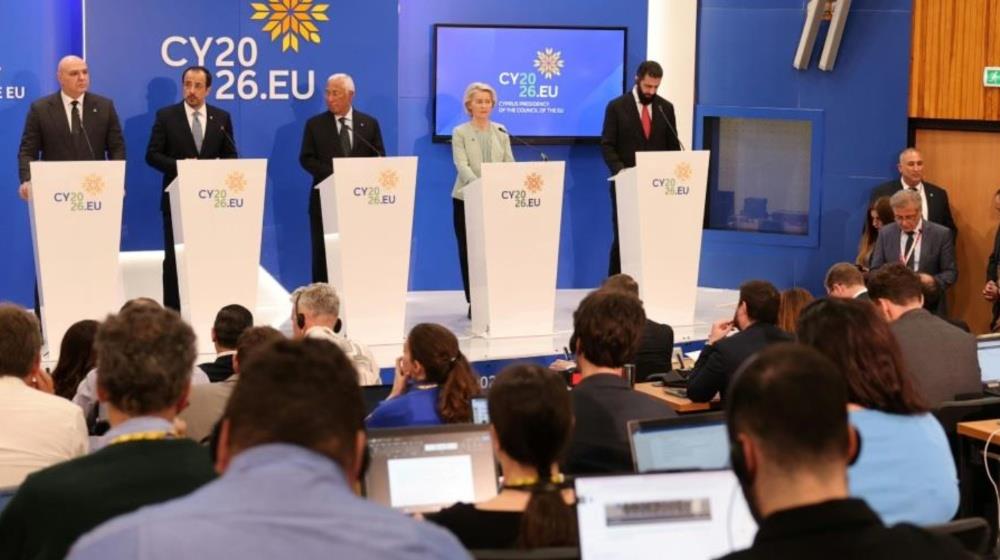
The strengthening of Europe's cooperation with its partners in the Middle East and the Gulf was discussed on Friday by European leaders with the leaders of Jordan, Syria, Egypt and Lebanon, at the Informal Leaders' Council, held within the framework of the Cyprus Presidency of the Council of the European Union, at the Filoxenia Conference Centre, in Nicosia.
Speaking at a press conference after the meeting, the President of the Republic, and EU Council President Nikos Christodoulides, sent a clear message that "restraint must prevail over escalation, diplomacy must remain at the forefront, and dialogue is the only path to restoring stability". He also stressed that the European Union “is present, actively engaged and working closely with its partners in this part of its neighbourhood, committed to promoting our common goals of stability, security and prosperity”.
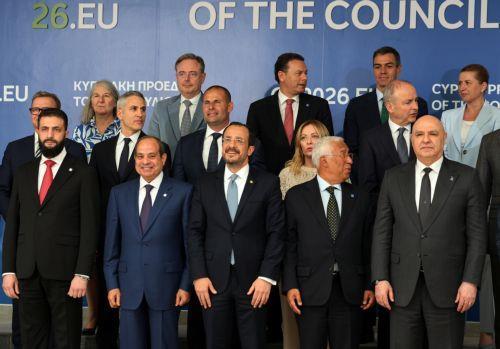
The President of the European Council, Antonio Costa, pointed out – among other things – that the war in the Middle East has already shown its devastating consequences, adding that the EU stands in solidarity with the countries and peoples of the region. At the same time, he noted that the Strait of Hormuz should be reopened immediately, without restrictions and without tolls. “The situation in Lebanon is a matter of great concern for us”, he said, adding that Hezbollah is an existential threat to Lebanon and a destabilising factor in the region.
On her part, the President of the European Commission, Ursula von der Leyen, said - among other things - that "our common goal is to negotiate a lasting peace that provides for free navigation through the Strait of Hormuz". Expressing the EU's full solidarity with its partners in the Middle East, she called for the territorial integrity of Lebanon to be respected, while stressing that a temporary ceasefire is not enough. At the same time, she thanked the Gulf states for their support in the repatriation of European citizens. Referring to the EU's relations with its partners in the Middle East, she said that "bonds become stronger in times of crisis. We are not just partners in managing the crisis, but partners for the future".
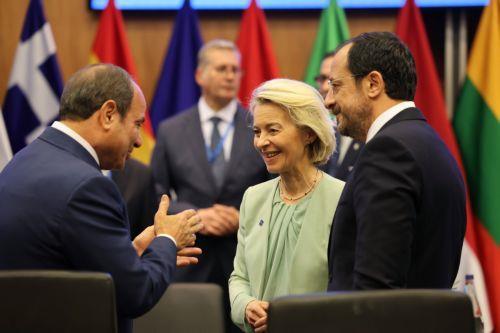
The President of Lebanon, Joseph Aoun, stated that he expressed the reality of Lebanon at the meeting. The war came at a time when Lebanon had not yet recovered from previous wars, he noted, adding that his country was “paying a very high humanitarian price.” However, he continued, Lebanon did not consider itself facing conflict but saw enormous potential for economic integration and connectivity in services and trade.
Syrian President Ahmed Al-Sharaa said the meeting “shows political maturity.” He also said that the security of Europe and the Middle East were intertwined, noting that “Europe needs Syria as much as Syria needs Europe.” He also called on the international community to shoulder its responsibilities for Israel’s aggression.
(Source: CNA)