






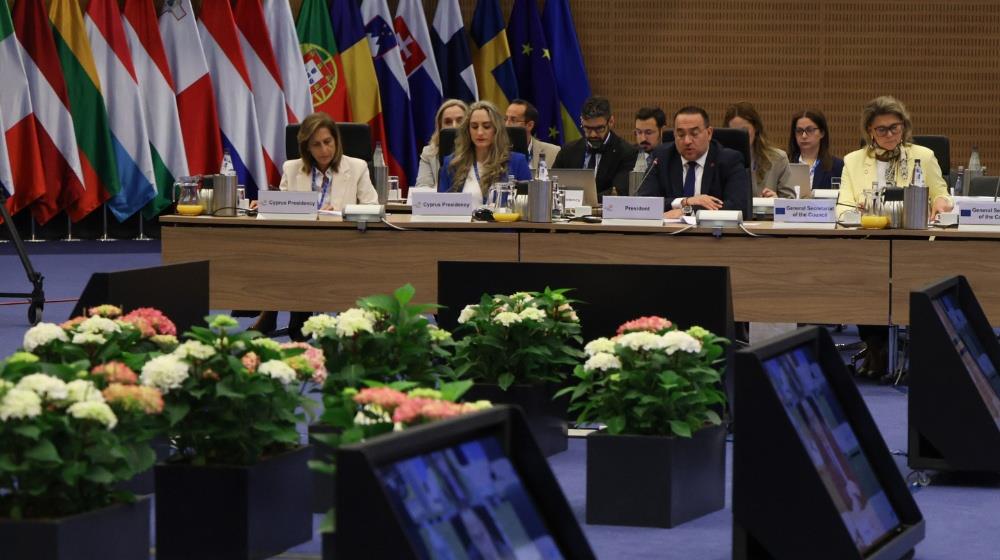
The contribution of tourism is significant for the European economy, Deputy Minister of Tourism Kostas Koumis has said, noting that global tourism has entered a period of intense uncertainty but its proven resilience during previous years creates a sense of optimism.
Addressing the 1st session of the Informal Council of EU Tourism Ministers on "the forthcoming European Strategy for Sustainable Tourism" on 17 April, Koumis said that the agreed ceasefire has brought optimism and revived bookings in the affected destinations, "but general uncertainty remains in the global tourism landscape".
He pointed out that "despite negative consequences, the proven resilience of the sector over the past few years creates a sense of optimism".
Highlighting the importance of tourism for the European economy, Koumis noted that the sector makes a significant contribution of around 5-10% to the Union's GDP and supports around 25 million jobs, recalling that the tourism sector has shown growth exceeding pre-pandemic levels.
"The first, and in some cases huge, growth of the sector has brought new challenges such as the environmental burden of climate change, changing infrastructure and cases of over-tourism in some regions," he said.
Strategic value of tourism
Koumis stressed that the Cyprus Presidency attaches particular importance to tourism, recognising both its strategic value and its increased exposure to external shocks such as geopolitical instability, climate-related impacts and rapid technological changes.
He added that today's meeting comes at a crucial moment as the European Commission is preparing to adopt the first EU Sustainable Tourism Strategy, marking an important step towards a more coordinated, more resilient, but above all, a future ready tourism policy at EU level.
"The forthcoming EU Sustainable Tourism Strategy is expected to shape a more sustainable, more competitive and inclusive tourism model fully aligned with Europe's environmental objectives, supporting local communities and strengthening the sector's resilience to the crisis, which is certainly a step forward," he said.
The Deputy Minister also expressed confidence that "the current informal ministerial meeting will provide valuable policy and guidance, contributing substantially to the shaping of this strategy".
Historic moment for Cyprus
In a doorstep statement earlier Koumis, described the informal meeting as "undoubtedly a historic moment for the Republic of Cyprus", adding that the participants will have the opportunity to take a stand in relation to the current challenges facing small and medium-sized tourism businesses.
European Commissioner for Sustainable Transport and Tourism, Apostolos Tzitzikostas, underlined that the meeting is taking place "in a difficult international context, with the ongoing crisis in the Middle East and its impact on travel and fuel prices, especially in the air transport sector". He stressed that "this reaffirms the urgent need to strengthen the resilience of the European tourism sector", noting that resilience is "one of the main aspects to be addressed in the EU's first sustainable tourism strategy".
Tzitzikostas described tourism as "one of the EU's most strategic sectors that offers enormous value to the European economy, local communities and citizens", underlining that "it is vital for the EU's competitiveness, resilience and long-term economic stability". At the same time, he noted that the aim is for the European Union to remain "the world's leading tourist destination", describing it as "safe, easy, open, attractive, diverse, ready to face shocks and, of course, the unpredictable".
Referring to Cyprus, he stressed that "it is not only a leading European tourist destination, but it is also a safe and stable destination for all".
A sustainable tourism strategy
The informal meeting is expected to contribute to the formulation of the European Commission's final proposal for the sustainable tourism strategy, which, according to the Commissioner, is due to be presented in the coming months.
Croatian Deputy Minister Monika Udovic said that "for the first time we will talk more about the new strategy for sustainable tourism development at EU level", noting that "in this difficult period for tourism, we want to be honest and work together to set the same goals with all citizens and all governments".
Estonia's tourism policy chief Kristina Jerjomina said that her country is looking forward to "guidelines on the European strategy for sustainable tourism, which could enhance the competitiveness and resilience of the tourism sector", stressing the need for solutions to be "practical, data-based and small business-friendly".
Greece's Minister of Tourism, Olga Kefalogianni, noted that "it is important that tourism should be given its due importance", stressing that it is "a very important sector for economies that provides employment opportunities for millions of Europeans and supports social cohesion and competitiveness".
Equitable growth
She added that the European strategy should be transformed "into a strategy that we will implement as member countries of Europe, so that we can have equitable growth". She pointed out that the presence of herself and Deputy Minister of Tourism Anna Karamanlis in Nicosia shows Greece's practical support to Cyprus in this difficult period "when due to the geopolitical conditions the situation of tourism is in a phase that needs the support and vote of confidence from all of us, because Cyprus always remains a safe and welcoming destination".
On behalf of Slovenian, Dubravka Kalin, Director General of the Ministry of Economy, Tourism and Sports, pointed out that the debate focused on "the strategic document, the strategy for sustainable tourism and Europe as a destination", with particular emphasis on "the importance of small and medium-sized enterprises, which are the backbone of European tourism".
Rosario Sánchez Grau, Spain's State Secretary for Tourism, stressed that her country would express "a very firm position on the international conflict situation", saying "a clear no to war", pointing out both the humanitarian costs and "the economic consequences already being felt in many Mediterranean destinations". At the same time, she highlighted the need for the European Union to "work to combat fossil fuels and promote sustainable aviation fuel".
(Source: CNA)
