







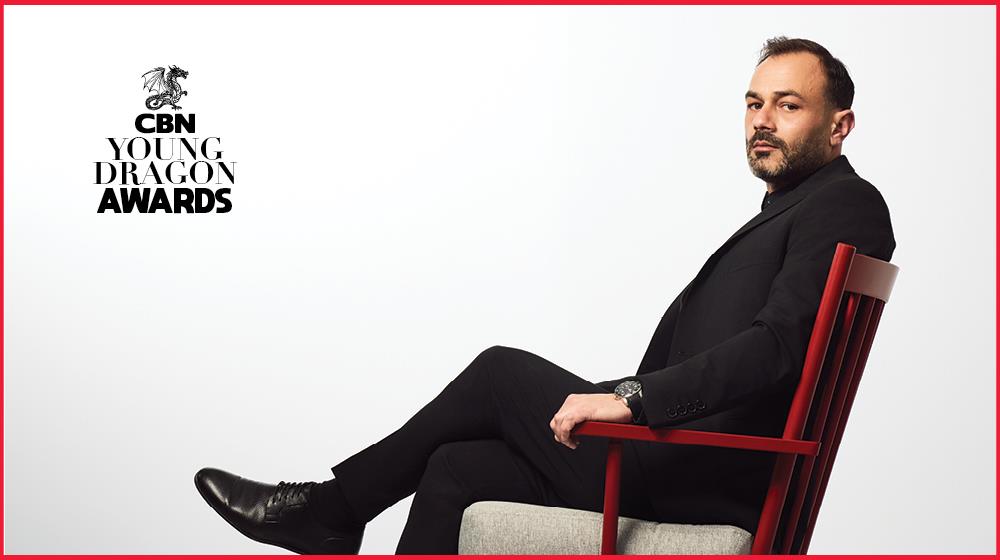
“Adjusting [to modern green technologies] early can enhance operational efficiency, strengthen competitiveness and build greater trust with consumers and stakeholders. In the long term, sustainability will no longer be perceived as an obligation but as an integral component of responsible and successful business practice,” Panagiotis Charalambous, the Environmental Operations & Compliance Officer of Charalambidies Christis Ltd suggests in his interview following his win at the CBN Young Dragon Awards in recognition for his contribution to the trading and manufacturing industry.
Speaking to GOLD magazine, Charalambous pointed out that Cypriots companies are continuously developing to meet environmental thresholds, such as the reduction of their emissions footprint, improved energy and water efficiency and effective waste management processes.
While this shift requires substantial investment in new technologies and immense capital, it also presents a strategic opportunity. “Adjusting early can enhance operational efficiency, strengthen competitiveness and build greater trust with consumers and stakeholders. In the long term, sustainability will no longer be perceived as an obligation but as an integral component of responsible and successful business practice,” adds Charalambidies.
Finally, on being recognised as a Young Dragon, he shares advice with other ambitious young professionals.
You are responsible for the environmental management and operation of the wastewater treatment plant (WWTP) at Charalambides Christis Ltd. Are green technologies and strategies being generally adopted in Cyprus? What has been most promising development in wastewater management?
Cyprus is making encouraging progress in adopting green technologies and sustainable practices, particularly in manufacturing and the food industry. There is growing investment in resource efficiency, energy recovery systems and circular economy initiatives, reflecting a broader shift towards responsible production models. In wastewater management, the most promising developments involve advanced biological treatment systems and water reuse strategies. Treated water can now be safely reused for irrigation and certain industrial applications, significantly reducing freshwater consumption – a critical priority for a water-scarce country like Cyprus. At the same time, modern monitoring and automation technologies enhance operational efficiency, while ensuring strict compliance with environmental standards. Overall, environmental responsibility is increasingly viewed not only as a regulatory requirement but as a strategic investment in long-term sustainability and operational resilience.
What are the most challenging environmental standards that manufacturing companies need to adopt?
One of the most demanding challenges for companies – particularly manufacturers – will be the transition from basic regulatory compliance to measurable and transparent sustainability performance. Businesses are now expected not only to meet environmental thresholds but to actively reduce their footprint through lower emissions, improved energy and water efficiency, and more effective waste management practices. Adapting to these evolving standards requires substantial investment in new technologies, process optimisation and continuous performance monitoring – all of which can be complex for industrial operations. However, this shift also presents a strategic opportunity. Adjusting early can enhance operational efficiency, strengthen competitiveness and build greater trust with consumers and stakeholders. In the long term, sustainability will no longer be perceived as an obligation but as an integral component of responsible and successful business practice.
How does winning a CBN Young Dragon Award reshape the expectations you place on yourself, going forward?
Winning the BN Young Dragon Award in the Trading and Manufacturing category is both an honour and a responsibility. Being selected from among such a strong group of nominees significantly raises the expectations I set for myself and motivates me to continuously improve. This recognition reinforces my belief that success is not a single milestone but a continuous journey.
It challenges me to lead with consistency, integrity and accountability, ensuring that my work creates value for the organisation, our people and society. Moving forward,
I feel an even stronger commitment to contribute to sustainable development within the sector and to promote a culture of excellence, innovation and long-term value creation.
Looking back on your journey so far, what is the biggest lesson you have learned and what advice would you offer to ambitious young professionals?
The most important lesson I have learned is that growth happens outside your comfort zone. Progress rarely occurs when everything feels safe and predictable; it comes when you embrace challenges, take responsibility and continue moving forward even when the outcome is uncertain. To other young professionals, I would say: take initiatives and trust your values. Be patient with your development, remain consistent in your efforts and treat mistakes as learning opportunities rather than failures. Surround yourself with people who inspire you and challenge you to improve, both professionally and personally. Success is not built overnight. It is the result of persistence, discipline and passion. When you work with integrity and purpose, opportunities will eventually follow.
PANAGIOTIS CHARALAMBOUS
Dr. Panagiotis Charalambous is responsible for the environmental management and operation of the wastewater treatment plant (WWTP) at Charalambides Christis Ltd, Cyprus’ leading dairy industry. His work focuses on ensuring full compliance with environmental legislation and standards, overseeing the efficient treatment of industrial wastewater and promoting sustainable practices across all company operations. He plays a key role in monitoring environmental performance, developing and implementing programmes that reduce emissions and waste generation, and ensuring that the company’s activities align with national and European sustainability objectives. In addition, he contributes to initiatives related to energy efficiency, pollution prevention and circular economy practices, fostering a strong culture of environmental awareness and responsibility within the organisation. He holds a Ph.D. in Chemical Engineering from the Cyprus University of Technology (CUT), where his research focused on optimising the anaerobic digestion of dairy industry wastewater– particularly the anaerobic utilisation of cheese whey using zero-valent iron (ZVI) – to enhance energy efficiency and biogas quality.
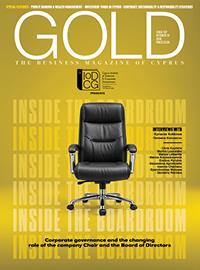
This interview first appeared in the March edition of GOLD magazine. Click here to view it.
