






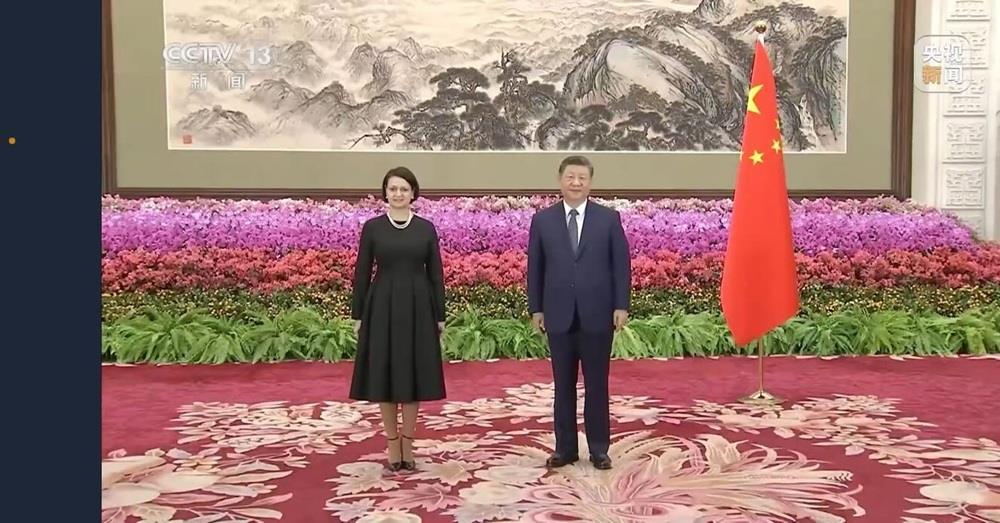
On the occasion of the 55th anniversary of diplomatic relations between Cyprus and China, the Ambassador of the Republic of Cyprus in Beijing, Koula Sofianou, outlines a relationship grounded in political trust, mutual respect and realism.
In a complex geopolitical environment, Nicosia -aligned with European policy- seeks partnerships with depth and potential, from shipping and the green transition to the digital economy and investment. With bilateral trade exceeding $1.1 billion, the challenge is to translate political ties into tangible economic results through strategic patience and active economic diplomacy.
The year 2026 marks 55 years since the establishment of diplomatic relations between Cyprus and China. How would you describe this relationship and how is it affected by recent geopolitical developments?
Cyprus-China relations are at a very good level, particularly politically, and are characterised by mutual respect and stability. China, as a permanent member of the UN Security Council, has consistently been an important supporter of efforts to resolve the Cyprus issue on the basis of relevant United Nations resolutions. The Republic of Cyprus firmly supports the One China policy and refrains from any contact with the authorities of Taiwan.
The meeting between the President of the Republic and the Prime Minister of China last September in New York, on the sidelines of the UN General Assembly, reaffirmed the willingness of both countries to further strengthen cooperation in areas such as shipping, education, trade and people-to-people contacts.
In response to the second part of your question, I would say that the relationship is characterised by stability. It is worth noting that with more than 55 years of diplomatic relations in modern history, Cyprus and China are two countries with civilizations spanning thousands of years -two ancient civilisations, as is often noted in our meetings- as well as shared social values such as family, hospitality and offering to others.
Your assumption of duties coincides with a new phase in Cyprus-China relations. How would you describe the way the Republic of Cyprus positions itself towards China today?
As I have already mentioned, bilateral relations are at a very good level. At the same time, Cyprus, as a member state of the European Union, aligns itself with EU policy towards China. In the context of holding the Presidency of the Council of the European Union, Cyprus supports continuous EU-China engagement at all levels and seeks a realistic, unified and constructive approach.
Cooperation with China is encouraged in areas of common interest such as sustainable development, climate change, investment, education, health, food security and pragmatic EU–China cooperation in the multilateral framework, including the United Nations and the WTO. We believe in maintaining open channels of dialogue and avoiding confrontation or escalation. Differences in views between the EU and China on certain key issues should not eliminate the space for constructive cooperation.
President of the Republic Nikos Christodoulides has referred to shared values such as respect for sovereignty and international law. How decisive are these elements in maintaining a stable and reliable bilateral relationship?
They are very important. Respect for sovereignty and territorial integrity is a fundamental principle of international law and a consistent compass of the foreign policy of the Republic of Cyprus. These principles create the framework of trust that allows for the development of stable and reliable international relations.
Cyprus is often presented as a bridge between Europe, Asia and Africa. How can it capitalise on this role to attract more Chinese investment?
In my humble opinion, it is now well established that Cyprus’ geographical location, combined with its status as a member state of the European Union, creates a significant comparative advantage. Proximity to the Middle East and Africa, as well as a reliable institutional and business environment, can function as a hub for companies wishing to operate in the wider region.
The competitive tax and legal framework, combined with a highly skilled workforce, the use of English and the large number of double taxation agreements with countries across these regions, all contribute to attracting foreign investors.
Bilateral trade between Cyprus and China exceeded $1.1 billion in 2024. Where do you see the greatest potential for upgrading this economic relationship?
The greatest potential lies in the services sector, where Cyprus has significant expertise and comparative advantages. Shipping is a key sector, with strong prospects for cooperation in the green transition and the digitalisation of maritime services.
At the same time, financial services, the digital economy and innovation create new opportunities for collaboration. We should also not underestimate cooperation in education and research, as well as in trade (imports-exports). It is worth noting that at embassy receptions and several official events in Beijing, Cypriot juices are served.
Shipping has long been one of the strongest links between Cyprus and China. How do you see this cooperation evolving in the coming years?
Indeed, shipping is one of the strongest connecting links between the two countries, as both are leading maritime nations and active members of the International Maritime Organization. As such, this relationship can be strengthened through synergies in areas such as maritime decarbonisation, the use of alternative fuel technologies, training of seafarers and promotion of maritime professions, energy efficiency of vessels and, of course, the digitalisation of maritime services as part of cooperation in the digital economy.
The key objective is to create stable partnerships with depth and potential.
In the field of clean energy, China has both expertise and scale. How can Cyprus leverage this experience, given the particularities of a small and isolated energy system?
First of all, allow me to note that these issues should be approached with realism but also optimism. For a small and energy-isolated country like Cyprus, technologies related to energy storage, smart grids and energy efficiency are of particular importance.
In these areas, cooperation can develop through the exchange of know-how and pilot projects tailored to the needs of Cyprus’ small energy ecosystem.
Cypriot business missions to China, such as those organised by the Cyprus Chamber of Commerce and Industry, are tools of economic diplomacy. How critical are such initiatives in turning political relations into tangible economic results?
They are extremely important. As I mentioned earlier, cooperation is cultivated through strategic patience, consistency, presence and trust. The Embassy is in direct communication with the Chamber to support its work.
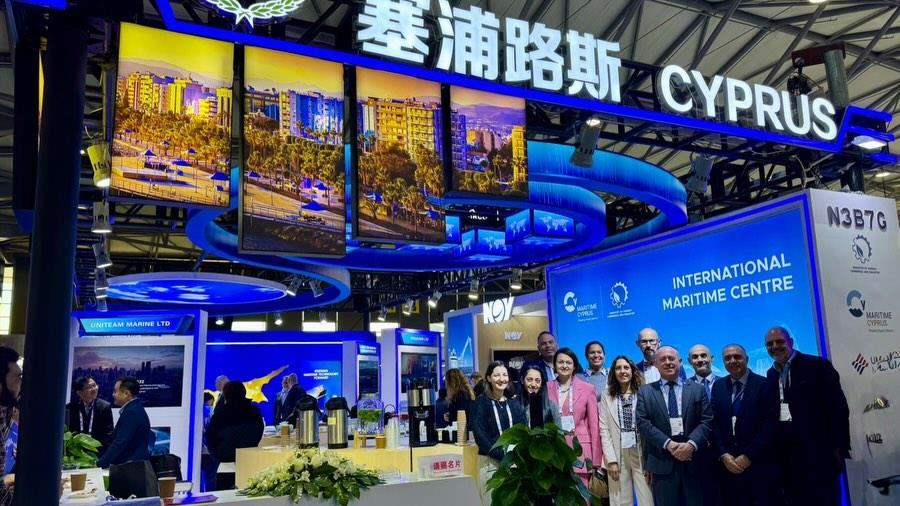
How important is Cyprus’ participation in major Chinese exhibitions, such as the China International Import Expo or CIFIT, for promoting Cypriot businesses and products? More generally, how important is participation in Chinese exhibitions?
Major international exhibitions in China are platforms for promotion, business networking and strengthening presence in the Chinese market. Our participation enhances the visibility of Cypriot products and services, creates reliable business networks and also has political significance- especially when it concerns exhibitions organised with the support of the Chinese state, such as the CIIE.
During such events, there are dedicated programmes for officials and ambassadors, alongside business meetings, contacts and side events. In conclusion, this is a market that requires consistency, patience and a long-term strategy, as one must first earn the trust of their counterpart.
As Ambassador of the Republic of Cyprus to one of the world’s most important powers, what do you consider the biggest challenge and the biggest opportunity of your tenure in China?
The biggest challenge lies in the highly demanding environment in which we are called to operate, especially in a country with the size and geopolitical, economic and political weight of China. In addition, we must bear in mind that the mindset is not one of a typical 9:00–17:00 working schedule.
The greatest opportunity is to leverage the historic milestone of 55 years of diplomatic relations and translate it into tangible cooperation outcomes, while strengthening Cyprus’ presence and visibility. Cooperation between the public and private sectors is essential for promoting Cyprus’ interests. Let us not forget that we are all part of Team Cyprus.
On a personal level, what is life like in Beijing and what has impressed you most about Chinese society and culture so far?
Due to demanding professional obligations, even after six months in my post, I often find myself working at the office on weekends. This means I have not yet had the time to explore the city as much as I would like.
However, my first impressions are very positive. Beijing is a city where cutting-edge technology, fast pace and greenery coexist within a society deeply rooted in tradition-many of which are also present in Cyprus, such as respect for family and elders. It combines the rhythm of any modern metropolis with a unique Chinese cultural character.
Finally, allow me to share an observation based on my first six months. The country’s success and progress, beyond its policies and its economic and demographic scale, are also due to a culture of dedication and hard work. It is a society that believes in continuous effort, discipline and long-term planning.