








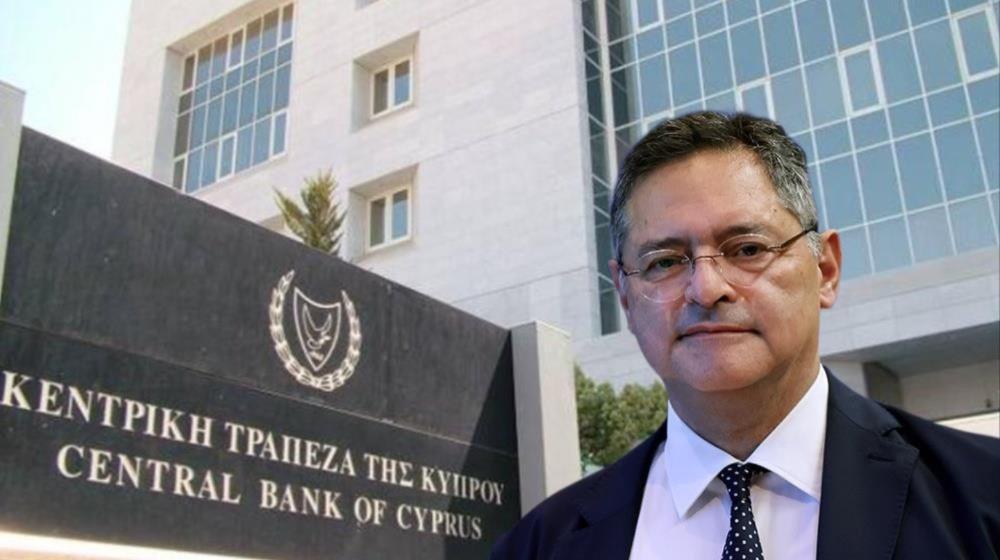
The Cypriot Presidency stands ready to launch the trilogues on digital euro later this semester, Christodoulos Patsalides, Governor of the Central Bank of Cyprus has said.
He made the statements in his keynote speech at the Eurofi High Level Seminar Digital Euro in Nicosia on 27 March. The Governor stressed the need for co-legislators to accelerate the legislative debate and keep the 2029 implementation trajectory on track.
Patsalides said that, whereas the Council of the European Union has agreed its general approach since last December, the European Parliament is debating extensive compromise amendments, and the ECB continues the preparatory work with speed and determination.
“The Council has set out a clear direction. It sees the digital euro as complementary to cash, available both online and offline, and designed to strengthen Europe’s strategic autonomy and payments’ resilience,” he said.
An enormous volume of amendments
Meanwhile, he added, Parliament has been navigating an enormous volume of amendments to the European Commission’s proposal, adding to more than 1,400, reflecting a wide spectrum of positions on privacy, governance, legal tender, and distribution.
“The Cypriot Presidency stands ready to launch the trilogues later this semester. And it is a fact that, once the co-legislators come together, convergence will come, swiftly and constructively. And I have no doubt that everyone here at Eurofi understands the importance of getting this right and with urgency,” he noted.
The Governor stressed that trust, balance, and implementation are the themes that will shape the success of the project. “A digital euro will only succeed if people trust it as much as they trust cash today. And trust here means privacy, and clarity,” he said.
He pointed out that privacy has emerged as one of the most sensitive issues. “Europeans want to know that the digital euro is on their side,” he noted, adding that co‑legislators need to remember that the ECB will track no one, that the digital euro design will protect our privacy and that personal data will be pseudonymised and stay personal.
“Co-legislators must decide what will be enshrined in the law and what will be set out in the ECB’s scheme rulebook. People expect to feel safe, not watched, to feel free, not monitored and to feel empowered, not constrained,” he stressed.
The digital euro will complement, not replace, cash
Moreover, he added that clarity will also matter. “The Council is clear that the digital euro will complement, not replace, cash,” he said, noting that the Parliament seems broadly aligned, but with stronger attention around legal tender and acceptance obligations.
Patsalides underlined that mandatory acceptance matters. “Without it, there is no inclusion, no resilience, no sovereignty. Exemptions must stay exceptional, otherwise legal tender loses meaning,” he said, noting that if a merchant already accepts digital payments, they can also accept the digital euro, since the infrastructure is there, the cost is minimal, and the obligation is proportionate.
Regarding balance, the Governor noted that both the Council and the Parliament agree that the digital euro must be distributed through private intermediaries: banks, payment institutions, electronic money institutions, and other service providers. “Europe is not trying to bypass the market. It is trying to strengthen it by ensuring that central bank money can function in the digital sphere,” he pointed, adding that intermediation means doing so in a way that maintains the fundamentality of financial stability and monetary policy transmission. “It keeps banks strong, keeps innovation alive, and keeps citizens firmly in control of their money,” he noted.
“We need a digital euro that strengthens Europe’s payments ecosystem, not one that fragments it. In fact, it is envisaged as a platform for innovation and growth; exploiting existing standards and infrastructures for efficiency and cost minimisation, combined with being technology neutral,” Patsalides stressed.
Setting out a structured path
Regarding implementation, the Governor said that the Council sets out a structured path: establish the legal framework, empower the ECB, safeguard financial stability, and ensure both the online and offline versions are ready from day one. Parliament, by contrast, is leaning toward a more explicit set of preconditions, calling for robust pre issuance testing, cyber resilience checks, liability allocation, and a phased or conditional roll out, he said.
He noted that the question is which implementation details belong in primary legislation, and which belong in secondary acts or the ECB’s scheme rulebook, adding that the art will be in deciding where to draw that line, while ensuring legal certainty and flexibility in responding to evolving market and technological developments.
“The euro remains the world’s second most important currency; but stability is not destiny. A stronger euro tomorrow needs stronger markets, stronger infrastructure, cross‑border payment links, and a digital euro today,” he said, noting that, in due course, the digital euro will reinforce the importance of Europe in the international arena.
“The exploration of new technologies in payment and settlement, in which the Eurosystem is at the forefront, will bring opportunities to establish further the credibility of the euro as a currency of choice for trade, settlement and store of value. The digital euro will not chase reserve status abroad; it will build trust at home; and a stronger euro at home becomes a stronger euro in the world,” Patsalides noted
That’s why, he continued, we cannot slow down. “Not when others are moving. I am confident that co-legislators will accelerate the legislative debate and keep 2029 on track,” he said, noting that Cyprus knows what it means to negotiate under pressure and what it means to preserve unity, even when the landscape is divided.
He stressed the need for digital public money to be safe, simple, and trusted. “This is the era of unprecedented digital innovation and change. The future will be shaped by those who design its rules. The lesson for today is clear; we must lead, not be led,” he noted, adding that Europe’s digital transition, and particularly the work on the digital euro, can become a key pillar of its resilience and strategic autonomy reinforcing confidence in the common currency in an increasingly digital world.
(Source: CNA)
