







The race with artificial intelligence. The future is already here. What place do humans have in it?
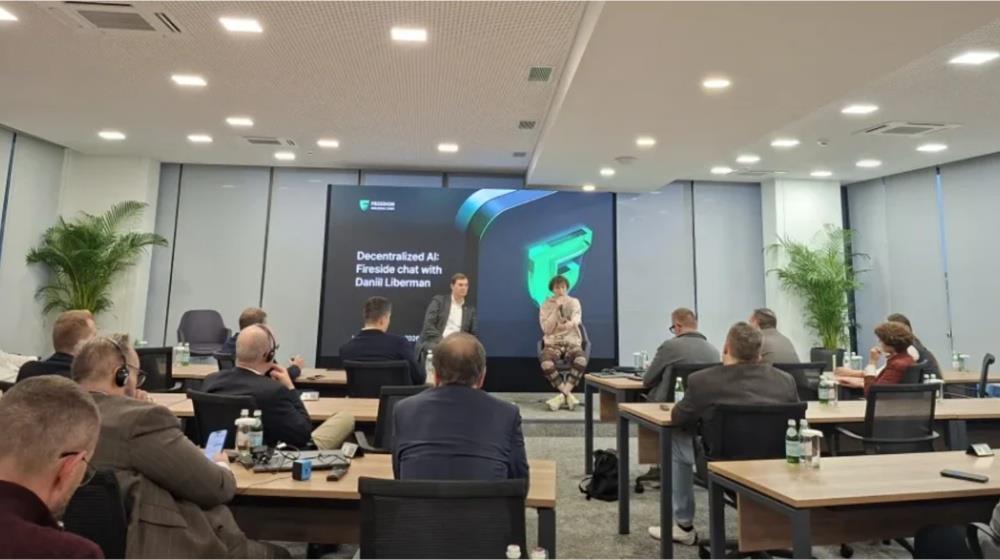
To figure this out, Freedom24 invited Daniil Liberman, one of the most prominent tech visionaries and entrepreneurs of the new generation, to Cyprus. Brothers Daniil and David Liberman are tech innovators, visionaries, talent investors and entrepreneurs who turned down $100 million for the sake of a better future for humanity. Last week, Daniil visited Cyprus. In his opinion, artificial intelligence will radically change our lives in the next five years. What awaits us: dolce far niente or a struggle for survival?
Artificial intelligence (AI) is a convenient and useful tool. At the same time, it takes away jobs from some people. Since the AI revolution cannot be stopped, it makes sense to think about the new future and our place in it as early as possible. A new civilisation is being born right now, but we do not yet fully understand what role people will play in it. Is there a risk that machines will start to control us?
If robots learn to do any job better than humans, then the very need to work will disappear. But that's in theory. In practice, artificial intelligence may end up in the hands of five corporations that will turn it into a strategic resource. And then access to AI for everyone else will only be possible for good behaviour (high social rating) or for a lot of money.
In August 2025, the Liberman brothers launched Gonka, a decentralised network for AI computing. The idea is not to give power over artificial intelligence to American tech giants, but to create a distributed network around the world. Daniil Liberman spoke about the project at the Freedom24 office in Limassol. He then answered questions from Europa-Cyprus.
FROM ‘ CARTOON PERSONALITIES’ TO HOLLYWOOD
We are nine brothers and sisters. Our eldest brother is 74 years old. Our father was born in 1925. In the 1950s, he worked in quantum biophysics in the USSR, studying DNA with the idea that this macromolecule is a kind of computer that provides the genetic programme for the functioning of organisms. And in the 1960s and 1970s, our uncle wrote the first book on the possibility of artificial intelligence.
From November 2009 to February 2013, our animation studio, Prostransstvo Idey (Space of Ideas), produced the show Mult Lychnosti (Cartoon Personalities) on Channel One. For four years, we aired on Sunday prime time and were among the top five most popular shows in Russia. The innovation was that we produced computer animation dozens of times faster and dozens of times cheaper than anyone else in the world.
After moving to Hollywood, we worked with Robert Downey Jr., Jimmy Fallon, Jon Stewart, the creators of The Simpsons and other animated and non-animated shows. It was all great, but in the end, we realised that it wasn't quite what we wanted to do. The "business hit - made money, no hit - no money" model didn't suit us. We were thinking about innovation.
And then we moved to Silicon Valley and launched several business projects there. In 2016, one of them was acquired by Snapchat, a mobile app aimed at young people. We built an avatar system for them... Another of our projects, Product Science, is still optimising mobile app code. Almost all of our clients' apps load in less than a second.
USA: YOU WILL USE OUR AI
About three years ago, we came to the conclusion that all previous machine learning methods would become irrelevant after the emergence of Chat GPT and other LLM models... At the same time, we realised that it made sense to engage in decentralised artificial intelligence. This requires not just home computers, but server-grade Nvidia chips with large memory and high speed.
The field of AI is rapidly becoming politicised. In the summer of 2023, a meeting was held in Aspen between leading players in the field of artificial intelligence and representatives of the US authorities, who discussed the need to restrict access to powerful Nvidia graphics processing units (GPUs) to all but American companies. Five global players in the AI market (all from the US) purchase 90% of Nvidia's top-of-the-line chips.
This was explained as a strategic necessity for the US. In February 2025, at the Munich Security Conference, Vice President J. D. Vance very aggressively stated that "you will all use our AI and don’t think of anything else" ... In August 2025, we launched the Gonka start-up, a project that is currently the only alternative.
SO, THE ALTERNATIVE
Is it realistic to create a decentralised network in the field of artificial intelligence? Is it possible to imagine such an open-source project? Yes. Linux currently covers 75% of all servers in the world. The data centres of Bitcoin, which has become digital gold, do not belong to any one corporation. We thought that if we applied the same logic to AI infrastructure, we could achieve a similar effect.
This effect has already worked. We launched the network at the end of August 2025, and in four months, it grew from 64 top-of-the-line GPUs to 12,000. The cost of renting this equipment can be estimated at $150 million per month. The network continues to grow. I regularly receive messages saying, "We want to invest $30 million. How can we get involved?" I spread my arms and say, "Here are the instructions. What difficulties are you having? Join."
It is impossible to stop this network from working because the servers are scattered all over the world, already in 20 countries. It is an unblockable service where you can access AI services in an encrypted, private and decentralised way without gatekeeping. Since there is no clear owner, there is no point of attack. It would not be crazy to assume that in the future, such a network could become 10% of the AI market.
We are in talks with the governments of a number of countries because, for them, dependence on American or Chinese servers is a kind of loss of sovereignty. There is the US with a population of almost 350 million and China with just over 1.4 billion. All other countries together account for about 6.5 billion. Obviously, they need mathematical calculations of their requests. In the next two to three years, this will require millions of GPUs."
A ROBOT FOR EVERYONE - IS IT REALISTIC?
What are the main arguments for attracting new people to the Gonka project?
The most important argument is that this network has potential. You have a chance to compete for a share of the future AI market, which large corporations are competing for. It's like investing in OpenAI, Anthropic or xAI, where investors with big cheques are lining up. You have a chance to participate in the growth of this market. Of course, you can create your own AI company. Or you can invest in a decentralised AI company.
Aren't you afraid that US law enforcement officials will come to you and say that you are some kind of bad American?
But I'm not American. I don't have a US passport. I'm an Israeli citizen. That risk definitely exists. That's why we're doing everything as openly as possible. And we're not doing anything that would violate the law. But, of course, they could still come and say, "Oh, that sounds too open". But we are very well prepared. It's completely open source, it doesn't depend on us at all, because we don't control it. It's controlled by the mining community. And we don't even mine coins, we provide this opportunity to other people.
There is a comment on Alexander Sokolovsky's podcast with you and David (Dubai, October 2025) that says, "I wanted AI to wash the dishes and clean up while I write poetry and paint. It turned out that it writes poetry and paints while I wash the dishes and clean up". The comment has received hundreds of likes. Do you agree with this assessment?
I think that in the next five years, AI will be able to do most of the intellectual work in an office better than most people. This will be a huge turning point. By the way, vacuuming with AI is already being done. We'll have to wait a little longer for robots.
Is a robot for every person a reality?
I believe it will happen, but I don't think it will be soon. It may well take 30 years. The first robots with artificial intelligence will go to factories. I think it will take five to ten years before we allow a robot to stand next to our child without fear that a 60-kilogramme piece of metal will fall on them.
It will take 10 to 20 years to scale up, because billions will need to be produced so that everyone has a robot. It's exponential: it will start slowly and then continue very quickly. This is already a new reality and presents new challenges that we probably cannot even predict yet. But it will definitely happen before our very eyes.
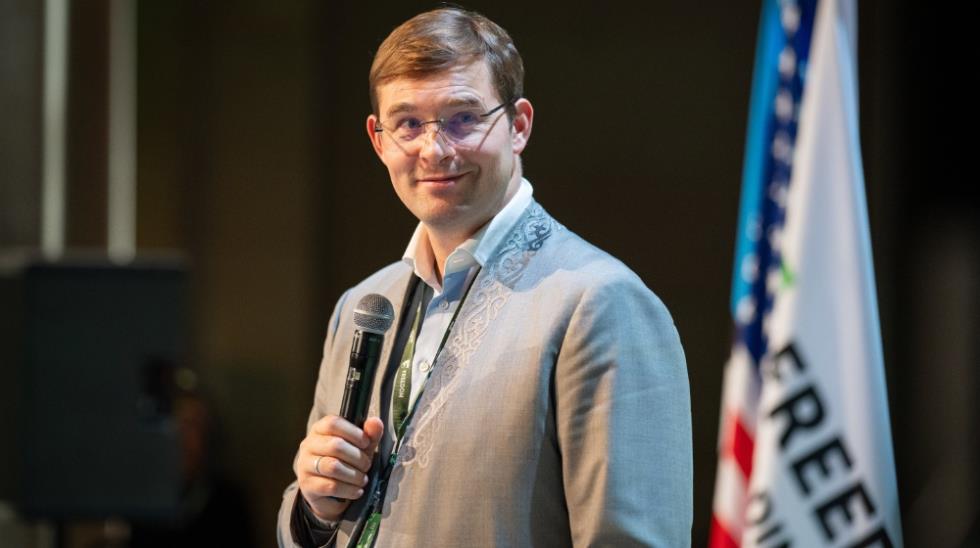
I believe that Cyprus has fantastic potential to start implementing digitalisation. The amount of human capital in the field of development on the island is simply incredible. Probably no other country in the world has so many IT specialists per capita," Timur Turlov, CEO of Freedom Holding Corp.
Notes
● Daniil and David were born in Moscow to biophysicists Efim Liberman and Svetlana Minina.
● They graduated from the Maimonides Academy with a degree in Mathematics and Computer Science.
● Their older sisters, Anna and Maria Liberman, are actively involved in all of their projects.
● In 2015, they launched Frank.Money, a widget for visualising income and expenses.
● In 2018, they held a competition for a $1 million grant in the field of educational technology.
● They say their main mission is to make the world and governments transparent.
● They turned down more than $100 million from the two most influential AI laboratories in the world, which were trying to buy them out.
All children, while they are still children, think about how wonderful the world could be. But not everyone has people around them who share these ideas and don't criticise them. We have a lot of children in our family, so this kind of dialogue has never stopped.