





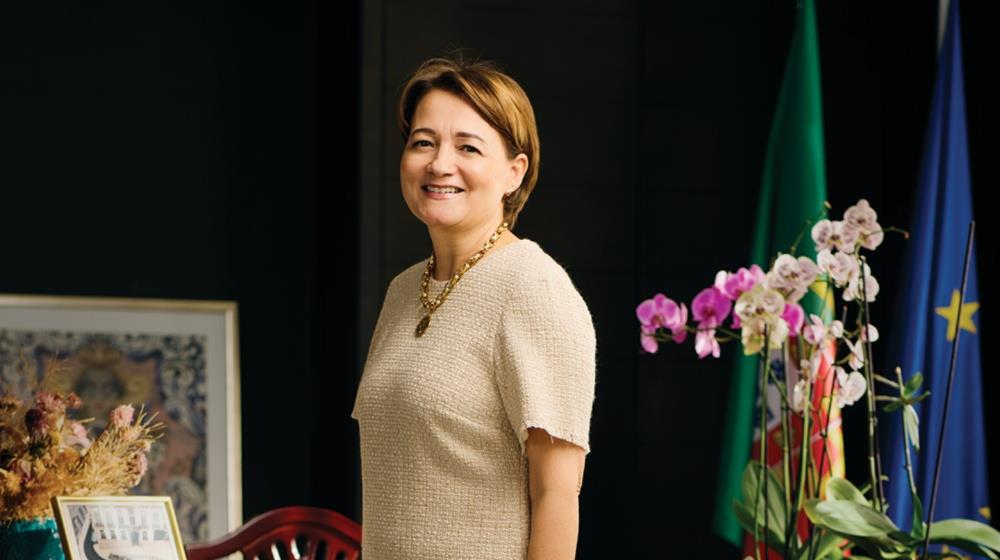
Portugal’s Ambassador to Cyprus, Vanda Sequeira, talks about the potential for closer collaboration between the two countries, identifies shared ambitions and reveals how Lisbon has dealt with problems similar to those facing Nicosia.
In a recent interview with GOLD magazine, Her Excellency also talks about her time in Cyprus so far and what she enjoys most about being posted here.
What is the current state of bilateral trade between both countries?
In the 1960s and 1970s, bilateral trade was particularly significant, with Portugal ranked among Cyprus’ leading suppliers. Although current trade volumes are more modest, the prospects for growth are clearly positive. Portugal is widely recognised as a stable and competitive economy, and bilateral exchanges are gradually diversifying towards higher value-added sectors. Areas with potential include professional and financial services, tourism, maritime and shipping-related activities, agri-food products and technology-driven services.
As open, service-based EU economies, both countries offer complementary business environments that facilitate partnerships beyond traditional geographic constraints. Diaspora networks also contribute to strengthening economic ties. Both countries benefit from sizeable international communities and Cyprus has seen a growing presence of Portuguese business professionals relocating from other EU member states, South Africa and the United Kingdom, adding to the depth of bilateral commercial links.
What about inward and outward Foreign Direct Investment?
In terms of FDI, Portuguese companies traditionally focus on larger markets but they remain attentive to targeted opportunities in Cyprus, particularly in specialised services and maritime-related sectors. At the same time, Cypriot investors increasingly regard Portugal as a strategic platform for accessing Atlantic and Latin American markets, including through Limassol-based companies employing Portuguese professionals active in Portuguese- and Spanish-speaking regions.
Where do you see potential for expanding business and economic relations?
I see clear scope to further expand business and economic relations in sectors where both countries’ priorities and capabilities converge. Tourism will remain a central pillar, particularly through higher value-added segments such as cultural, wine, nature, nautical, wellness and sports tourism, where diversification and sustainability offer significant growth potential. The green and digital transitions constitute another major area of mutual interest. Portugal has established itself as a frontrunner in renewable energy and related technologies, energy efficiency, smart grids and circular-economy solutions, fields in which Portuguese companies bring considerable expertise. These capabilities align well with Cyprus’ energy transition objectives and its interest in scalable and innovative solutions. A concrete illustration is the water management project in the Larnaca district, developed through cooperation between Portugal’s JANZ and Cyprus’ NewCytech Business Solutions. The maritime economy is another natural area for cooperation, given both countries’ maritime traditions and strategic positioning, encompassing shipping services, port management, marine technologies and the blue economy. Finally, higher education and skills development represent a promising long-term bridge for economic cooperation. Despite connectivity constraints, there is untapped potential for academic exchanges, joint programmes and research partnerships, supporting deeper business and innovation links.
Lisbon has been dubbed a ‘unicorn capital’, due to startup initiatives that have led to growth. What were the most effective policies that Portugal implemented in this area and which Cyprus might benefit from as it attempts to further encourage its startup scene?
Lisbon’s emergence as a startup hub did not result from a single flagship policy but from a sustained set of pragmatic measures aimed at reducing friction for entrepreneurs. Predictable regulation, simplified administrative procedures and competitive fiscal frameworks proved decisive, combined with lifestyle appeal, connectivity and a dynamic services ecosystem – elements that Portugal and Cyprus share. Portugal’s added value lies in its capacity to support internationalisation from an early stage. Its geographic and cultural positioning allows startups to scale easily into large markets, including Europe, Africa and Latin America, reinforced by the global reach of the Portuguese language. Cyprus has the potential to follow a comparable path by building on its strategic location and talent base, while strengthening policy coherence, long-term vision and the conditions that enable startups to grow and internationalise in a predictable, business-friendly environment.
As Member States with shared economic interests, are there joint initiatives that Portugal and Cyprus can take to deal with EU economic shifts and policymaking?
As small EU member states, Portugal and Cyprus have a shared interest in EU decision-making processes that preserve balance and ensure that the perspectives of small and medium-sized countries are duly reflected. Both have benefited from frameworks that promote inclusiveness and cohesion in EU policymaking, particularly in times of economic adjustment. Informal coordination platforms such as MED9 provide a useful setting to identify common priorities and advance joint initiatives. While regional coordination is important, it also serves to reaffirm a core EU principle that no region is inherently more important than another, even when specific circumstances require targeted attention. A shared Mediterranean outlook and complementary diplomatic networks enable Portugal and Cyprus to work together in promoting balanced EU approaches to Mediterranean policy, maritime security and migration management, grounded in solidarity, responsibility-sharing and a development-oriented perspective.
Portugal is experiencing a housing crisis – with some blaming overtourism as a driver – and Cyprus’ real estate market is similarly becoming too expensive for many citizens. How is Portugal combating this problem?
Some housing pressures in Portugal are linked to the country’s increased attractiveness for foreign entrepreneurs, investors and remote workers, a trend shared by several European markets. The policy response has therefore been comprehensive, combining measures to increase supply with targeted support for affected households. On the supply side, fiscal incentives were introduced to stimulate construction and rehabilitation, including a reduction of VAT to 6% on residential construction and lower taxation on long-term rental income. These were complemented by capital-gains exemptions and higher transfer taxes for non-residents, with exemptions when properties enter the rental market. In parallel, regulatory simplification aims to shorten licensing timelines, banks are required to offer fixed-rate mortgages and targeted programmes support young renters and encourage relocation to less densely populated areas. While it is early to fully assess the results, the challenge has been met through a coordinated policy approach.
Portugal has long been an advocate of finding a just settlement of the Cyprus Problem and supported the Committee on Missing Persons. What is your country’s view of the problem and how a solution can be found for an issue that has now dragged on for more than half a century?
Portugal is a firm advocate of a multilateral, rules-based international order. While it makes clear strategic choices, including as a founding member of NATO, it has also demonstrated an ability to engage across divides. This balance between commitment and openness to dialogue underpins Portugal’s credibility in multilateral fora. In this context, Portugal has consistently supported a comprehensive, negotiated solution to the Cyprus Problem within the United Nations framework, aimed at the reunification of the island and the protection of the security and rights of all Cypriots. More than six decades after intercommunal violence and five decades after the island’s division, moving forward requires acknowledging several key realities. First, there can be no monopoly on victimhood. The conflict has affected individuals and communities across different backgrounds and identities; polarised narratives risk entrenching divisions rather than fostering reconciliation. Second, any sustainable solution must be Cypriot-led. The UN, the EU and international partners can facilitate and support but they cannot replace political ownership and leadership by the Cypriots themselves. Recent developments suggest that opportunities may exist, provided that political will and courage exist on both sides. Third, the status quo entails real costs for all Cypriots. Positions upheld out of principle have limited value if they do not translate into tangible progress.
Finally, Cyprus’ unrealised potential should not be underestimated. Its constitutional bilingualism, strategic location and international appeal could enable the island to become a hub for business, trade and regional cooperation. A comprehensive settlement would unlock these opportunities for the benefit of all Cypriots.
Finally, how has your time as Ambassador to Cyprus been so far and what do you like most about being here?
My time in Cyprus has been deeply rewarding, both professionally and personally. From the very first day, I felt genuinely welcomed and that sense of openness has made my work here particularly meaningful and, in many ways, easier. There are strong affinities between Portuguese and Cypriots – a shared Mediterranean sensibility, an appreciation of history, family and community, and a natural warmth in human relations that creates an immediate rapport. Life in Nicosia is indeed very pleasant, as the city offers a unique blend of history, culture and everyday life. I have also greatly enjoyed travelling across the island. Cyprus’ richness, diversity and resilience are striking, and engaging with its institutions, civil society and business community has been a privilege. I am certain that, when the time comes, it will be difficult to say goodbye to this wonderful island and to the many friends I have made here.
(Photo by TASPHO)
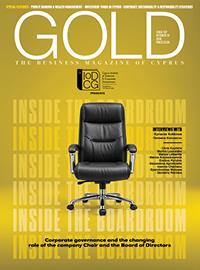
This interview first appeared in the January edition of GOLD magazine. Click here to view it.