








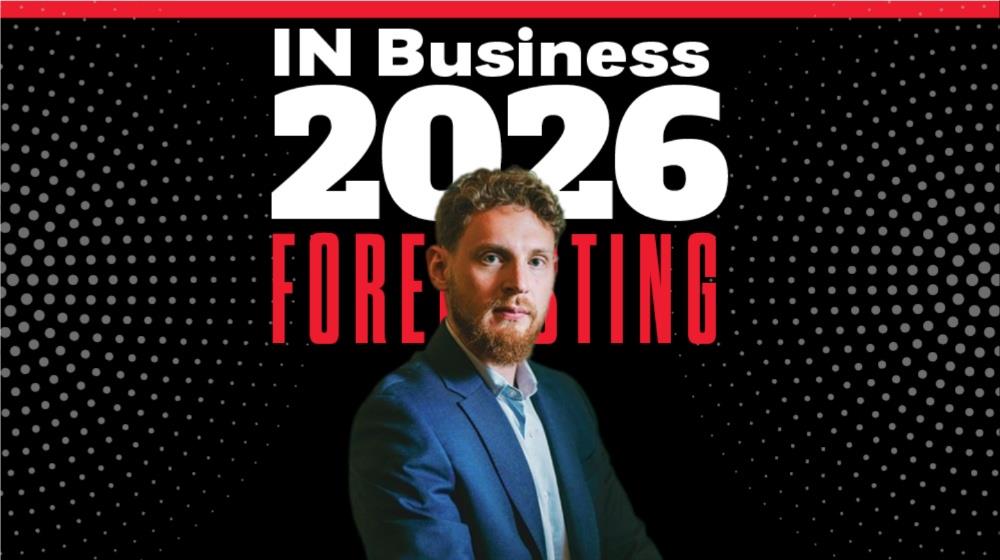
"The gaming industry is becoming more sophisticated and mature," Dmitry Byshonkov, CBDO at MY.GAMES notes, going on to explain, "The era of rapid, almost effortless growth is largely behind us, there is no major distribution breakthrough on the immediate horizon, and competition from other forms of media — such as short-form video platforms and YouTube — is very real. In this environment, success will belong to companies that are lean, agile, and disciplined in how they operate and allocate resources."
In an interview with CBN as part of the IN Business Forecasting 2025 series of interviews with business leaders, Byshonkov also shares his thoughts on the development of the Cypriot economy in the new year, pointing out that "Maintaining Cyprus’ reputation as a predictable and business-friendly jurisdiction will be key to long-term resilience."
Among other things, he also talks about the mergers and acquisitions trend, the tax reform and MY.GAMES' plans for the new year.
How do you foresee the development of the Cypriot economy in the new year, and what are its prospects? What do you see as the biggest risks, and how might they be addressed?
Cyprus enters the new year with solid fundamentals and a clear strategic position as a regional business and technology hub. Continued growth in services, technology, tourism, and professional industries creates a balanced foundation for sustainable economic development. The country’s ability to attract international companies, talent, and capital remains one of its strongest advantages.
At the same time, many of the challenges Cyprus faces come from outside its direct control. Shifts in the global economic environment and ongoing uncertainty in the broader region can influence investor behaviour and business confidence. These challenges can be addressed through policy stability, regulatory transparency, and continued investment in education, digital infrastructure, and innovation. Maintaining Cyprus’ reputation as a predictable and business-friendly jurisdiction will be key to long-term resilience.
How do you expect your company’s sector in particular to perform in 2026? What major trends or changes do you anticipate, and what do you consider the most significant challenges?
The gaming industry is becoming more sophisticated and mature. The era of rapid, almost effortless growth is largely behind us, there is no major distribution breakthrough on the immediate horizon, and competition from other forms of media — such as short-form video platforms and YouTube — is very real. In this environment, success will belong to companies that are lean, agile, and disciplined in how they operate and allocate resources.
Artificial intelligence is another defining factor for the industry. We are focused on implementing AI in a thoughtful and responsible way, particularly where it can help automate routine processes, improve efficiency, and allow teams to focus more on creativity and quality. At the same time, gaming remains a creative industry at its core. Human judgment, vision, and responsibility will continue to play the decisive role, and we see AI as a powerful tool to support talent — not replace it.
A strong trend taking root in the Cypriot business landscape is mergers and acquisitions. Do you expect this trend to become more pronounced in your sector as well?
Yes, we expect M&A activity to become more pronounced, particularly in technology-driven sectors. In our industry, consolidation is a natural response to increasing competition, higher production costs, and the need for scale, technology, and diversified expertise.
For Cyprus, this trend is positive. The country is increasingly seen as a convenient and credible base for regional and international transactions. Well-structured M&A activity can strengthen the local ecosystem, attract capital, and create new opportunities for talent and innovation.
At the same time, the rapid development of AI is enabling a parallel trend: the rise of small, highly efficient teams and solopreneurs. While these teams may not yet operate at a scale that typically attracts large enterprises, they are increasingly becoming a source of strong creativity and fresh ideas. Over time, this dynamic can enrich the industry and potentially create new opportunities for collaboration and future consolidation.
What should we expect from your organisation’s plans and strategy for growth and expansion in 2026? What specific actions do you intend to take to support this direction?
Our strategy for 2026 is focused on sustainable growth rather than rapid expansion for its own sake. We plan to deepen our investment in our core products, while selectively experimenting with new genres and formats where we see clear long-term potential.
Cyprus is a very important hub for us. Beyond business growth, we see real value in contributing to the broader local business and innovation ecosystem through knowledge sharing and a long-term presence in the country. This approach was recently recognised with the Invest Cyprus International Investment Award, which honours international companies that have made a significant contribution to the Cypriot economy. We are proud of this recognition and remain committed to helping shape Cyprus as a growing hub for international business.
The new year sees the implementation of tax reform, taking place 22 years after the previous tax reform. How do you expect it to affect the Cypriot economy, businesses, and Cyprus’ ability to attract foreign investment?
Tax reform is both necessary and timely. If implemented in a balanced and transparent way, it can modernize the economic framework and strengthen Cyprus’ competitiveness in an increasingly complex global environment.
For businesses, clarity and predictability will be more important than headline changes. A well-designed reform can enhance investor confidence, align Cyprus with international standards, and reinforce its image as a stable and responsible jurisdiction for foreign investment. Ultimately, the success of the reform will depend on open dialogue with the business community and a clear long-term vision for economic growth.
