





"The trend towards mergers and acquisitions is expected to intensify in the communications sector as well, driven by rising market demands," Dimitris Ioannides, Founder & CEO, Purpose Communications, suggests, going on to note, "Internationally, the recent acquisition of Interpublic Group by Omnicom, valued at USD 13.5 billion, clearly illustrates this direction. The deal is not about scale alone. It reflects the strategic need to integrate creativity, data, technology, and advisory capabilities within a single structure in order to address increasingly complex client needs."
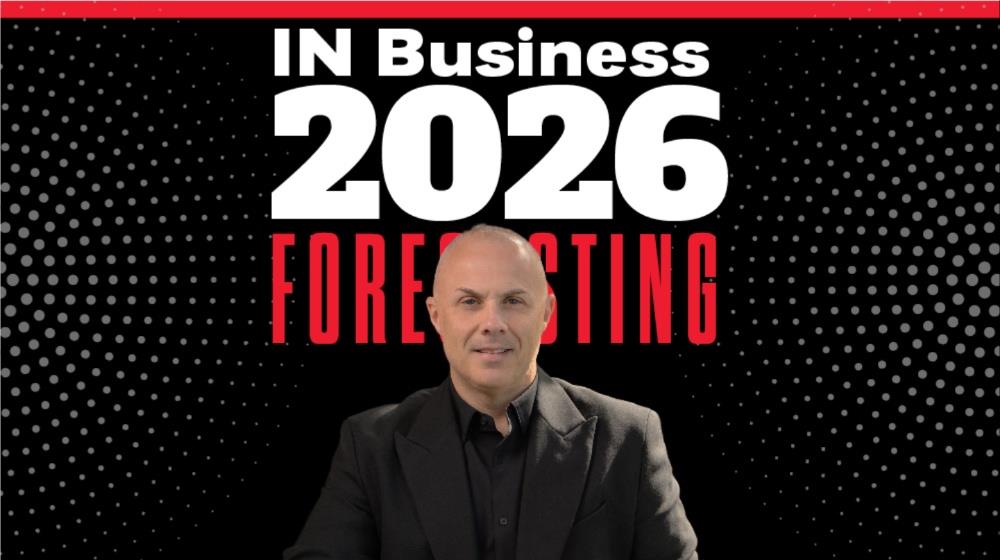
In an interview making up part of the IN Business Forecasting 2026 series of interviews with business leaders, Ioannides also shares his expectations for the Cypriot economy in the new year as well as how he anticipates the communications sector to evolve.
Among other things, Ioannides in addition reveals his own company's plans for the new year.
How do you expect the Cypriot economy to perform in the coming year, and what are its prospects? What do you see as the biggest risks, and how can they be addressed?
The Cypriot economy enters the new year on a solid footing, despite an international environment that remains volatile and demanding. Prospects remain positive, but growth increasingly depends on the quality of decisions rather than on external conditions. The key challenge is therefore not only to sustain momentum, but to convert it into growth with depth, resilience, and long-term value.
Opportunities lie primarily in export-oriented sectors, technology, and investments that strengthen productivity and support economic modernisation. At the same time, the main risks are well defined. Geopolitical instability and energy uncertainty continue to weigh on costs and demand. The labour market is emerging as a critical constraint, marked by difficulties in sourcing talent, skills mismatches, and differing expectations around the working environment across generations. Pressures on housing affordability and availability, along with the need to upgrade core infrastructure, further affect labour mobility and overall competitiveness.
Addressing these challenges requires clear direction and policy consistency. Targeted investment in productivity, skills, and infrastructure, combined with a predictable framework that enables businesses and investors to plan with confidence, will be decisive. The year ahead will be shaped by the extent to which Cyprus can translate stability into resilient, sustainable growth and competitiveness.
How do you expect your sector to evolve in 2026? What major trends or changes do you anticipate, and what are the key challenges?
The communications sector enters 2026 at a clear stage of maturity. The discussion has moved beyond reach and frequency, focusing instead on the role communication plays in decision-making and organisational resilience. Communication is now firmly positioned as a strategic management function, supporting risk management and value creation.
The most significant shift concerns how effectiveness is assessed. Organisations increasingly demand evidence, measurable impact, and a clear link to business objectives. Reputation, trust, ESG, and regulatory compliance are now addressed as a unified field of strategic responsibility. At the same time, artificial intelligence is fundamentally reshaping how information is produced and distributed. The defining factor is no longer speed, but credibility. In an environment of information overload, visibility is earned through consistency, quality, and clear positioning.
Owned channels and the substantive presence of senior executives in public discourse are gaining importance. Well-documented thought leadership and the ability to communicate complex issues with clarity strengthen influence and build long-term trust. In parallel, crisis readiness is evolving from a specialist service into a core organisational capability, embedded in how businesses operate.
The main challenges relate to information saturation, heightened time pressure, and the shortage of specialised talent. The market increasingly values precision, judgement, and accountability. In 2026, those who approach communication as a strategic discipline, rather than as content production, will clearly stand apart.
Mergers and acquisitions are becoming a strong trend in the Cypriot business landscape. Will this also be reflected in your sector?
The trend towards mergers and acquisitions is expected to intensify in the communications sector as well, driven by rising market demands. Internationally, the recent acquisition of Interpublic Group by Omnicom, valued at USD 13.5 billion, clearly illustrates this direction. The deal is not about scale alone. It reflects the strategic need to integrate creativity, data, technology, and advisory capabilities within a single structure in order to address increasingly complex client needs.
In Cyprus, market size limits transactions of this magnitude. However, the underlying pressures are equally present. Clients increasingly expect integrated solutions, depth of expertise, and consistency across multiple communication disciplines. This creates space not only for selective mergers, but more importantly for strategic partnerships and the pooling of capabilities, a model particularly suited to the local market.
Such approaches are already taking shape. The collaboration between Purpose Communications and DELEMA is a clear example, bringing together complementary expertise to deliver more integrated, meaningful, and strategically aligned solutions, while preserving flexibility and distinct identities.
This logic is likely to gain further traction. Fewer moves driven by scale, and more collaborations driven by substance. In an environment of growing complexity, aligning knowledge, judgement, and specialisation becomes a decisive competitive advantage.
What should we expect in terms of your organisation’s growth strategy and expansion plans for 2026?
For Purpose Communications, 2026 is a year of targeted growth. Our strategy centres on further strengthening communication as a core management function, with emphasis on strategic thinking, institutional precision, and the ability to manage complexity. Within this framework, we are developing new collaborations and strategic partnerships that expand both the breadth and depth of our offering.
Cyprus’s Presidency of the Council of the European Union acts as one of the catalysts in this direction, increasing demand for institutional and regulatory communication, while forming part of a broader growth strategy rather than defining it exclusively.
At the same time, we continue to invest in our people and in the skills required to operate effectively within complex business and institutional environments. Our objective is to deliver solutions that combine strategic coherence with measurable value, while preserving flexibility and a clear organisational identity.