





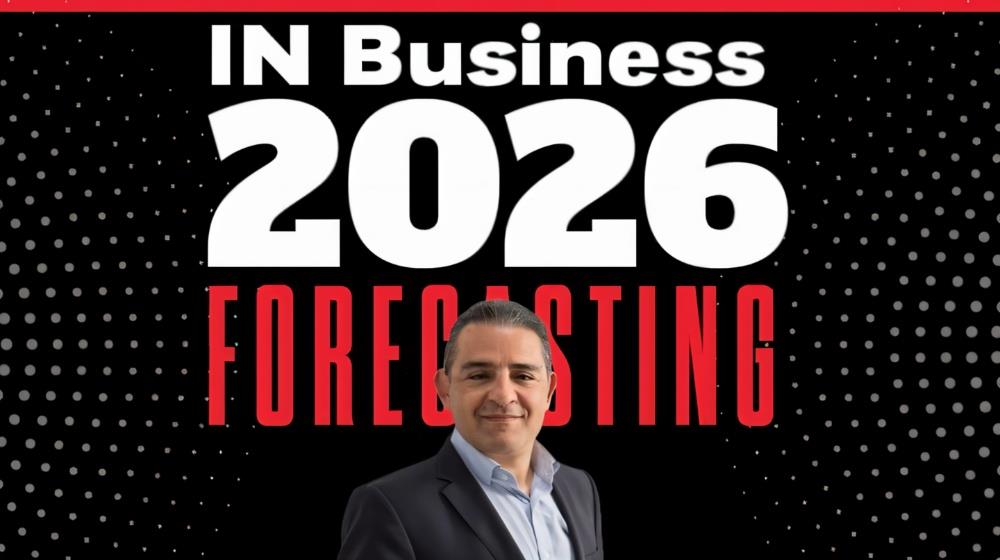
Charalambides Christis' readiness to proceed with strategic partnerships of substantial weight, but with clear criteria, has been expressed by the company's CEO, Marios Constantinou, stating that "we pursue healthy, sustainable growth, with responsibility towards producers, consumers and the Cypriot economy."
In an interview with InBusinessNews as part of the 'IN Business Forecasting 2026' series, Constantinou emphasises that 2026 is an opportunity for the company to further strengthen its position as a leader of change in the dairy sector, while analysing the main axes of the organisation's strategy for the new year.
Regarding Charalambides Christis, he states that the company ensures quality raw materials, rational management of production costs, maintaining pricing competitiveness and full compliance with strict quality and traceability requirements.
Regarding the tax reform, Constantinou indicates that "if implemented in an environment of institutional stability, transparency and a business-friendly framework, we believe that it will enhance Cyprus' attractiveness for foreign investment - especially in the agri-food and manufacturing sectors."
How do you think the Cypriot economy will perform in the new year and what are its prospects? What do you consider to be the biggest risks and how can they be addressed?
The Cypriot economy is expected to continue growing in 2026, albeit at a more moderate pace. The momentum of recent years remains strong, while public and private investments, increased extroversion and increased exports create an overall favourable environment.
Cyprus can not only maintain, but also strengthen its competitiveness
We say "overall" because there is no shortage of challenges: geopolitical uncertainties, increased energy costs internationally, the transition to a greener economy, and pressures on income, production costs, and the cost of living can affect consumer spending and competitiveness.
To absorb shocks that may develop into risks, a mix of applied strategies is required: structural reforms, investments in infrastructure and green energy, strengthening extroversion, as well as support for export and export-oriented businesses — especially the agri-food sector, where Cyprus has tradition and know-how.
At Charalambides Christis, we believe that, under these conditions, Cyprus can not only maintain, but also strengthen its competitiveness at the European and international level, creating new opportunities for growth and added value.
How do you expect your company's industry to perform in 2026? What are the biggest trends and the most important challenges?
The dairy sector is in a transformation phase. The latest data shows that our traditional product, halloumi, maintains its lead in exports: in 2024, over 42,400 tons were exported, with a value approaching €324 million, an increase compared to the previous year.
This demonstrates the strong international demand and the continuous strengthening of halloumi's share in the country's export basket.
At the same time, we are seeing changing consumer trends: more and more consumers are turning to quality, healthy, protein-rich and functional dairy products.
The demand for innovative products is increasing, while environmental and social sustainability is gaining substantial weight in the consciousness of consumers.
For us, at Charalambides Christis, 2026 is an opportunity to further strengthen our position as a leading force of change in the industry: in production, quality, innovation and sustainable development.
Our critical priorities are ensuring quality raw materials (goat, sheep and cow's milk), rational management of production costs, maintaining pricing competitiveness and full compliance with strict quality and traceability requirements. These are non-negotiable pillars of growth.
The trend of acquisitions and mergers is strengthening in the Cypriot market. Will we see something similar in your sector?
In the business environment of Cyprus, there is indeed a strong movement in acquisitions and mergers, particularly in the banking sector, services and large enterprises.
At Charalambides Christis, 2026 is an opportunity to further strengthen our position as a leading force of change in the industry
In the dairy industry, the need for scale in the production-distribution relationship favours not necessarily mass acquisitions, but strategic collaborations of substantial weight: partnerships with producers and cooperatives, or joint investments for exports, logistics or green production.
Charalambides Christis, thanks to its experience and leadership position, is positive about such collaborations — but with clear criteria: the creation of real added value, ensuring quality and respect for tradition and the environment. We do not seek power for power's sake. We seek healthy, sustainable development, with responsibility towards producers, consumers and the Cypriot economy.
The main pillars of strategy
What are your organisation's plans and development strategy for 2026? What actions will you take?
Our strategy for 2026 is based on four main pillars:
1. Strengthening exports and expanding markets
The demand for PDO halloumi and quality dairy products is steadily increasing. We are deepening our presence in existing markets and entering new ones only where we see substantial growth prospects.
2. Product innovation & healthy eating
We invest in products that respond to modern nutritional orientations: protein, low-fat, lactose-free, functional foods, as well as “ready-to-eat/on-the-go” solutions that respond to the lifestyles of today's consumers.
3. Sustainability, environmental responsibility & support for primary production
We focus on energy efficiency, RES, resource savings, improved waste management and continuous support for local producers — from animal feed and good practices to know-how and transparency in the origin of raw materials.
4. Digital transformation, traceability and human resources
We invest in modern production technologies, automation, traceability systems and the continuous upgrading of staff skills.
The demands of the next decade are high and we are addressing them methodically.
This plan is not “just another business plan,” but our practical commitment to continue serving quality, innovation, and responsibility — elements that have been at the core of Charalambides Christis' identity since the first day of operation.
The 2026 tax reform is a significant change. How do you estimate it will affect the Cypriot economy, businesses and the attraction of foreign investment?
Undoubtedly, the upcoming adjustment of the corporate tax rate is a first and important step in modernising the economy. Although it may initially pressure business profit margins, overall it can strengthen the country's fiscal sustainability.
For a strong export organisation with a national vision, such as Charalambides Christis, the goal is not simply tax optimisation, but increased productivity, innovation and extroversion.
Provided that the reform is implemented in an environment of institutional stability, transparency and a business-friendly framework, we estimate that it will enhance Cyprus' attractiveness for foreign investment - particularly in the agri-food and manufacturing sectors.
We support a framework where taxes generate value - not just revenue - and where businesses reciprocate by investing in quality, innovation and social responsibility.
Ultimately, 2026 will be a year of challenges, but also opportunities - both for Charalambides Christis and for the Cypriot economy. In a changing environment, we choose to move forward with consistency, quality and a vision for sustainable growth.
We do not see the future as a simple continuation of the past, but as a responsibility: towards tradition, producers, consumers and the new generation. In this spirit, we take on the responsibility to lead - not only as a business, but as an institution that serves Cypriot society and economy.
(Source: InBusinessNews)