







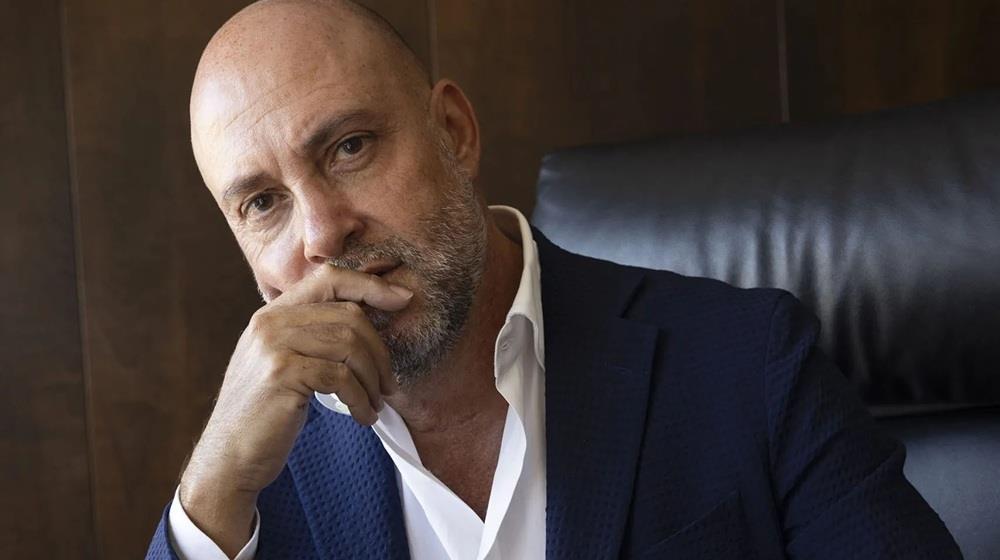
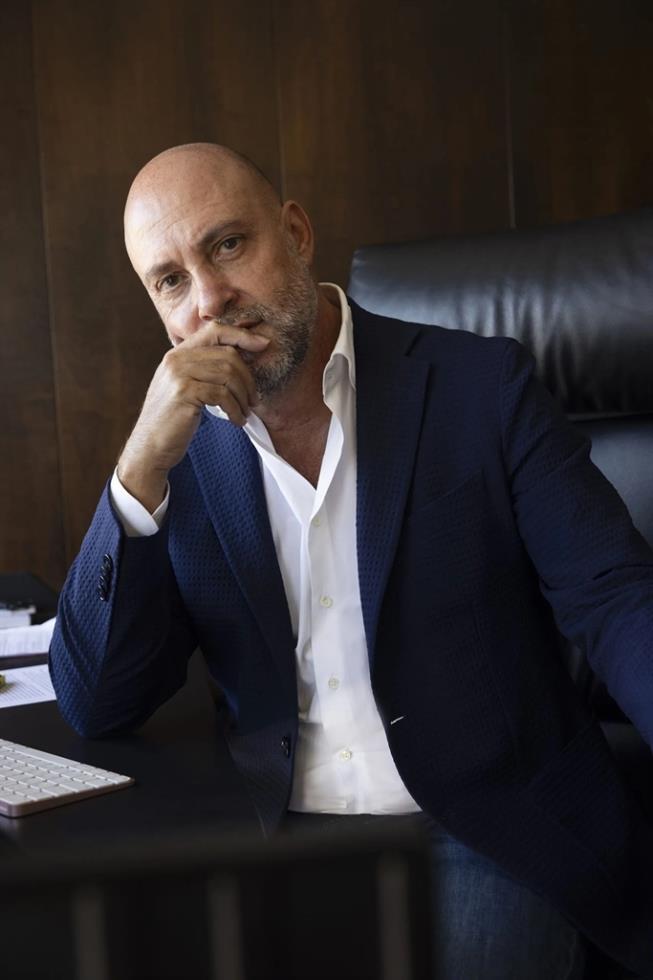
His career as a politician and public figure made him both popular and unpopular, but what has never been in doubt is the straightforwardness of his statements and the clarity of his positions. As a candidate for parliament for the Democratic Rally (Disy), George Pamboridis, who is once again entering the political arena, unveils his vision for the economy and business.
In an interview with InBusinessNews, he emphasises that development must be measured not only by numbers, but by the daily lives of citizens, by the cost of housing, access to decent services, and an energy policy that reduces the burden on households.
As Pamboridis states, the country needs long-term investments, the modernisation of the state, fiscal discipline with social sensitivity, and an energy transition that will finally bring cheaper electricity. He also presents his positions on how Cyprus can become fairer, more competitive, and more hospitable for future generations.
"A stable, competitive, resilient economy"
Briefly describe your vision for the sustainable development of the Cypriot economy.
My vision for the Cypriot economy is for it to remain stable, competitive and resilient. An economy that creates real opportunities for its people and provides prospects for our young people.
Cyprus is part of the European economy and this is not a limitation, it is the framework within which we can develop our own comparative advantages. Within this framework, our country must focus on its own priorities: a high-quality human resources, a flexible and reliable financial system, the professional standards we inherited from the Anglo-Saxon model, as well as our geographical location, climate and natural beauties.
Sustainable development, for me, means building an economy based on innovation, new technologies, energy transition and transparency; an economy that is based on sound public finances and that can withstand the crises of the future.
With a plan in place, consistency and extroversion, Cyprus can shape an economic model that not only endures, but evolves and creates prospects for all.
Do you believe that our economic development model is correct? Where would you put emphasis?
The traditional sectors of the Cypriot economy constitute a stable framework that has supported our country for decades. I do not believe that the model is wrong; however, I believe that it needs a qualitative upgrade, greater extroversion and adaptation to the new realities of the European and global economy.
For me, the state should act as a regulator and supporter — creating a healthy, simple, and stable environment within which businesses can grow without unnecessary obstacles.
The real priority is investing in people: in skills, in education, in innovation and in entrepreneurship. The Cypriot is resourceful, creative and bold. When he finds suitable ground, he does great things. The job of the State is to give him this ground: a stable, predictable and modern framework, which will allow him to fully exploit his potential.
Do you believe in the development of the economy through entrepreneurship? What is the role of the state in this development? How much and where should the state intervene in entrepreneurship?
I deeply believe that entrepreneurship is one of the most important drivers of economic growth. It creates jobs, generates value and gives young people the opportunity to stay and create in Cyprus.
As I mentioned in my previous answer, the role of the state is not to interfere in entrepreneurship, but to ensure a stable, simple and fair environment: with rules that are implemented, with transparent procedures, with modern tools and services that facilitate, not complicate.
In a small economy like ours, the State must support healthy entrepreneurship, invest in people's skills and remove the obstacles that hold back innovation and productivity, and certainly not compete with the private sector.
The Cypriot economy is recording positive growth rates, but inequalities remain. As a candidate for parliament, what do you propose to ensure that growth is sustainable and fair for all?
Prosperity in numbers is not an end in itself. It is a means, not the goal. The goal is the prosperity and dignity of our people. For growth to be truly sustainable and fair, it must provide opportunities for all: access to good jobs, modern skills, and an economy that rewards effort.
If our young people cannot build their lives here, if they feel they are being left behind, then we have failed — no matter how positive the numbers. Development only makes sense when it is experienced by the people of the country.
"Goal: long-term investments, not opportunistic choices"
How important are foreign investments for the development of our economy?
Foreign investments are particularly important for the Cypriot economy. Our country must attract as much investment as possible, but this effort should not be limited to quantitative targets. We must now target specific directions that create long-term value for the economy. Cyprus must attract companies that choose our country, not opportunistically or only for tax reasons, but because they find a stable, reliable and modern environment in which to develop over time here.
Where should our efforts to attract foreign investment be focused?
The relevant bodies must focus on sectors that are aligned with the country’s development model and that can create real added value for the local economy and society. Attracting investment must prioritise companies that leverage Cyprus’ human resources and services — the so-called local content — so that the benefits remain in the country. Our goal is not just more investment, but investment that brings about a real benefit to the economy and society.
I see growth prospects particularly in the areas of relocation and headquartering, especially in industries such as shipping, financial services, gaming and technology (ICT).
Geographically, countries such as the United States of America, India, Canada and Great Britain present significant interest and prospects.
Foreign investment and the large influx of citizens from other countries also bring problems, such as rising real estate prices and demographic issues. How are these being addressed?
The problems exist and we must manage them seriously. That is why I insist on the importance of local content. When a foreign investor cooperates with the local economy, utilises domestic human resources and creates real ties with the country, then its presence becomes stable and brings about substantial benefits.
These ties lead to knowledge being transferred to Cypriots, to upgrading infrastructure such as schools and services, to better connectivity with the outside world, and to a general strengthening of the economy, not only immediately, but also in the long term.
"We want prosperous numbers and happy citizens"
How can a state be fiscally disciplined, maintaining, for example, a small public debt and surpluses in the state budget, while at the same time being generous in benefits and development projects?
A country with prosperous numbers and unhappy citizens is, for me, a failure. Our goal should be prosperous numbers and happy citizens. These two are not mutually exclusive. They are combined with proper prioritisation, an effective state and targeted policies that bring real benefit to society.
Fiscal discipline is only valuable when it translates into a better life for citizens. What good is fiscal excellence if our people are struggling?
"Without dependence on fuel oil, we will not see cheaper electricity"
How and when will Cypriot consumers - households and businesses - finally have cheaper electricity?
If we don't get rid of fuel oil, we're not going to see cheaper electricity. We need to focus on our fastest possible transition to natural gas. The arrival of Cypriot natural gas would be a welcome development. Until then, however, we need to ensure the import of natural gas from the region, alongside investments in renewable sources and energy storage systems.
Finally, our network needs immediate and substantial upgrading. Without a modern network, no energy transition will deliver the benefits that Cypriot consumers are entitled to.
Will we one day be able to utilise and generate revenue from our own natural gas?
We must be realistic. Geopolitical problems and the unresolved Cyprus problem make it difficult to fully utilise and commercialise our natural gas. However, the proper and responsible management of our reserves can be a tool that will facilitate, rather than complicate, the effort to resolve the Cyprus problem.
The GSI power cable is considered a landmark project for Cyprus' energy security and green transition. However, many details remain unknown, such as the cost, state participation and potential benefits. What is your position?
Without a doubt, the electrical interconnection of Cyprus with the European grid would be a very important development for the country's energy security and green transition. It must proceed immediately, because the benefits will be multiple and long-term.
However, as far as state participation in the investment itself is concerned, I would be cautious. The state must ensure that there is full transparency, clear costing and a viable business model before committing public funds.
"A simpler and fairer system, without exaggerations"
The government is preparing the largest tax reform in decades, aiming for a simpler and fairer system. What is your opinion on the matter?
In Cyprus, in recent years, we have lost control over the use of big words. I see a necessary tax adjustment that corrects some weaknesses of the existing system and moves towards simplification. However, I would not characterise it as “tax reform”. Words have meaning and we should not use them lightly.
"Housing, energy, education"
Inflation is under control, but the cost of living remains high for the middle class. What measures do you propose to relieve households without jeopardising fiscal stability?
Households are suffering, mainly from the cost of housing, education and energy. Long-term policies are needed that will substantially reduce costs in these areas.
However, until these actions pay off, we cannot sacrifice an entire generation. Until then, we must provide targeted support to those who are suffocating today, without jeopardising fiscal stability.
At the same time, businesses that can boost economic growth must have the appropriate incentives to continue their growth path, without being discouraged by energy costs.
"If housing and electricity cost €800, young people would stay"
Unemployment has decreased, but many young people choose to work abroad. How do you evaluate the government's actions and what are your own thoughts on addressing the brain drain?
The choice of place to work depends on many factors, but the cost of living is decisive. If a young person in Cyprus earns €2,000 and pays €1,200 for housing and electricity, it makes sense for them to choose another European country where the salary is €5,000 even if they pay €2,500 in rent and electricity.
If, on the other hand, the cost of housing and electricity in Cyprus were around €800, many more young people would choose to return and build their lives here.
This shows that, as a country, we have not focused enough on the happiness and prospects of our young people. The state must take greater responsibility for the basic expenses of every household, such as housing, energy, transportation and education. If we reduce these burdens, then young people, like every household, will be able to build their lives in a truly humane society like ours and achieve their dreams.
(Source: InBusinessNews)
